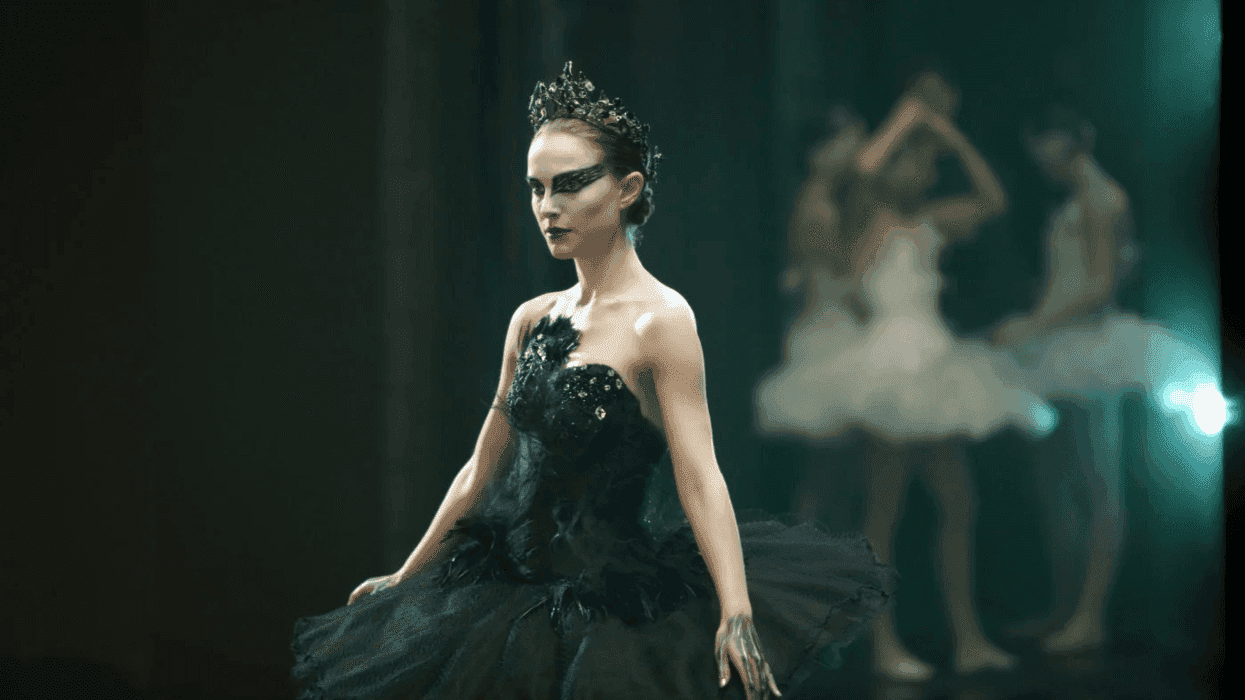
Aaron Darronofsky’s Black Swan (2010) is a beautiful visual rendition of how perfection means striking a balance between the darkness and the light in you. The narrative explores nature’s duality both philosophically and visually, through Nina’s (Natalie Portman) journey, as she finally transforms into the Black Swan, but at the cost of her own life.
In this article, we’re analyzing how every scene and almost every frame in the Black Swan realigns the narrative to its central theme, nature’s duality.
The Story
Black Swan follows Nina, a ballet dancer at the New York City Ballet Company. Ambitious and talented, Nina’s identity centers on her art. When the company announces a new show, their own rendition of the Black Swan, and the director announces that he is looking for a lead, Nina is determined to nab the role.
In the audition, Nina realizes that while she is perfectly encapsulating the essence of the White Swan, Odette, she is far from being the Black Swan, Odelia, despite her experience, talent, and years of practice. Knowing that the director is hell-bent on casting a single dancer to play both roles, Nina begins a desperate pursuit of perfection in her art.
Even after bagging the part, Nina is still unable to encapsulate the Black Swan. Her obsession with perfection and ambition starts taking a toll on her mental health. Things go from bad to worse when Lily (Mila Kunis), a talented and promising dancer but a comparatively newer addition to the ballet troupe, shows a naturalistic sync with the role of the Black Swan, proving herself to be the worthier choice for the Black Swan.
Seeing her carefree poise and seductive grace, Nina begins to perceive her as a threatening rival, becoming more and more insecure with every passing day. As she loses herself in her pursuit of perfection, she begins to hallucinate her inner darkness, in her own shape and form, continuously shadowing her. Be it at practice, dress-fitting, or in her bath, the dark Nina is everywhere, psychologically tormenting her just by her mere presence. Amidst her mental turmoil, she juggles her overbearing mother, competitive fellow dancers, and a demanding director until she transforms into the Black Swan perfectly, but at the cost of her life.
How Black Swan Unveils Its Duality Scene by Scene
Let’s begin unveiling the duality that lies snugly hidden in the story structure.
Underlying Duality in Nina
Nina is shy, composed, and poised. She strives to dive into the details of her art to perfect every little aspect of her dance. She is disciplined, soft-spoken, and fragile. She never goes against what is expected of her and hardly ever lives for herself, beyond the ballet. But the moment she is offered the role, we begin to get glimpses of the buried restlessness within her. Throughout the story, while she outwardly embodies the White Swan, her jealousy, obsession, and competitiveness continue to give us glimpses of the version of Nina that she is yet to meet—the dark Nina.
Although she feels such strong emotions that are often considered negative, she strongly resists breaking free from the cage she has made for herself, as if she is choosing to be fragile in the name of being safe. Or maybe she was too comfortable in her delusion. In any case, the cowardice in her is somehow too evident to miss. For instance, when the old man in the subway openly starts touching himself in the metro, digging his eyes straight into Nina's, she chooses to turn her face away instead of confronting him. Or when she doesn’t even try to fight the director’s decision to replace her with someone else for the role of Swan Queen, until he explicitly prompts her to fight for her place.
But did you notice how she didn’t think before confronting Lily directly after she learned that she had been talking to the director about her behind her back (although she said good things)? With these sequences throughout the narrative, Aronofsky continues to remind us that we’re almost equal parts light and darkness, and it’s smarter to embrace the darkness before the light overwhelms you.
Duality Through Contrasts
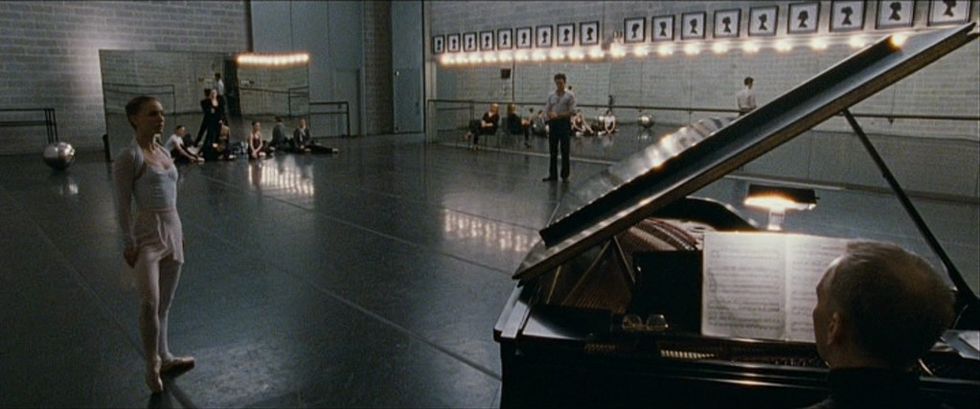
The scenes are also designed with duality in mind. For instance, every interaction between Lily and Nina focuses on highlighting the contrast between the two.
 Black Swan (2010)Credit: Searchlight Pictures
Be it at the practice or at dinner and clubbing, the difference between the two women is jarring, until Nina breaks out of her shell.
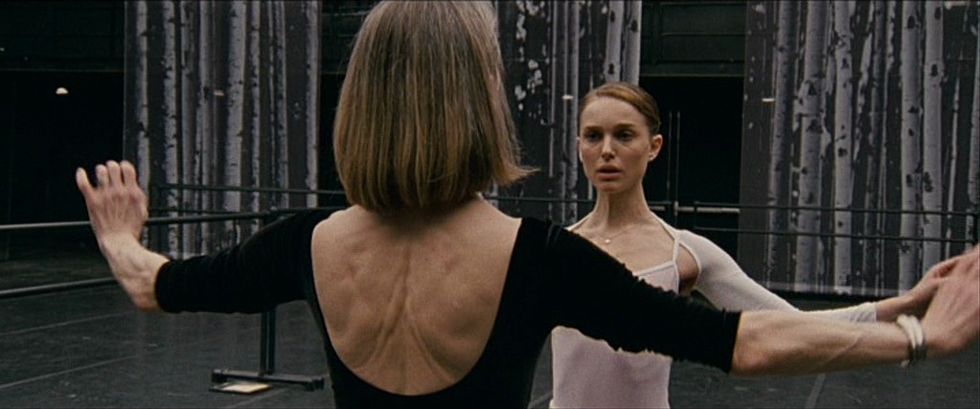 Black Swan (2010)Credit: Searchlight Pictures
Even the costumes are largely divided into blacks and whites, especially in her rehearsals. The climax, i.e., the ballet show, is also visually checkered—blacks and whites, from costume to set design.
Duality Through Visual Motifs
Visually, Aronofsky uses mirrors as his central visual motif to establish duality every chance he gets. Almost every scene has prominent usage of mirrors that continue to visually project Nina into twos, even before her descent into madness. For instance, in the opening sequence, she is shown sitting before a three-fold life-sized mirror, as she talks about her dream from the previous night. Where there is no mirror, Aronofsky plays with her reflection.
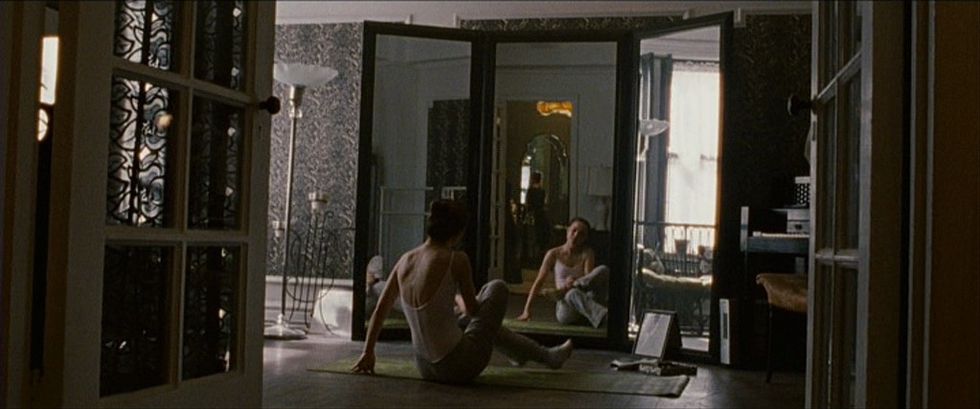 Black Swan (2010)Credit: Searchlight Pictures
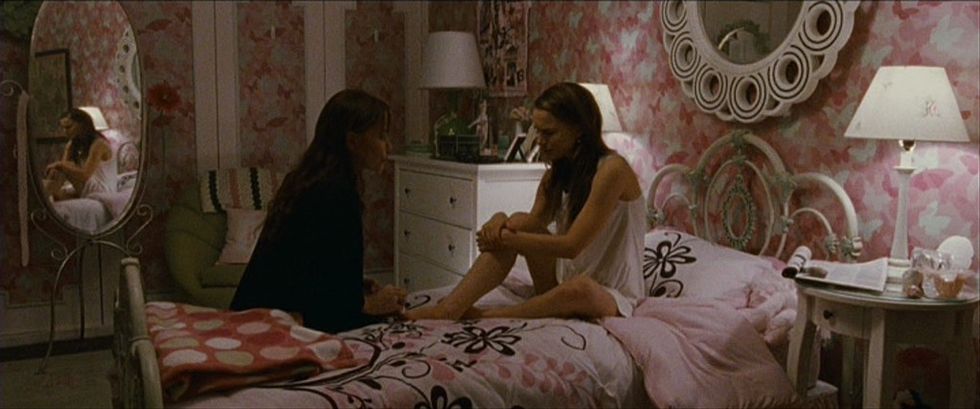 Black Swan (2010)Credit: Searchlight Pictures
Nina is rarely alone, visually.
This relentless visual and narrative mirroring of the “yin-yang” concept compels audiences to experience Nina’s duality as she does, seemingly in real-time.
The beauty of Black Swan lies in its visual metaphors. Be it duality, obsession, masochism, or self-discovery, Black Swan’s visual language is as strong as its storytelling. Have you watched Black Swan yet? Let us know your favorite highlights from the movie.