Film Quote of the Day: The 'Pulp Fiction' Line That Recognized a Simple Truth About Consequences
"If my answers frighten you, then you should cease asking scary questions."
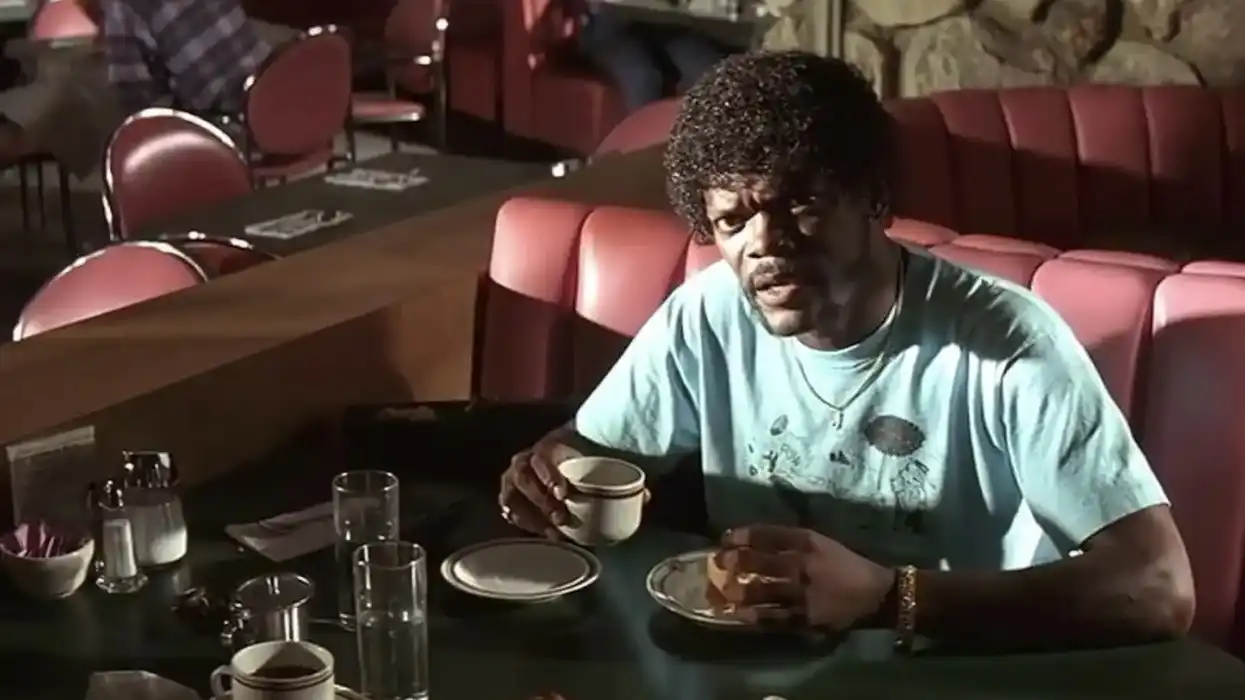
'Pulp Fiction'
There's something about that Tarantino dialogue that just rattles in our brains and makes us lean toward the movie screen with fervor.
I have never seen Pulp Fiction on the big screen, but I can imagine opening weekend, when some of the best dialogue ever written hit people's ears, and I can picture how it all changed when the credits rolled.
There are so many quotable lines from that movie, but today, I want to talk about one that I think sneaks past a lot of people.
Let's dive in.
- YouTubewww.youtube.com
The Scene In Question
Pulp Fiction is one of the greatest movies of all time. It really is a small miracle that comes alive every time you watch it.
In the scene I'm talking about, we find hitmen Jules Winnfield (Samuel L. Jackson) and Vincent Vega (John Travolta) sitting in a booth wearing ridiculous, oversized tourist t-shirts and shorts after accidentally executing a guy and being forced to clean up.
The genius here is how it lulls you into a moment where you see two guys having a casual debate about a dog versus pigs, and then we're in the middle of something heavy.
Jules drops a bombshell: he is quitting the hitman business because he believes God physically intervened to stop the bullets that should have killed them earlier that morning.
This throws the audience and Vincent into a tizzy.
Vincent demands to know the exact logistics of Jules's future and presses him on an unknown world that we can tell he has never considered. When Jules responds that he plans to simply "walk the earth like Caine in Kung Fu," Vincent gets angry about Jules's decision and says he's going to livel ike a bum.
This is where we get a line I love so very much. Jules says:
"If my answers frighten you, Vincent, then you should cease asking scary questions."
The Contrast of the Ordinary and the Extraordinary
- YouTubewww.youtube.com
The Takeaway for Screenwriters
As filmmakers and writers, we often feel the need to make characters argue about the immediate plot details or state their subtext in something on the nose.
This is like a five-minute chat where we explore the entire universe and how certain things affect the people within it. Is it all chance, or is there a higher power? That question is the backbone of Pulp Fiction.
The movie is about the philosophy of choices and how they affect us. And for writers, we have some specific lessons that I think echo Tarantino's words...
- Lull them with the ordinary: Start your scenes with grounded banter before dropping your thematic hammer. It makes the heavy moments land with a sharper contrast.
- Let characters project: When a character is aggressively questioning another, ask yourself: What are they actually afraid of in themselves?
- Give words earned authority: Jules can deliver a line about scary questions because he spent the morning looking at the answers. Ensure your character's words carry the specific weight of their lived experience.
Summing It All Up
There's a reason this movie is so good, and it lies within its thematic heart. It's not just about gangsters or Los Angeles; it's about us and how we deal with the big and small moments that happen to us. This is a film about reactions and choices. Will we make the right ones, or will we crumble under the pressure?
That's a lot like making it in Hollywood, too.
Let me know in the comments below.
- The Wallet Test: How the Final Scene of ‘Pulp Fiction’ Flipped the Script ›
- What’s in Pulp Fiction’s Briefcase? Nothing and Everything ›
- The Iconic 'Pulp Fiction' Scene That Survived the Chopping Block ›
- How Tarantino Uses Dialogue in the Burger Scene to Intimidate | No Film School ›
- Film Quote of the Day: The 1971 Movie Line That Captures the Bittersweet Reality of Life | No Film School ›