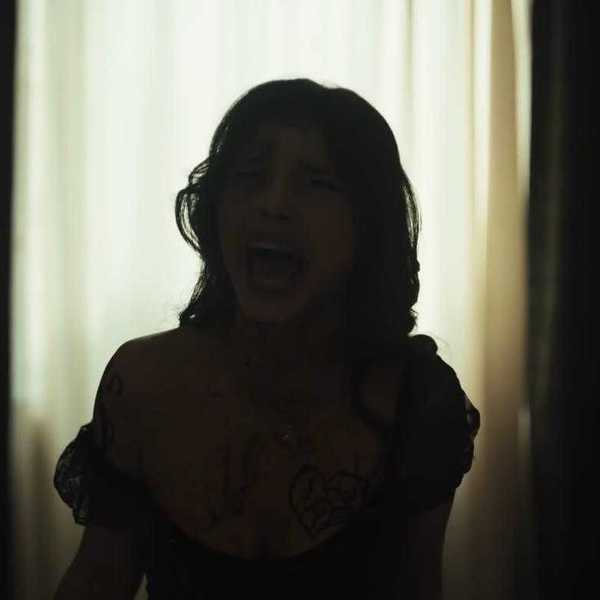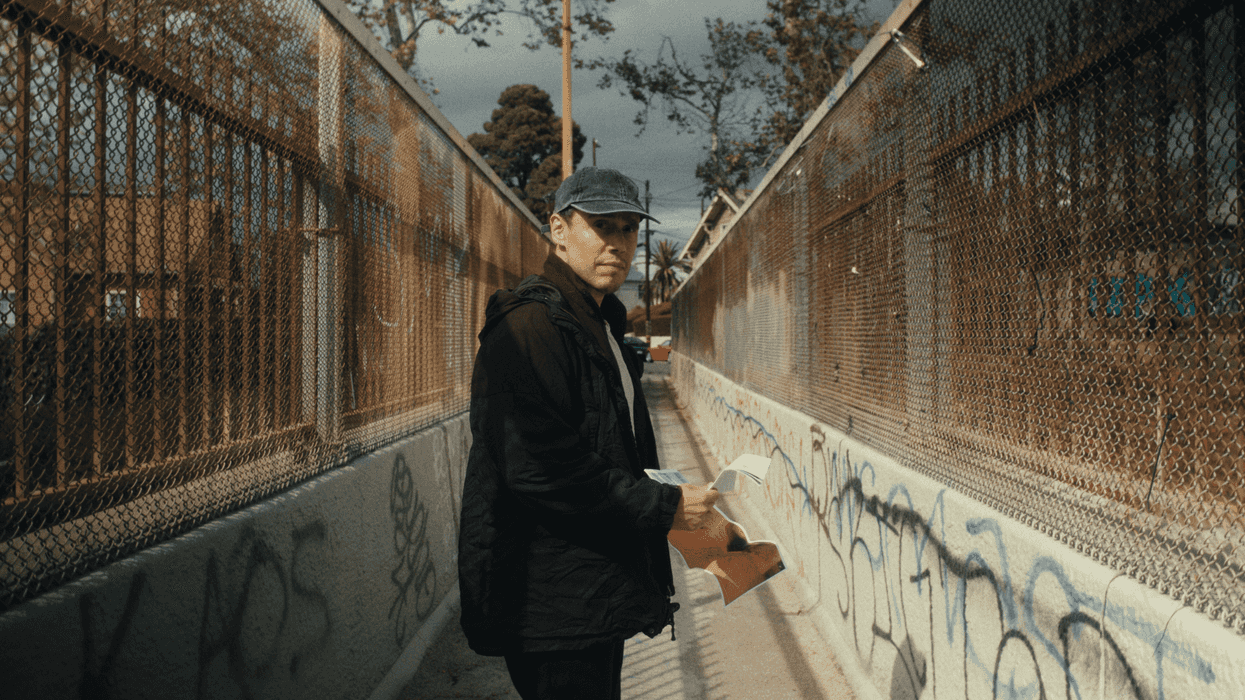
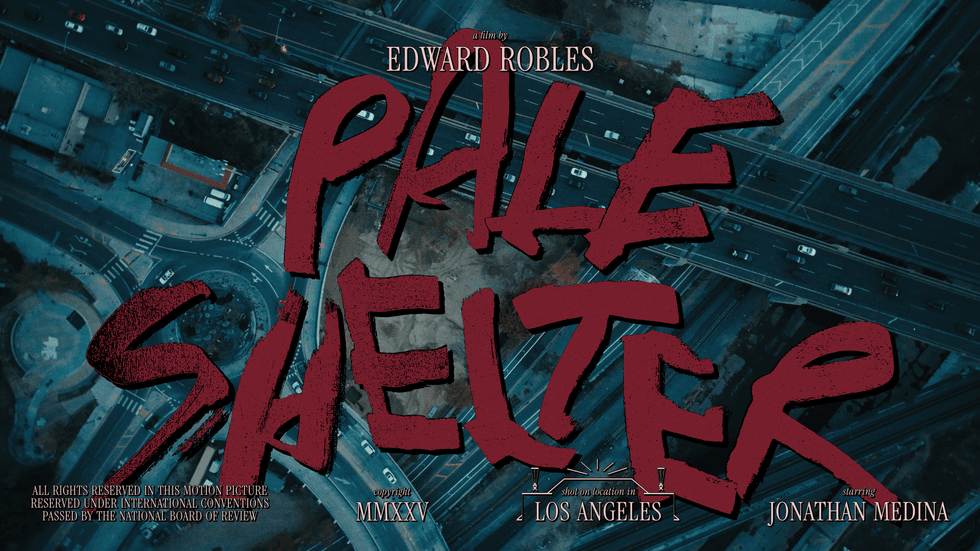
Over the past 2.5 years, I wrote, shot, edited, and finished Pale Shelter, a 15-minute short film. Half of that time was spent shooting. That wasn’t some unfortunate accident. It was the game plan.
Why?
Pale Shelter
Pale Shelter centers on a homeless man investigating a series of murders among LA’s unhoused population. It is my humble entry into the film noir canon. Telling a story about a homeless detective investigating homeless serial killings afforded me three things:
- The stylistic opportunity to tell a noir story
- The thematic entry point to examine the underbelly of the American Dream, which is what I believe noir has always been about
- The aesthetic entry point to access the harsh, neglected corners of LA.
By the numbers
- 13-page script.
- 15 shooting months.
- Typically, 2-3 shoot days per month, and 1-5 shots per shoot day.
- An average of 10 takes per shot, sometimes as many as 30+. More on this later.
- 2TB of footage.
- Countless hours making proxies.
- While producing the film in total probably cost me ~5k, 80% of the process cost me zero. I’ll dive into this later.
Some “TLDR” things to know upfront:
- I had a pretty good job for a bunch of years, and slowly accrued a modest film package during that time. I’ll get into the gear.
- Then I became unemployed! For most of the time I made Pale Shelter, I had no job.
- Having a bunch of gear and very little money meant that I was free to shoot to my heart’s content, but largely unable to hire a crew.
OK, let’s get into it.
 Credit: FEUERMAN PR
Have Gear, Not Money
Over the past 5 years (during the times I was comfortably jobbed), I assembled a purpose-built gear package. BMPCC 6k G2 and accessories. Fun lenses: two MEIKEs, an old Zeiss telephoto (definitely a photography lens, but I made it work), and the fabled Helios 4-22 (the ‘anamor-fake’ look, wonderful color, big recommend). A good but sometimes back-hurting gimbal (DJI RS4). And a damn good drone (DJI Mavic 3 Cine). Rode Wireless Pro 2 mics/lavs, and a Sennheiser boom (which I catastrophically misused, more on that later). Plus a decent ND filter set.
My gear list is not the cheapest, but it punches way above its weight. Excellent visual quality on a relatively tight budget. And I spent years accumulating this stuff. The lesson, if I have one: do your research, spread purchases out, and know what it takes to achieve the look you’re after.
This gear package was built to be 100% operated by me, one-man-band style. I fully believe that if you want to be a filmmaker, you must own the means of production and produce within your means. If you spend money acquiring all the gear you need, you can shoot multiple projects. As an indie filmmaker, you want your only constraint to be yourself. In the long run, it’s much cheaper than paying a crew over and over again.
Don’t get me wrong – I *love* collaboration. And I love big crews. Learning how to collaborate is a vital non-negotiable skill if you want to make things on a bigger scale. But crews need to be paid. That’s also a non-negotiable. So I made the tough but calculated decision to shoot and physically create much of Pale Shelter myself.
I had the gear; I didn’t have much money.
Befriend An Actor
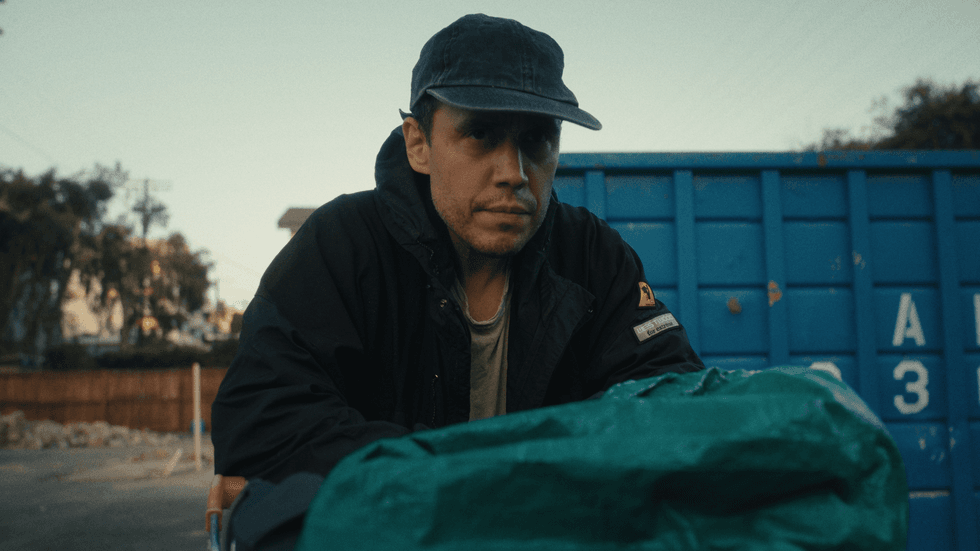
I truly love Jonathan Medina (star of Pale Shelter, Primo, For All Mankind, The Purge, and so much more) both as an actor and as a dear friend. We met through a mutual acquaintance only 4 years ago, and we’ve already worked together 3 times. He is a knockout actor and fantastic collaborator who I hope to work with again and again.
But no matter how good of friends you are with someone, 15 months is a long damn time.
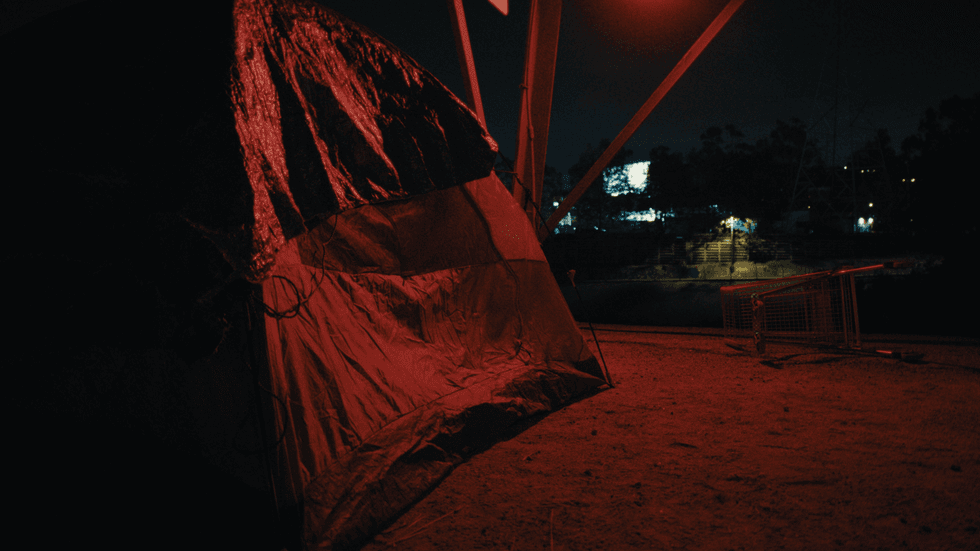
Often, I’d pick up Jonathan at 4 pm, and we’d shoot from 5 p.m. to sundown: just him pushing a shopping cart around Los Angeles for three hours. Other times, my longtime dear friend and DP Phillip Jackson would light, frame, and shoot tent interiors in my weed-infested backyard. (Whenever I felt out of my depth – which was often – I’d call up Phil. Not only is he an amazing cinematographer, but he’s also my longest-running collaborator. He’s my pair of eyes. He also happens to be a great friend. Be sure to have one of those. Write that down.)
Filming felt like fishing. We never knew what we’d get. Fortunately, we loved the process. Real locations, real people, real sunlight. These chance conditions greatly shaped our creative decisions. The lesson: prepare like crazy, but be prepared to adapt to the living, breathing world we live in.
 'Pale Shelter' Credit: FEUERMAN PR
Where Was I?
Over the course of production, we’d often misplace the logical, emotional, and thematic throughline of a given shot or story beat. We’d have to stop, talk, get reacquainted with the script, the character, and what the moment needed. This must’ve happened a hundred times.
Turns out continuity, over 15 months and on a shoestring budget, royally sucks.
How did we guard against this?
I used Miro, a creative software, to visually organize what we’ve shot and what’s still left to shoot. I’d also add storyboards, visual references, and notes in the Miro board. Everything was color-coded, so if we ever took a two-month lapse (which did happen), we would be able to jump back in and quickly understand where we were.
Ahead of each shoot day, I’d prep Jonathan on exactly what we were shooting. This briefing would largely be logistical. Often, on the day, he’d have a stronger POV on the emotionality of the scene than me. I say to other directors, this is a gift. Where possible, trust your collaborators. Let them carry some of the weight. The film will be better for it.
Wardrobe continuity: The main character, JJ, only wears one costume. Sourcing a homeless man’s wardrobe at Goodwill wasn’t difficult or expensive. I’d wash it between outings. Jonathan also wore some of his personal clothes.
Make-up continuity: Jonathan often handled that himself. He’s a pro.
Daylight/time-of-day continuity: we shot almost exclusively late afternoon to dusk, affording ourselves general shot-to-shot continuity re: sun/shadow. It’s cheap and beautiful! Who cares if it’s a cliché? If Lubezki can do it, so can you.
Artificial lighting continuity: many scenes took place at night, as our homeless detective hunted for clues. It was easy to remember how I lit something months earlier because I only had like 4 lights (two 15-inch tube lights, an eight-inch tube light that was actually a prop light, and a Godox SL60II). The prop tube light was the character’s personal light (think: living in a tent). The 15-inch tube lights created a nice harshness on the subject while casting indirect light elsewhere – lifting the scene nicely. One time I saw Phil flag a tube light with gaffer tape, so I began doing that, too. Great way to shape a tube light. Monkey see monkey do.
Bigger Boats
After many months of shooting, I finally came to terms with reality: one scene called for a bigger production footprint.
It’s the first scene in the script, when two homeless men assess a crime scene. Another homeless man has been murdered, and he wasn’t the first.
The logistical challenges: It would be a long shoot day to cover the entire scene. It needed to be a remote, industrial, forgotten-feeling location. A realistic tent encampment would need to be built, and it’d need to feel like it was ransacked. We’d have to construct a crime scene. A dead body would need to be dressed with wounds and grime. Plus, I’d have to care for three actors.
Immediately, I knew I’d have to scale up. I brought on Phil, my longtime friend and DP. Through friends, I found Ryan Mekenian, an incredibly reliable writer/director/producer to help me manage the shoot. I also found Mallory Shofi, an incredible make-up/physical SFX artist. And Emma Koh, a great production designer. The rest of the crew filled out from there. Maybe ten people total.
This shoot day resembled any other indie low-budget shoot, except it also happened to be the hottest day of the year. Everyone – even the actor who played the dead body – gave their blood, sweat, and tears that day.
Money Talks
Even though I was fully unemployed for most of the shoot and very underemployed for another big chunk of it, I still spent about 5-6k to produce the film. For the aforementioned big shoot day, I paid everyone decent day rates. Score and color also cost money. Plus, random gear, hard drives, etc.
The truth is, nothing is ever truly no-budget. And paying for people’s time and labor is never a bad thing. I’m grateful to everyone I worked with on this. I hope to work with all of them again, and I hope I’ve earned the chance to!
 'Pale Shelter' Credit: FEUERMAN PR
Visualizing the Homelessness Crisis in America
It is a sad truth that in any American city in the 21st century, it is not hard to authentically capture the harsh ugliness of homeless life. Armed with film gear and patience, anyone could capture the pain, sorrow, hopelessness, and violence of street life.
While my intention was to visually/sonically capture Pale Shelter so that it could stand shoulder to shoulder with modern noir/crime classics like Nightcrawler and Good Time, the production resembled a documentary. As I said, shoot days felt like going fishing.
Accessing these neglected corners of Los Angeles was tough at times. Safety, of course, was a concern. But so was the risk of exploitation. I made a conscious choice to never show the faces or identities of anyone living on the street. Their lives are not on display for me. Their story is not mine to take. Capturing homelessness in America became about achieving a texture, a tone, weaving a tapestry. Approaching these harsh, forgotten spaces with respect and not making anyone’s life any worse.
I have never been homeless. My relationship to homelessness is, I imagine, similar to that of many American city dwellers: unhoused people are part of the tapestry of everyday life. As ubiquitous as trees – perhaps even more so – and just as invisible.
Except they're not so invisible, are they? We all get that pang of guilt as we pass by somebody living through a crisis we could hardly comprehend. We all feel that swell of emotion, that fleeting urge to do something, gone as quickly as it came. We all keep walking, or the light turns green, and we drive away, too guilt-ridden to confront these living symptoms of the society we partake in.
With Pale Shelter, I tried to make something you can’t look away from. I wanted to imbue a fictional homeless man with the cunning and characteristics of a detective – and by virtue challenge assumptions, both yours and mine.
By relying on noir and thriller tropes, I’m hoping to cast the homeless population in a compelling light so that you (we) might regard these people as people first, material conditions second. Since making this film, I’ve wondered more deeply about the inner lives of every passing unhoused person, and I hope that consideration is contagious. Until we see them as people with inherent value (and surprising skill sets), nothing will change.