Some movies wait years for the "right" moment to get made, but filmmaker Jill V. Dae felt she had a story to tell right now.
So rather than waiting for someone to greenlight it, she went out and made it.
She blended a Freaky Friday-style body-swap premise with the vibrant, ancestral weight of Día de los Muertos into a short called DEI.
We caught up with Dae to discuss how she pulled off a guerrilla-speed production, the deeply personal family history behind her script, and why the movies you don't make are scarier than the ones you do.
No Film School: What was the initial spark for DEI, and what made you feel this was a story you needed to tell?
Jill V. Dae: First of all, I’m such a huge fan of NFS, not freaking out at all. It’s been my dream to talk with you guys, and the pod has gotten me through so many seasons of my life here in LA. So, hello, hi!
The story for DEI was born out of the vitriolic, inhumane arrests that have been happening to our neighbors across the country these last few years. But my journey with the project really started three years ago, when I became a filmmaking teacher at the Latino Film Institute’s Youth Cinema Program in East Los Angeles, in a 99% Latino community. Getting to know the children, the parents, teachers, the whole community, and having the privilege of teaching them made it impossible for me not to use my voice to say something when all the insanity began.
These clever, creative, and innocent children, along with their families, were being vilified in the media and by this administration, using names and labels to dehumanize and criminalize them. I was appalled at how so many of us have lost our humanity, our sanity, watching grown adults cheer on children being torn from their families and chalking them up to a punchline.
So the characters in our film were inspired by them. This story is for them. And I wanted to inspire them, just like through my teaching, to know you are not who they say you are. And you can be anything you want to be.
NFS: The film puts Bryan in Carla’s body, forcing him to experience a world very different from his own. What interested you about using this premise?
D: Great question. I truly believe that if people on either side of the divide had the chance to sit down with each other for just five minutes, we'd find so much more commonality than we do. Whether it be sports, faith, family, work ethic, dreams and worries, or even a beer. Yet, people so rarely elect to come together—there's too much fear and distrust. So the idea was, what if you were forced to? Under a Freaky Friday-esque body swap? Undercover in a family you so fear?
I think using a supernatural premise to force our characters to walk a mile in each other's shoes (in this case, a day) is more wishful thinking for me than anything. I wish we could make this divine power come true. (And hey, stay till the end of the film!) We should feel, head to toe, what another fellow human being is feeling before we can pass judgment, let alone vote against each other's interests. That’s empathy to me.
And I’m personally a big believer in karma and karmic energy, which you could call supernatural as well. I often wonder if those who enact pain on others or cheer it on believe they are eating into their karmic debt at all, if they believe in that kind of thing. And how would you feel if you were born as the person on the other side of your vitriol in the next life? A supernatural premise helps me ask the audience to consider that, and Maeve Garay, who plays Carla, does such a fantastic job in taking the audience along her soul-hopping ride from teenager to 50-year-old-man-in-teenager.
NFS: Why was Día de los Muertos the right cultural and narrative backdrop for this story?
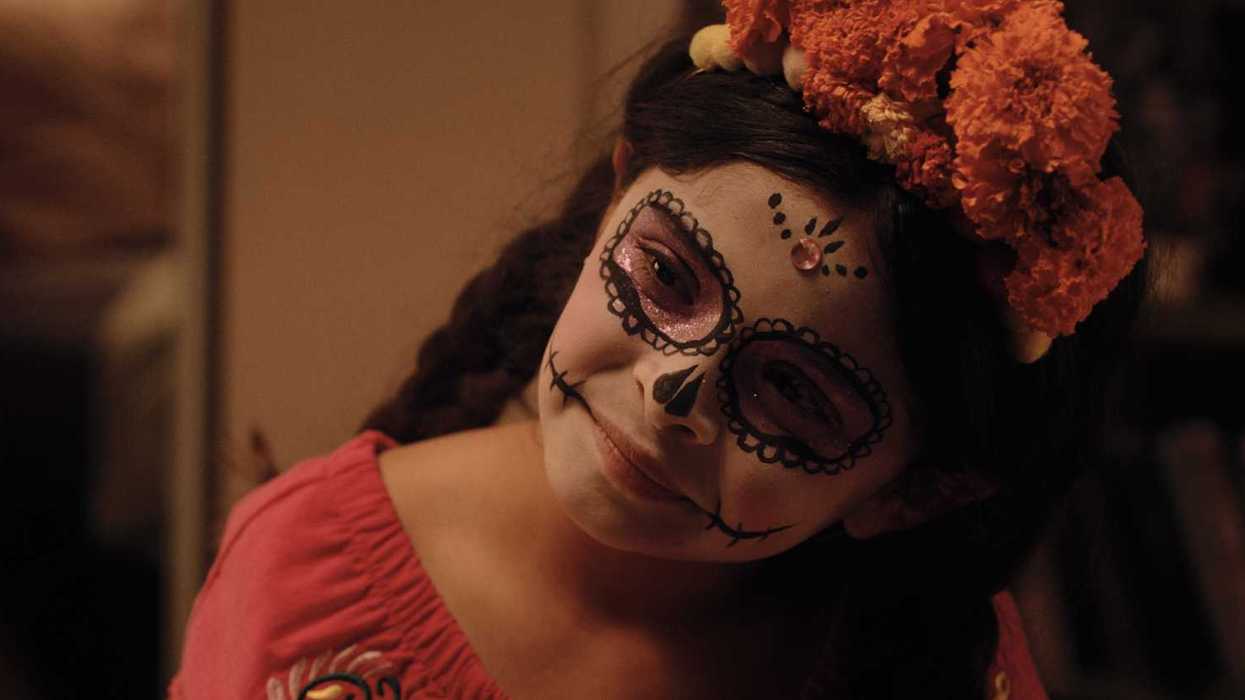
JD: Continuing on my point of connection and similarities, in my (Chinese) culture we actually have a Day of the Dead as well (Qingming Festival), and I grew up around many similar Buddhist practices (Hungry Ghost Festival, etc.). ‘Qingming’ actually means clear and bright, and it’s a festival combining grief with Spring, bringing joy and renewal rather than anything too scary or dark, just like Día de los Muertos (how it’s celebrated joyfully and colorfully). Through Lucia’s character (played by Zara Castaneda), I tried to show a sense of childlike excitement for the day rather than fear of the ghoulish, an emotion that was slowly learned for us kids who were naturally scared of tombs we had to help clean on the day.
In my family, there was always a large emphasis on respecting our elders and our ancestors, and a shrine for my grandfather, similar to the Ofrenda where we place offerings and candles, was always present. Something I haven’t shared before is that in the scene where Marcos (played by Erik Rolando Rozet) speaks at the Ofrenda to the family, saying about the departed: “They couldn’t become American people on Earth, but they did become American ghosts,” was something my grandfather actually said to us right before he passed of cancer from years of handling toxic chemicals at a copper plant. In the '90s, members of my family were slowly trying to immigrate to Canada, including eventually my grandfather, who waited years for his citizenship but passed away before he got it. He said to us at the hospital, “Well, I never became a Canadian citizen, so I’ll just become a Canadian ghost.” I remember hearing it at only six, but when my dad reminded me of this later in life, it stuck with me. And 20 years later, it did jerk a few tears from my dad when he watched DEI.
I think for me, I want people to zoom out, past all our Earthly time and bodies, and really examine what our choices here mean in the grand scheme of space-time. Cultural festivals rooted deeply in ancestry hold a lot of gravitas when asking people to question their choices and their consequences here. And for me, it was deeply personal.
NFS: What was the biggest creative or production challenge you faced while making DEI, and how did you overcome it?
JD: Coincidentally and unfortunately, on our first day of production, the ICE raids rang out across Los Angeles. As in the very same morning, the first case hit the headlines, and we got the notifications on our phones as we were rolling our scene of an ICE raid. It was terrifying and awful, especially for our majority Latino cast and crew on set. You never want dystopian art to play out in real life, let alone in real time.
We had to delicately navigate that, and thank God we did it all right by having permits and security and all that, since we were filming on location in the community. Neighbors past our cordons were coming out of their houses, scared that it was actually happening on their streets. I was also terrified they could come and hurt our actors out of fear since they were in full uniform. I’m so thankful for our talented producer Amina Nada, first AD Rogelio Salinas, and production coordinator Kyra Brennan for keeping everyone safe and accounted for. This was one of the most challenging production days we’d experienced.
NFS: Was there a particular scene, performance, or visual choice that turned out differently, or better, than you originally imagined?
JD: Without spoiling the ending, I took a wild swing in executing it, approaching it with a less-is-more/say-less mentality. Though after hearing a few wild and at times confusing interpretations of it, perhaps saying more would have helped more people understand the true meaning of our twist ending. I didn’t go to film school (whoop whoop!), so my education has always been to create, create, create, and learn from doing, so I take every opportunity to do so! Every project is always a great lesson and exercise. Hats off to Jarod Bainbridge, our VFX artist, in helping me realize some of these wild visual choices.
In terms of performances, we originally had a hard time casting Lucia, the young girl, as it was close to impossible to find someone at her age who could memorize all those lines and act with such depth as she did. We were really freaking out at one point and thought I might have to rewrite her character. And then at the 11th hour, Zara Castaneda came in, and it was like the seas parted and light shone through. She was our Lucia. Rightfully so, her performance has been recognized and nominated for a Rising Tide Award at Catalina Film Festival!
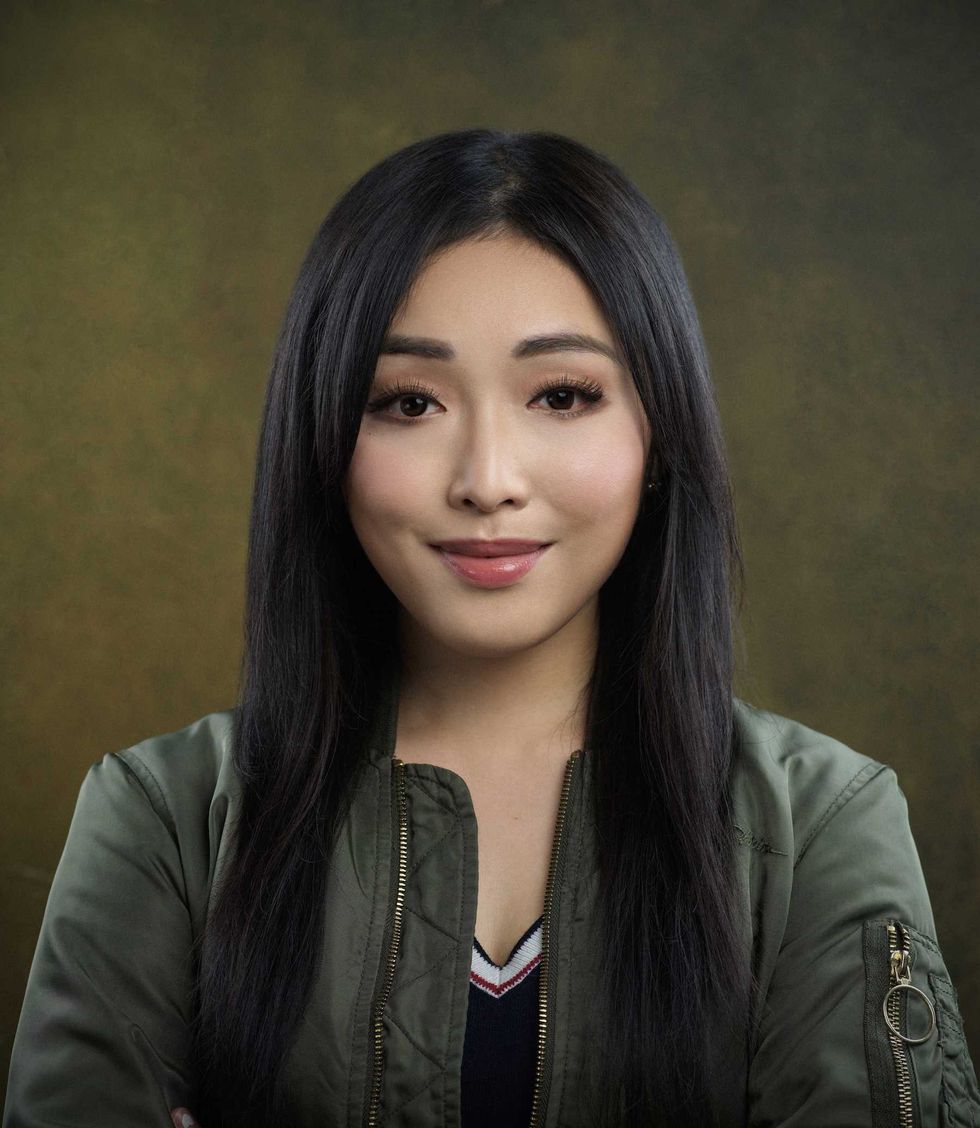 Jill V. Dae Credit: Impact 24
NFS: What did making DEI teach you about yourself as a filmmaker, and how do you think that lesson will shape what you make next?
JD: I think going for our film the way that we did—urgently, fearlessly, somewhat controversially—reignited my love for indie filmmaking. When I felt the idea spark, I wrote DEI in three days, called my producer and said, "How do you feel about going into production for this film in one month?" She said, "You’re crazy, let’s do it." We didn’t stop pre-pro for the next three weeks after that call, and we were pictures up within a month (including getting our amazing lead Lochlyn Munro on board).
I’m not saying that’s a great way to go about every film, but I think it reminded me, on a grand scale, to do the project that you want to see and make as soon as you can while you have the creative drive and momentum. Make the film fearlessly; don’t wait for the perfect moment because that moment was always yesterday. And I really love the saying: the film you don’t make is scarier than the film you do make. Really let that sink in. Your unrealized ideas that die in a hard drive are way scarier than doing something imperfectly and putting it out in the world.
It also reminded me to keep making daring work that pushes the envelope, even if it ruffles a few feathers. Asian women are rarely allowed space to create risqué films, and I plan to change that. We’re in pre-production for my feature directorial debut, equally daring and exciting, and I cannot wait to share it with No Film School guys soon! Let’s say, in a year? Manifestation and momentum are key!