The Filmmakers at Wonder Dynamics Building AI for Filmmakers
“For us, that became our core theme, is just building something for artists that leaves them in control.”
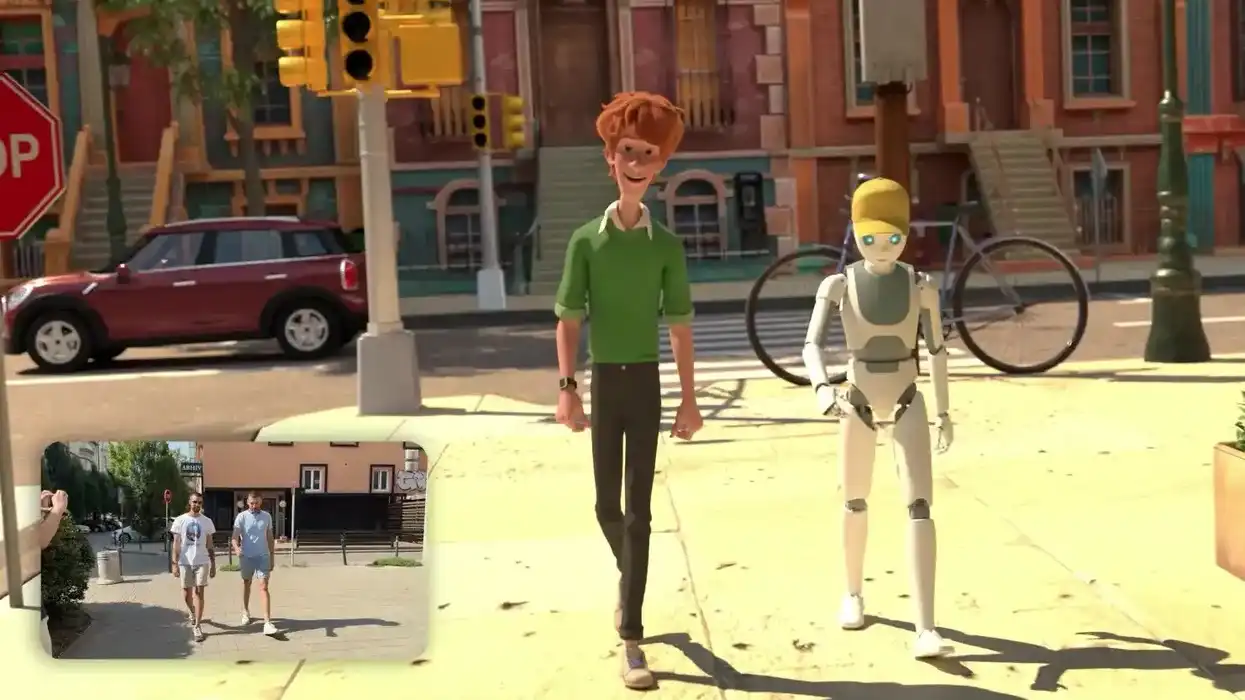
In this episode of the No Film School Podcast, Wonder Dynamics co-founders Tye Sheridan and Nikola Todorovic join GG Hawkins to explain how their filmmaking backgrounds shaped the development of AI-powered production tools for artists.
They trace the company’s evolution from an interactive storytelling startup to Autodesk Flow Studio, a tool designed to transfer live-action performances to CG characters while preserving creative control and compatibility with established VFX pipelines.
The conversation covers Hollywood’s changing relationship with artificial intelligence, the potential for lower-cost sci-fi filmmaking, Autodesk’s acquisition of Wonder Dynamics, the continuing importance of marketing and distribution, and how emerging filmmakers can prepare for an AI-integrated industry.
In this episode, we discuss:
- How Sheridan and Todorovic met while working on Last Days in the Desert and bonded over their interest in making independent science-fiction films
- Why the expense of CG and visual effects inspired them to pursue a lower-budget, “Blumhouse model” for sci-fi and animation
- Wonder Dynamics’ pivot from interactive narratives to AI tools focused on film production
- Why AI filmmaking technology should be developed by people who understand professional production and post-production workflows
- The differences between tools made for social media content and tools made for long-form narrative filmmaking
- Why editability, control, and compatibility with established VFX pipelines became central to Autodesk Flow Studio
- How Autodesk Flow Studio captures a performance from single-camera footage and transfers it to a CG character without a traditional motion-capture stage
- Why Sheridan and Todorovic do not believe an actor’s performance should be generated entirely through prompts
- Hollywood’s pushback against AI during the SAG-AFTRA and WGA strikes and the industry’s gradual shift toward discussing responsible use
- How filmmakers can evaluate AI tools according to their ethics, usefulness, and respect for artistic control
- The potential for AI to lower production costs and help independent filmmakers create ambitious sci-fi and VFX-heavy projects
- Why cheaper production does not eliminate the challenges of marketing, distribution, and audience discovery
- How short films, YouTube projects, commercials, and music videos can serve as testing grounds for new filmmaking technology
- The opportunity to create visually ambitious genre films that remain grounded in original ideas and character-driven storytelling
- What Autodesk’s acquisition of Wonder Dynamics provides in terms of 3D expertise, scale, resources, and integration
- How small production teams have used Autodesk Flow Studio to revive scripts they previously could not afford to produce
- Why future filmmakers may see AI as an ordinary part of every creative tool rather than a separate category
- Sheridan’s advice to practice whenever an opportunity appears and learn from every film set
- Todorovic’s advice to persistently seek mentors and approach experienced professionals with genuine curiosity
Guests:
Subscribe to the No Film School Podcast on:
Get your question answered on the podcast by emailing podcast@nofilmschool.com
Listen to more episodes of the No Film School podcast right here: