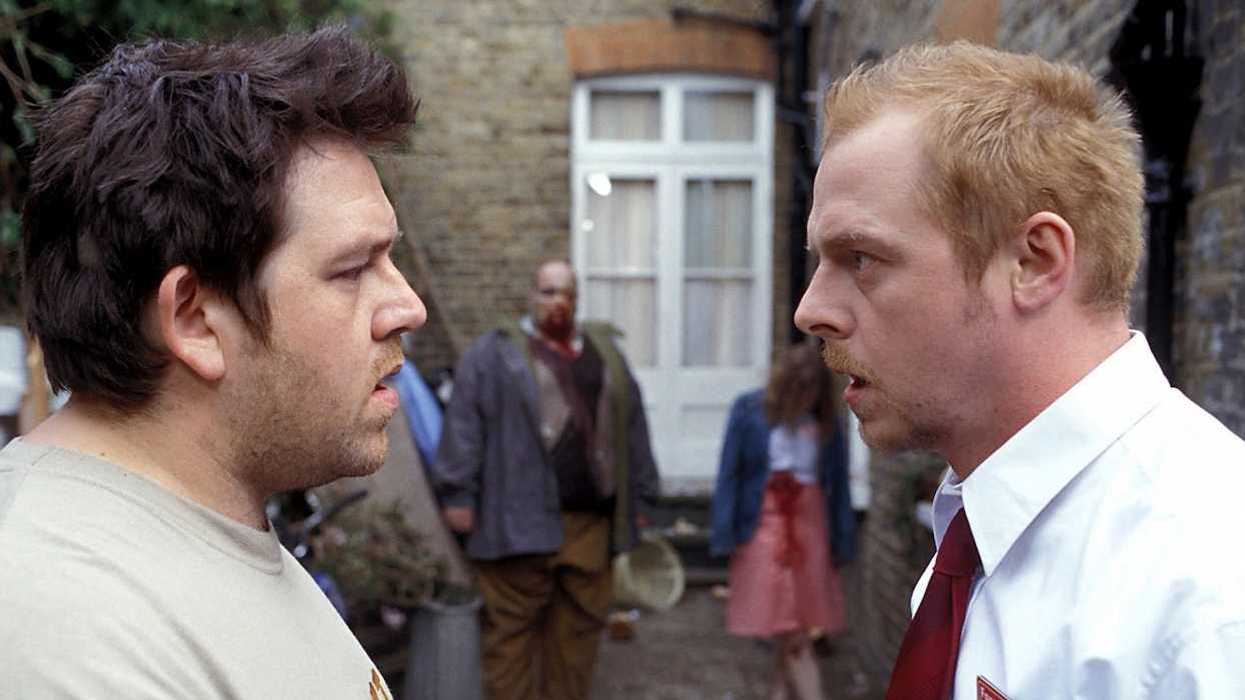
There are times when I randomly think about films that started whole new genres. It makes me giddy to openly admit that nobody really knows what is going to work out in a film or screenplay (yes, even the seasoned writers and filmmakers). And trying something completely new? That’s a trip to Vegas!
So, on our worn-out laptops, with jittery hands and overthinking minds, we type out even the most bizarre ideas, with our fingers crossed. But, as a writer who’s a regular in this limbo of hits and trials, these films are my inspiration as they remind me to tell my story anyway, because as artists, shouldn’t we be curating new experiences for the patrons?
So, when in doubt whether that crazy idea is going to work or not, here’s a list of movies to inspire you that opened up new pastures for global cinema with their inventive narratives.
Movies that Started Whole New Genres
1. Deluge (1933) - World’s First Disaster Film
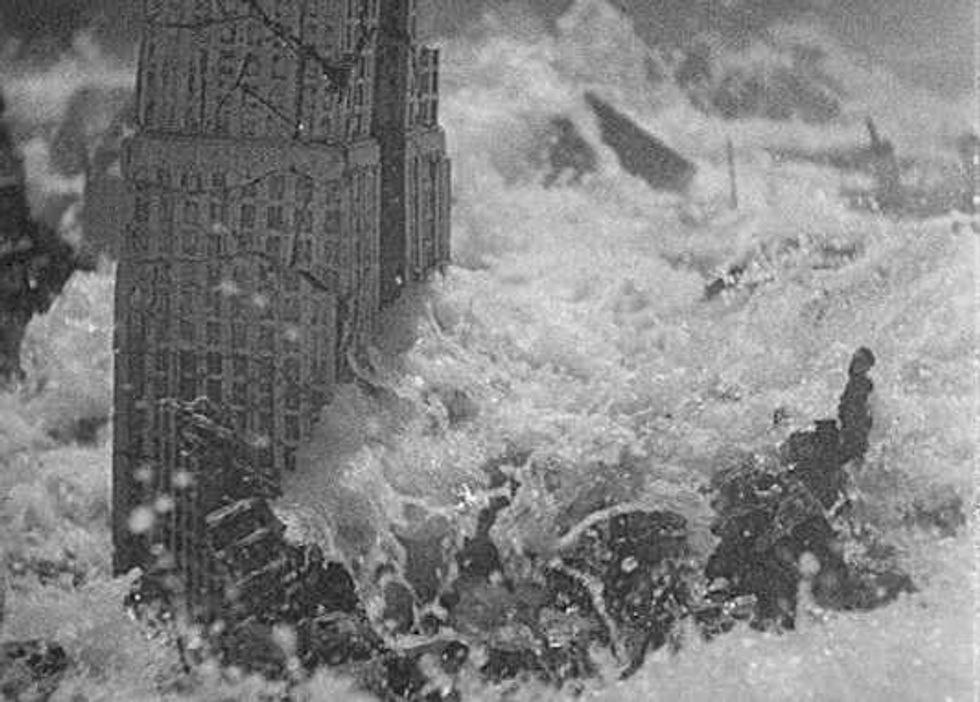 Deluge (1933)Source: RKO Radio Pictures
While today’s disaster films are made for thrills and spectacle, Felix E. Feist’s Deluge was focused on the survivors as much as the spectacle of catastrophe. Credited to be the first full-length disaster film, Deluge remained forgotten and lost for several decades until a low-quality, Italian-dubbed print was found in 1981. Written by S. Fowler Wright, John F. Goodrich, and Warren Duff, the film centers on a massive earthquake and its aftermath after it strikes the United States, claiming lives and destroying civilization. While films like Mark Robson’s Earthquake and J.A. Bayona’s The Impossible are milestones in capturing the chaos of a natural disaster, Deluge’s raw exploration of survival vs disaster sets it apart, even decades later.
2. Cannibal Holocaust (1980)- Introduced the World to Found Footage Filmmaking
The world was introduced to found footage filmmaking through Ruggero Deodato’s Cannibal Holocaust after the film was recovered by an anthropologist (Robert Kerman) who ventures into the Amazon rainforest on a rescue mission. The film presents the disastrous encounter of a film crew with the indigenous cannibal tribes of the Amazon, alternating between traditional storytelling and found footage narrative. That being said, Cannibal Holocaust isn’t the first film to use the technique. Shirley Clarke’s The Connection had used this technique about two decades before Cannibal Holocaust to present a story following the disappearance of an acclaimed documentary filmmaker. About two more decades later, the release of The Blair Witch Project cemented found footage as a legit subgenre of horror, sci-fi, and more in Hollywood.
3. Spies (1928)- The First Spy Feature
No offense, if you’re a lover of the spy genre, it would be a shame not to have watched Fritz Lang’s Spies and Alexander Butler’s short, O.H.M.S.
Butler was the first one to introduce a spy character in cinema ever, while Lang literally created a handbook for all spy films.
Spies centers on three enigmatic characters: a criminal mastermind, Haghi (Rudolf Klein-Rogge), known for his spy operations, a Russian lady, Sonya (Gerda Maurus), who works for him, and a government secret service spy, No. 326 (Willy Fritsch), who’s set to nab him by romantically manipulating Sonya. No. 326’s plan was perfect, only Haghi discovered the forbidden romance well in time. Only if the Academy Awards had begun a year prior, Spies would have been sure to have nabbed a couple of those coveted golden statues.
4. Peeping Tom (1960)- The First Slasher Film
Here’s a truth bomb for you: Hollywood and the entire film community owes a serious apology to Michael Powell. If you’re a slasher lover and haven’t heard about Peeping Tom, no offense, but I guess you owe him an apology, too. The film’s release in 1960 ended Powell’s career due to its graphic nature, only for the slasher genre to become super popular in the 80s. Talk about a film ahead of its time!
Peeping Tom centers on a psychotic filmmaker (Carl Boehm)who kills women and documents their dying moments with his camera. His truth is revealed after his curious neighbour, Helen (Anna Massey), watches one of his “documentaries” secretly. Honestly, as a slasher-lover, if you’ve missed Peeping Tom, that’s just unfortunate.
5. Metropolis (1927)- The First Cyberpunk Film
Fritz Lang pioneered not one but two film genres. Before Spies, Lang introduced the world to the cyberpunk subgenre through his silent, black and white film, Metropolis. Set in a socially decayed and technologically advanced dystopian world, the narrative explores a utopian city that thrives on class-based discrimination. Don’t expect stylized visuals in Metropolis, yet the film is critically acclaimed for its world-building, which immerses you in its futuristic visuals while deeply rooting the narrative in the universal reality of the cons of progress.
6. Shaun of the Dead (2004)- The First Zombie Rom-Com
Up until Shaun of the Dead, zombies were primarily limited to horror (occasionally edging into comedy). Edgar Wright gave the world its first zombie rom-com in 2004. Incorporating his signature humor, as we’ve seen in films such as Scott Pilgrim vs the World and Hot Fuzz, Wright whips up a zombie romantic-comedy through the plight of a London electronics salesman, Shaun (Simon Pegg), whose romantic life is upturned in the face of a zombie apocalypse.
7. A Better Tomorrow (1986) - Invented the Heroic Bloodshed Genre
Before A Better Tomorrow, action films were broadly divided into two types based on their action sequences: one that featured weaponry fighting (guns and ammunition) and the other that featured hand-to-hand combat and martial arts, such as Kung-fu.
John Woo showed the world how to blend the two styles of action into one, inventing a style of action, the ‘gun-fu.” In this style, the action sequence uses both weaponry and martial arts.
Woo’s A Better Tomorrow invented the heroic bloodshed genre, one that is defined by narratives that explore themes of brotherhood, loyalty, tragedy, and mythic masculinity, by merging action spectacle, melodrama, and ethical complexity, becoming a foundational template for action films all over the world.
Which of the above films have you watched?