I came to filmmaking through acting. After years of auditions and waiting for someone else to give me the part I wanted to play, I started writing one for myself.
Then I made a short. And somewhere in the process of figuring out how to actually make the thing I had written, I realized I loved filmmaking more than I had ever loved auditioning. So I kept making things.
I didn’t go to film school. I learned by doing it. I learned what I needed in the edit by not having it. I learned how long things actually take on a set. I learned by getting things wrong and trying not to get them wrong the next time.
And I met people. On sets, in acting classes, through friends. One short led to another, one person introduced me to someone else, and without really realizing it, I was building a community of people I trusted and who trusted me. Years later, those were the people I called when I decided I was insane enough to make my first feature.
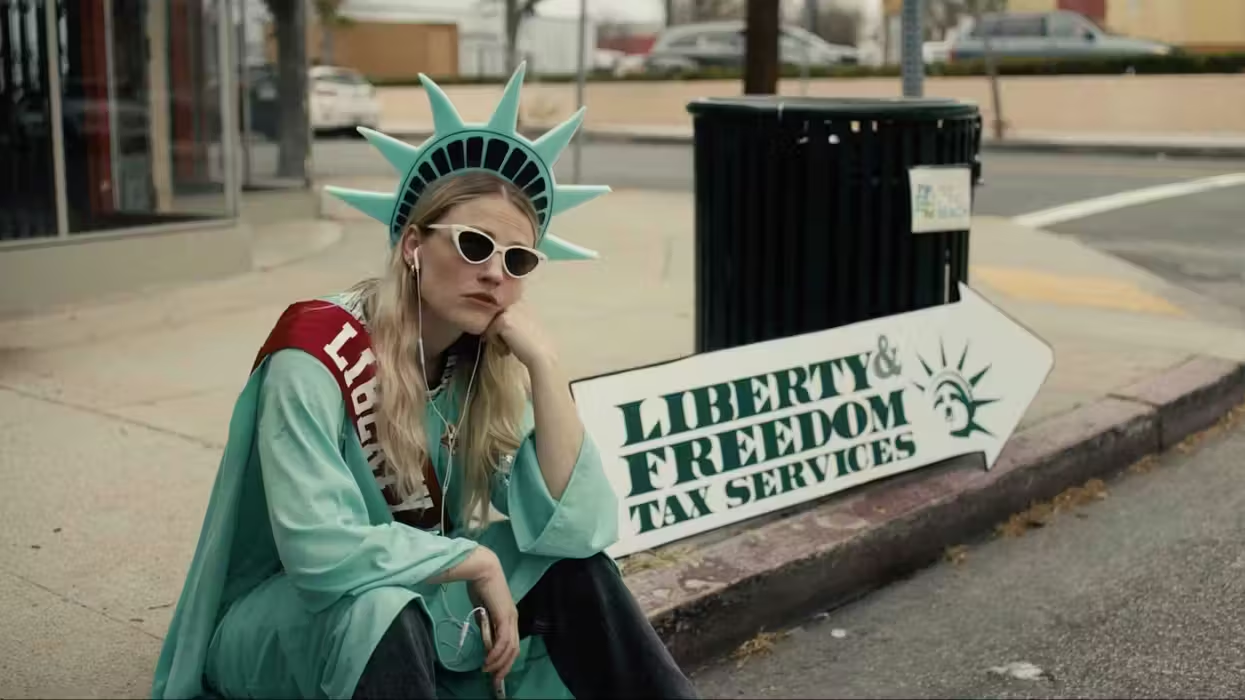
That movie became Rhythm Is a Dancer, and it started with the thing I knew best: my own life.
- YouTubewww.youtube.com
Your Life Is Not a Screenplay
I was raised by a lesbian mom and conceived through an anonymous sperm donor. I always knew how I was conceived. My mom was very open about it. I didn’t start looking for my biological father until I was 18, and I eventually met him in my twenties. So that part is true.
But one of the first problems I ran into when I started turning my life into a screenplay was that my actual life wasn’t dramatic enough. My mom, for example, was supportive of me finding my biological father. She had always been open with me about where I came from, so there wasn’t some huge betrayal when I started looking, which is great when it’s your actual mother and not particularly helpful when you’re trying to write a movie.
I needed conflict. So I made some up. I changed relationships. I combined people. I moved things around. I gave the characters reactions that the real people never had.
That took me a while to get comfortable with. When you’re writing something based on your own life, it’s very easy to get stuck on, “But that’s not what happened.” I definitely did that. I felt this weird responsibility to the truth of it, even though nobody had asked me to make a documentary.
Eventually, I realized that “this is what actually happened” is not a good enough reason for something to be in a screenplay. Sometimes what actually happened is boring. Sometimes the person who was incredibly important to you in real life does absolutely nothing for the story. Sometimes two people need to become one character. Sometimes you need your mother to be angry with you even though your real mother wasn’t.
Once I gave myself permission to do that, I stopped trying to recreate my life and started writing a movie. And then I had to make it.
I was writing my first feature, directing my first feature, and acting in almost every scene of my first feature. I apparently really like making things easy for myself.
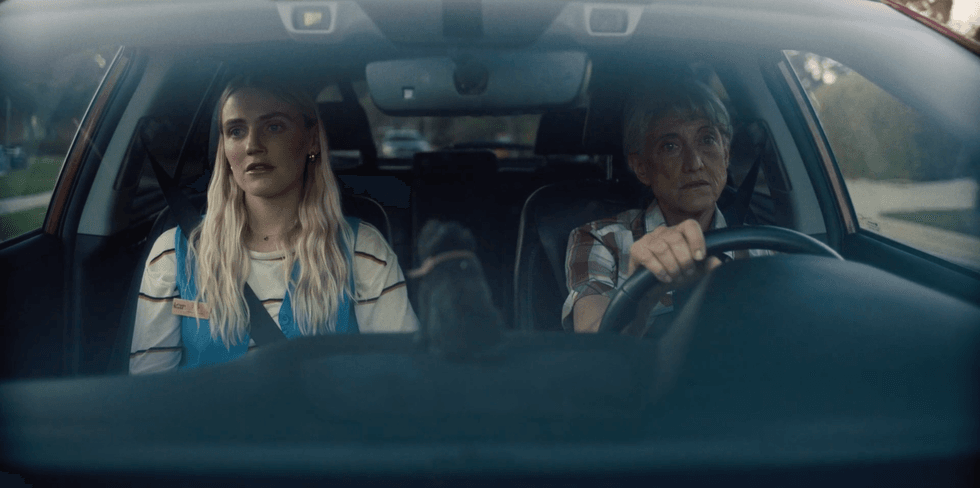 'Rhythm is a Dancer' Credit: Utopia
Prep for Every Hat You’re Wearing
We shot the movie in 18 days with 26 actors, around 50 crew members, and a ton of locations. I was also in almost every frame of it.
I knew going in that I wasn’t going to have time on set to figure things out. Most of the time, we got two takes. Three if I was lucky. I rarely had time to watch playback because as soon as we had it, we had to move on. So I prepped for every hat I was wearing. I prepped as an actor. I prepped as a director. I prepped as a writer and as a producer.
Before we started shooting, I made a 100-page book for the film that covered everything from tone and color palette for my DP to wardrobe, production design, hair, and makeup. Every department knew what movie we were making before we got to set because I knew that once we were there, I was going to be very busy. And I was.
I was often in hair and makeup or wardrobe while everyone else was getting ready. Then I had to walk onto set, talk through the scene, get in front of the camera, and be Ro. I couldn’t stand behind the monitor while we were rolling because I was usually the thing on the monitor.
We even figured out tiny ways to save time. If we were shooting in a bedroom, I would hide the monitor under a bedsheet or somewhere else out of sight of the camera and my scene partner so I could check the framing before we rolled without having to get up and walk back and forth to video village. It sounds like nothing, but when you have two takes and 18 days to shoot a feature, those few steps add up.
The other part was trust. I had to trust the people around me, especially my DP and first AD, because I physically couldn’t see everything. I couldn’t direct, act, watch playback, and keep the day moving at the same time.
I was also pretty obsessive about our hours. There can be this attitude with independent films that everyone has agreed to suffer because there isn’t a lot of money. I don’t really believe in that. If people are already working incredibly hard to help you make your movie, I don’t want the plan to also be that they’re exhausted.
We moved fast. We were efficient. We didn’t go over. And of course, things still went wrong.
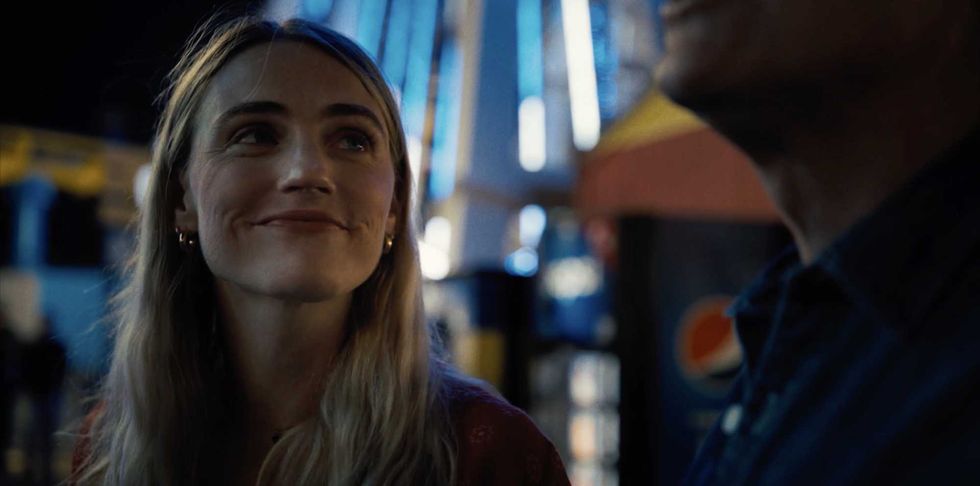 'Rhythm is a Dancer'Credit: Utopia
Never Get Rid of Your Data Wrangler
Because we were trying to put as much money as we could into our camera crew’s day rates, we combined a camera position with our DIT/data responsibilities instead of having a dedicated data wrangler. On paper, it seemed like one of those low-budget compromises you make because you’re trying to stretch everything as far as it can possibly go.
Then a card got shot over. I found out because I was watching our dailies from that week and realized an important scene was missing coverage. At first, I assumed I just wasn’t seeing it. There had to be another card. There had to be another folder. Something.
Nope. The card had been formatted and used again. We had so many cards. There were empty cards available. We had a system. It was just human error, and to this day I don’t really know exactly how it happened. But the footage was gone.
And it wasn’t one bad take that we could live without. We had lost several shots. Two-shots. Singles. The coverage we actually needed to cut the conversation together. What we still had was a wide shot where we were basically looking at the actors’ backs while they said the dialogue. Not exactly ideal. The actor was about to fly home, and we were already done with that location. We couldn’t just go back the next morning and pick it up. We were in the middle of an 18-day schedule where basically every hour already had somewhere it needed to be.
So we had to figure it out. We changed the actor’s flight. We moved things around. We found a different location and built a set that looked enough like the original one that we could shoot the missing coverage. And we got it.
So if I can give another filmmaker one extremely unglamorous piece of advice from my first feature: have a dedicated data wrangler. I know. Not exactly the sexy directing advice you dream about before making your first movie. But there are a million places where you have to get creative with money on an indie. In retrospect, the person responsible for making sure your footage continues to exist probably shouldn’t be one of them.
And the irony is that trying to save money there ended up costing us money anyway. We had to change a flight, recreate a location, and find time in a schedule that did not have time.
That experience also changed the way I think about prep. I used to think the point of being incredibly prepared was to stop things from going wrong. Now I think things are going to go wrong no matter what you do. A location falls through. An actor gets sick. You lose the light. Apparently, someone shoots over your footage.
The reason to prep is so that when that happens, you’re not also trying to figure out what movie you’re making.
We knew what we needed from the scene. We knew what we had lost. So once I got past the initial panic of “Oh my God, that footage is actually gone,” we could start solving the problem. There were a lot of problems to solve over those 18 days. There always are.
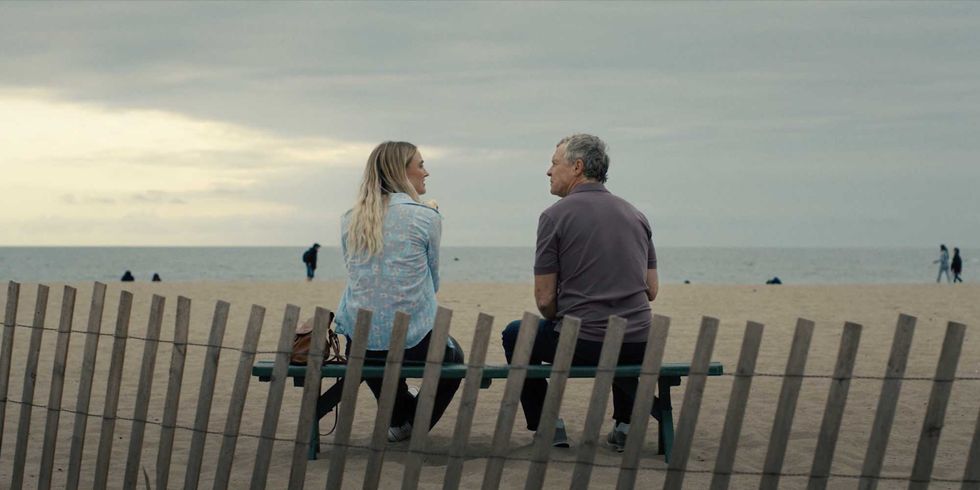 'Rhythm is a Dancer'Credit: Utopia
Eventually, the Movie Isn’t Yours Anymore
The circumstances in the movie are made up, but the feelings underneath them aren’t.
When I wrote Ro, I knew the feeling of looking around and thinking everyone else had somehow figured out their life while I was still trying to figure out mine. I knew what it felt like to have a career that hadn’t gone quite the way I thought it would. To not totally understand my place in the world. To grow up knowing there was this biological part of me out there somewhere that I didn’t know, and to wonder if finding it would somehow make me feel more complete.
And then I found that part of myself. I met my biological father. And I still had questions.
That was the underbelly of Ro for me. I fictionalized the biography, but her central ache was mine. That constant feeling of trying to figure yourself out. Who am I? Where do I belong? Why does it seem like everyone else knows something I don’t?
I could change the facts. I could make Ro do things I never did and give Susan reactions my mother never had. But I couldn't really separate myself from what was underneath all of it because I knew exactly where it came from. And then I put it out into the world.
I think that has been the hardest part of making something this personal. Once the movie belongs to an audience, they get to have their own relationship with it. They get to like it, dislike it, misunderstand it, connect to it, judge it. And I don’t get to explain which parts are fiction or why I made every choice. I don't get to stand next to the screen and tell them what they're supposed to feel.
They just see the movie. I'm still learning not to experience every opinion about it as an opinion about me. Because even though the feelings came from me, the movie isn't me. It isn't even mine anymore. I think maybe that's the final part of adapting your own life: letting it stop being your life.
I stole from mine. I changed it. I made a movie out of it. And now I have to let people see whatever they see in it. That might be the part I’m still learning.