The Anthology Trick for Making Your First Feature Film
How to make your first feature when you're not ready.
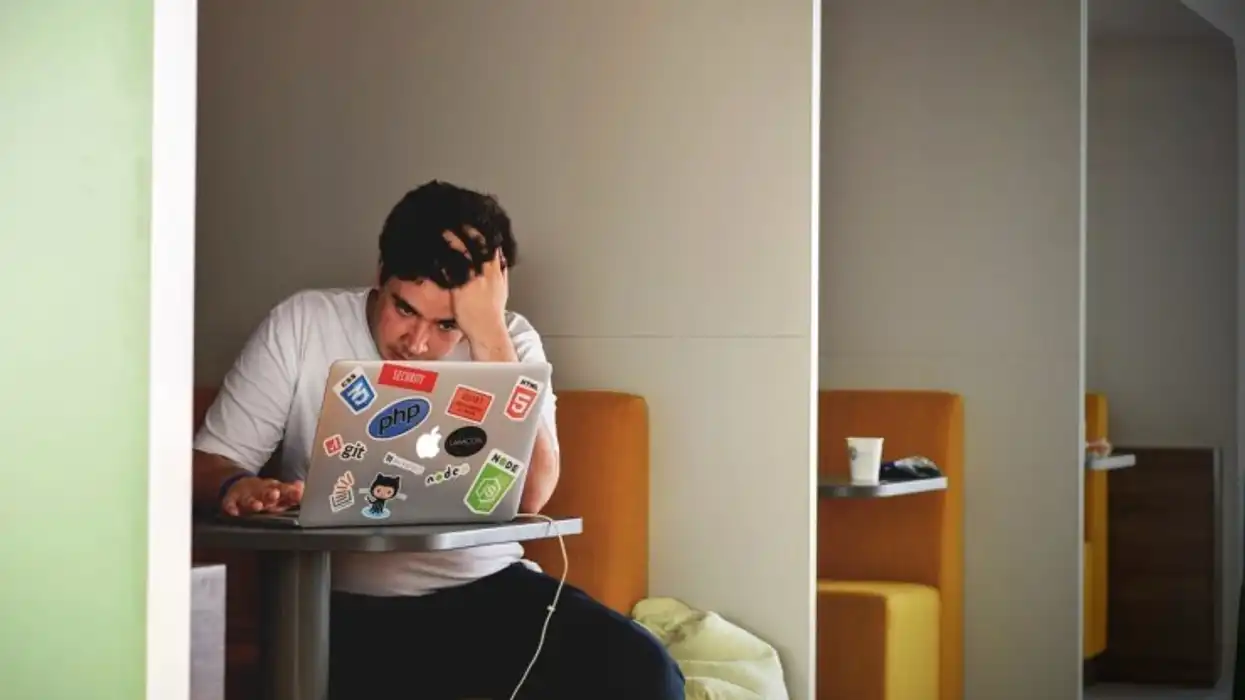
Making stuff is hard. There are obstacles every step of the way. But at so many points of your filmmaking journey, the thing holding you back might just be… you. You have to finish the script. You have to be brave enough to pitch. You need to build momentum. You need to make connections. It’s all about taking a step, so you can take the next step.
At first, Gavin Gaitan didn't have the confidence to make a feature either, so he engineered a way around it. The Los Angeles writer/director has since finished three microbudget features (Life in Long Beach, Hollywood Hopeful, and his latest, Down Town), all while holding a day job in web development.
In a recent Film Courage interview, he discusses the scrappy, slightly unhinged strategies that got him across the finish line. If you're great at making shorts but too scared to attempt a feature, his opening move might be the permission you've been waiting for.
Watch the whole interview below.
- YouTube www.youtube.com
Make It an Anthology
Gaitan's first feature was an anthology. The logic makes sense. He knew he couldn't sustain one big story on the money and experience he had, so instead he shot a short, sometimes two, every day, bringing in a single actor at a time.
"So I just thought very logistically, and realized the best thing that you can actually do is make the anthology film, which I would say is a great first feature idea,” he says. “It's not necessarily … going to be a great film in terms of maybe going to festivals or getting distribution, but it's an amazing starter film."
Good ones stayed in. Bad ones got cut. For him, it doubled as training.
"It was like director's boot camp, because you bring in a different actor every single day, sometimes twice a day. You're working with two different actors for two different shorts. And you meet that person, and then you have to figure out what their acting style is. And then you have to train yourself in that moment how best to work with that person and get them to get the best performance possible. Then they're gone.”
Then came the puzzle of post. Played literally back to back, he admits, two dozen sketches are unwatchable, so in the edit he invented a through-line to stitch the vignettes into something whole.
His pitch is that if you're already stacking up shorts, "you're already making a feature." You just have to find a theme they share and package it. This is a realistic and accessible short-to-feature path.
Make It for What You Have
The numbers stay low. Gaitan made his first feature for around $10,000 and his second for $15,000, and he says he could drop back to ten grand if he had to.
The method is relentless resourcefulness. Call in favors, use friends' houses and friends' cars, get friends to join your crew.
"You really only get like one favor from everybody," he says, so he spends them with care.
We’ve got plenty of other examples of this across the site. For instance, a $3,611 feature that still secured international distribution shows the floor is lower than most people believe. You’ve heard the advice before. Gear doesn’t matter, story does. Work with your limitations. Just do the thing.
More on Directing Actors
As he’s already pointed out, the nature of his cast meant recalibrating for a new person daily. Some came in off-book and precise. Others went stiff the moment they read a line, and for those, Gaitan learned to tell them to stop reading and just be themselves.
His advice is to meet people where they are, and that’s an important skill when directing non-actors. He also knows how to pay it forward to them. He gets footage back to the cast, cut and credited, fast.
"There's so many directors that don't finish their projects, and they never get their footage back to their actors, and that is like, how dare you?" he says. “They're not doing it for the money probably at your level. They're doing it for the footage.”
So it’s your job to deliver it.
Lead with Goodwill
When nobody's getting paid, expectations and behavior should be different. Gaitan figures a director can afford to be picky only when everyone's cashing a check big enough to justify it. On an unpaid set, you have to be the reverse.
"You have to be a much nicer, friendlier, happier guy if you're not paying people," he says, because they showed up for the experience.
So he runs sets with no hierarchy.
"Everybody eats at the same table. We're all friends," he says. “We're all trying to have a good time, even when it's extremely stressful.”
Being everyone's buddy while also producing and problem-solving is draining, he admits, but the return is loyalty, including when a shoot starts falling apart.
The advice is valid, but we’d encourage you to be a benevolent and friendly director no matter what. You are working hard, and the job is stressful, but being nice pays off.
Who Do You Blame?
His second feature, Hollywood Hopeful, turned some of his frustration onto its main character. The protagonist keeps failing, but largely because he keeps sabotaging himself, refusing anything he considers beneath him.
"The industry is not the enemy," Gaitan says. In this story, the character is his own worst obstacle.
As a filmmaker, Gaitan also refuses to blame the system, and it feeds a near-compulsive accountability. He'll lie awake thinking about some guy at the grocery store he once told about a project, convinced the man assumes he gave up.
"If I tell somebody that I'm going to do something, I'm going to do it," he says.
The flip side is advice you'll hear from a lot of directors. Don't announce a project you haven't made yet. Then you don’t have to have that anxiety. Just make your stuff and show up with the finished project.
Set Boundaries and Find Balance
Because film is his side hustle, and his day job has hard start and stop times, Gaitan’s creative life has no real guardrails. For him, the grind is always one more hour before bed… then one more after that. We’ve probably all been there. On his second feature, he did that for two months straight.
"It was really, really unhealthy to spend that much time working on something and not having any other outlets," he says.
Now, he forces himself to step back and take a day off by going to a museum or taking up a hobby like photography that he has zero intention of turning into a career.
"The tiger has to go in a cage for a little bit, or else my life is like a nightmare," he says.
- How We Shot Our First Feature Film in 10 Days for $2,500 ›
- How to Write, Direct, and Survive Your First Feature Film ›
- 7 Things You Wish You Knew Before Directing Your First Feature ›
- How I Made My First Feature For $25k ›
- How I Stole From My Own Life to Make My First Feature in 18 Days | No Film School ›