How to Write a Flashback
And how to make sure they don't derail your script.
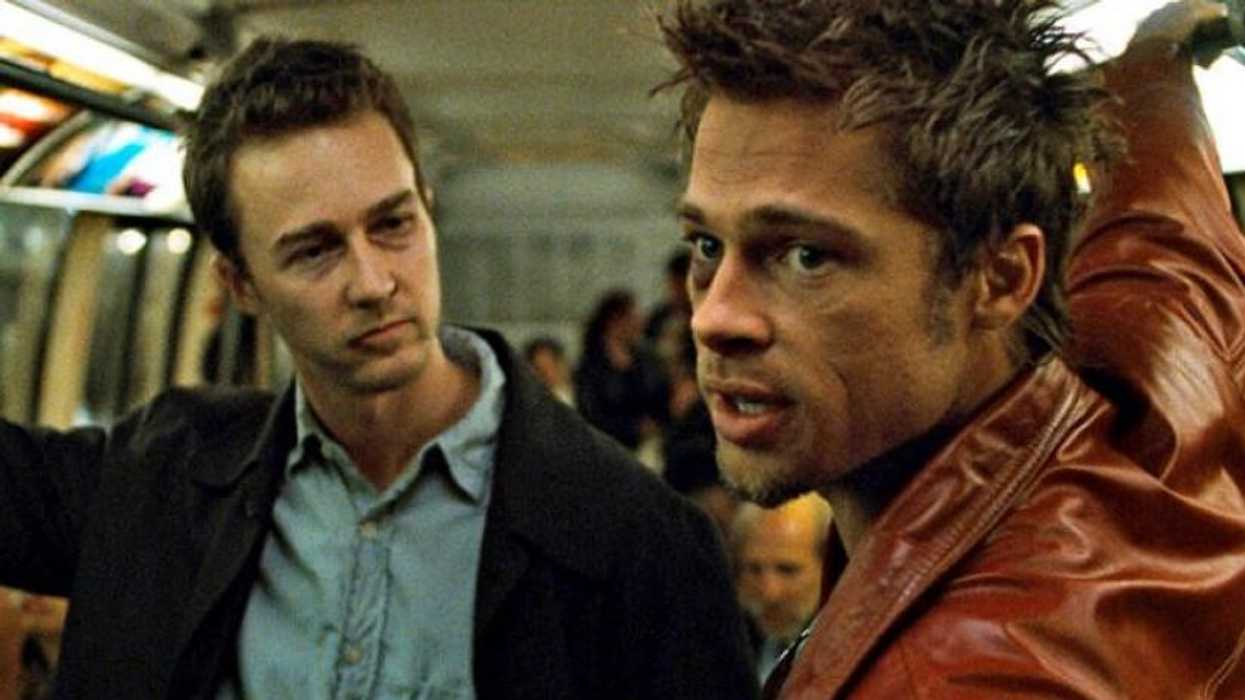
Fight Club
Flashbacks sometimes get a bad rap in screenwriting circles.
You'll hear advice to avoid them completely if you're just getting started. There's some value to that, because novice screenwriters can sometimes use flashbacks as lazy exposition dumps, pausing the narrative to explain backstory that could be handled more elegantly.
But flashbacks can also be artistic or shocking. Do we see the scene from another perspective? Do we get information that changes how we feel about a character? That's probably a great flashback.
Let's learn how to write them. But first...
What Is a Flashback?
A flashback is an interruption of a narrative to go backward to show something from the past.
The best flashbacks shouldn't just fill in what happened before. They should transform the meaning of what we're watching right now..
You might use one to reveal character backstory that directly impacts present action, expose a defining trauma that explains current behavior, or create suspense by showing us something that recontextualizes what we thought we knew.
For instance, flashbacks in Fight Club redefine the entire movie by revealing that the Narrator (Edward Norton) and Tyler Durden (Brad Pitt) are actually the same person.
So, How Do You Write a Flashback?
Okay, now that we're clear on what a flashback is, let's go over how to go about writing one.
Do You Need This Flashback?
This is where you should start. Before you write that flashback, ask yourself, "Is this the best way to convey this information? How am I going to transition in and out of the flashback in a way that makes sense and doesn't disrupt the rhythm?"
In other words, do you really need it?
A good flashback can create suspense, raise stakes, or reveal something.
A bad one slows story momentum.
Could this moment be better conveyed through dialogue or present action instead?
"But Jo," you might say, "I have been instructed to show, not tell."
Well, yes. Generally, that's true. But sometimes flashbacks feel heavy-handed, in that you're showing too much. Consider the benefits of making the audience work a little harder for information.
Instead of showing viewers exactly how a couple broke up, give us some tantalizing conflict. What's going on between these characters? What's their history? Drop hints in their conversation that suggest what caused their rift. This makes it more like a mystery the viewer has to piece together, and when they do, there's a sense of triumph. A flashback would nullify all that.
How to Format a Flashback
There's no one "right" way to format a flashback in a script. You just need to make sure it is absolutely clear to the reader that we're in one, otherwise it will just seem like continuing action.
I have used the following in my scripts:
INT. HOUSE - DAY - FLASHBACK
This is the way I typically see it, although you might also run into this:
EXT. SUBURBS - DAY (FLASHBACK)
Or sometimes I see it formatted like a transition.
FLASHBACK TO:
You might then indicate which scenes are in flashback by uniquely formatting everything that happens in the past, such as using italics. I've seen this in a few screenplays.
In one episode script for Andor, Dan Gilroy simply writes
FLASHBACK
as an action line within an already established scene (as Cassian watches a message from Bix she recorded the night before). This is done as an intercut, so it works.
A slightly more heavy-handed way to start a flashback sequence is to insert the line "BEGIN FLASHBACK" as an action element, then include your slugline. When it's over, you "END FLASHBACK."
Within the scenes, you might give additional description about "when" we are, and you can indicate any changes in characters (like their age and appearance) that are important.
Whatever method you choose, be consistent throughout your screenplay.
Transition Smoothly
A common way to transition into a flashback is to invoke the character's memory—having them see something that resonates, look at a photo, or hear a song that reminds them of another time. In old TV, sometimes you'll hear a music cue and the screen goes all wobbly.
You can use a bit of dialogue to bridge the past and present, too. Maybe a line from the present is something a character has heard before, and it takes them back to that moment.
You can use a match cut creatively. Is a character doing something that mirrors a past action? Use it to cut between the timelines.
You want it to be seamless so it doesn't distract, but you still want to make sure it's clear what's happening, so no one is confused.
Do you have a favorite flashback sequence?