Michael Mann’s Heat remains, after 31 years, his masterpiece. His three-hour-long crime epic consists of some of the most electric, visceral, white-knuckled action setpieces, as well as sharply biting dialogue. Both a critical darling and an audience favorite over the decades, the film has absolutely stood the test of time. Beyond all of the eye candy, the film remains one of the most fascinating character studies of its era. Let’s take a look at a line of dialogue from the film that fully encompasses the vast thematic landscape, and analyze all of the ground it covers.
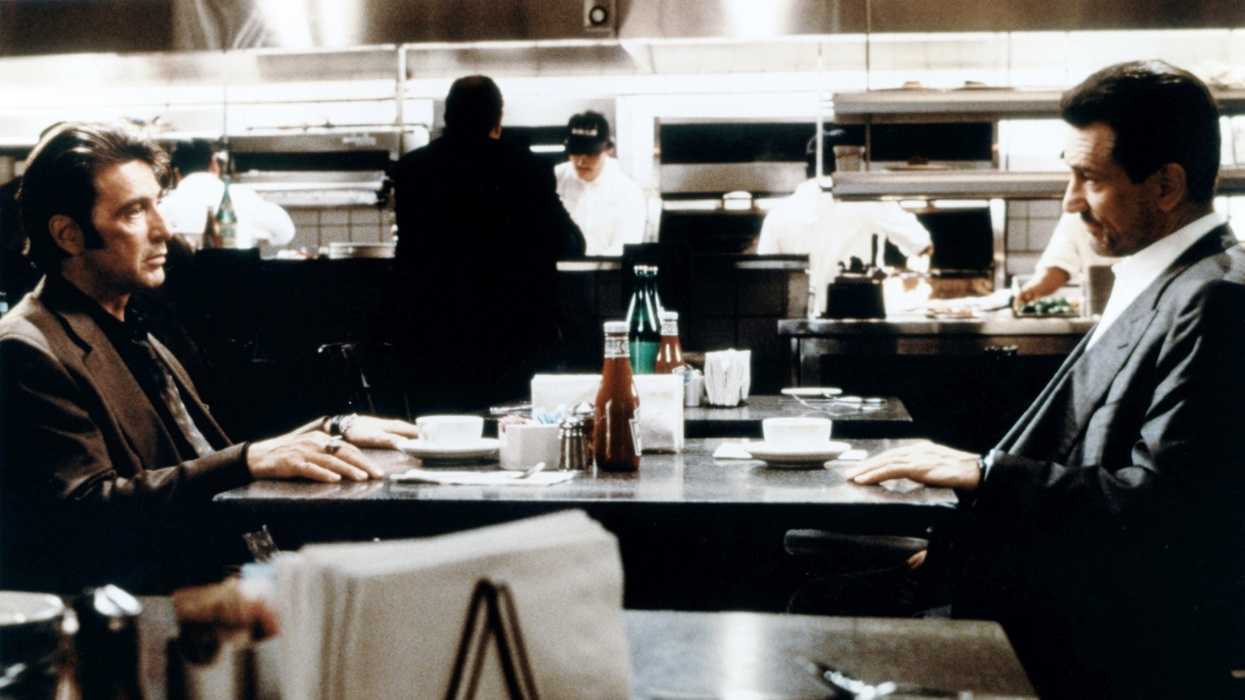
During the famous restaurant scene, Robert DeNiro’s Neil McCauley offers this piece of advice to Al Pacino’s Vincent Hanna: “Don’t let yourself get attached to anything you are not willing to walk out on in 30 seconds flat if you spot the heat coming around the corner.” He delivers this advice after Hanna laments to him that his life is in shambles in every area because he spends all his time chasing guys like McCauley.
Which Character Has Their Priorities More in Line?
There is a clear protagonist and antagonist with those two characters in the film. However, there remains a grey area with regard to the harm each character causes in their personal life. Hanna remains neglectful throughout the film of his relationship with his third wife and step-daughter, which causes severe personal turmoil and rifts between these characters. His step-daughter, played by Natalie Portman, is already suffering from severe anxiety and neglect from her birth father, who is also shown to abandon her at the drop of a hat. This added stress is reflected in her dwindling relationship with Hanna.
Meanwhile, McCauley finds himself living with such an intense personal code that he is loyal to above all else. There is a clear argument to be discussed about whether this code prevents him from negatively impacting any potential people in his life. However, he seemingly suspends this code while forming a relationship with Eady, a local graphic designer who remains blissfully unaware of his double life as a thief.
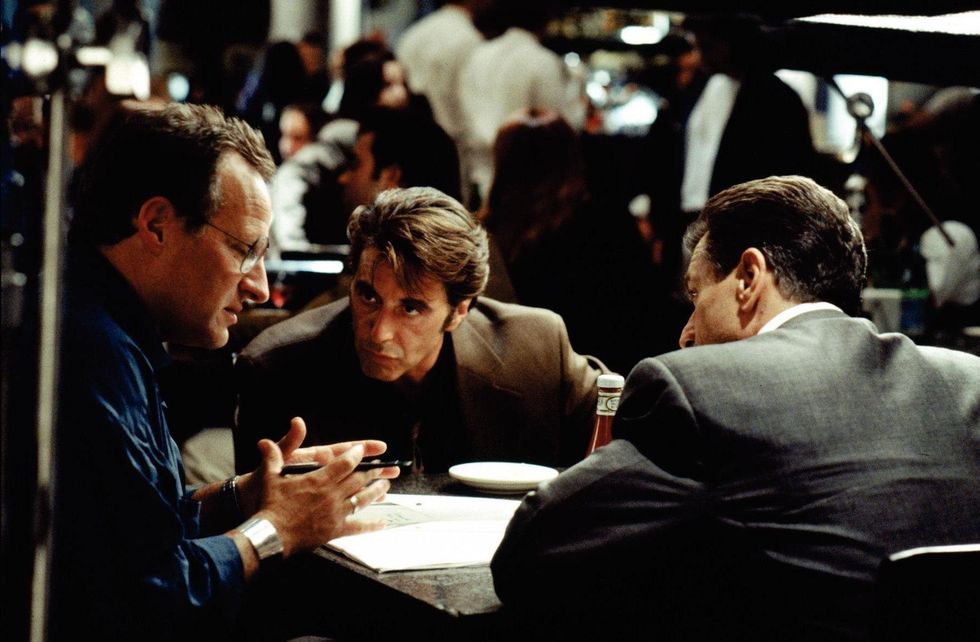 Michael Mann directing Al Pacino and Robert De Niro on ‘Heat’ Credit: Warner Bros.
The Consequences of an Obsessive Life
Neither character seems to be fully fulfilled by the time the film concludes. Obviously, McCauley is killed by Hanna, but he likely would have escaped if he weren’t so dead set on getting his revenge on Waingro. Additionally, the devastation he seemingly left in his wake with regard to the well-being and safety of Eady is likely high. In a way, he proves his moral code correct in that the one time he lets his guard down and betrays it, it literally gets him killed.
Similarly, while Hanna’s external goal of apprehending and killing McCauley is fulfilled, he nearly loses everything in his personal life to achieve it. His step-daughter attempts suicide and nearly succeeds, and he and his third wife come to a mutual agreement to go their separate ways. They acknowledge their relationship will never work while Hanna is committed to his work. Once again, while not condoning McCauley’s moral code, its accuracy in practice is all-but confirmed when it comes to an obsessive lifestyle.
Finding the Balance Between Passion and Obsession
Both characters struggle significantly throughout the film to find a really messed-up version of a work-life balance. But what ultimately gets in the way of their plights beyond their own mistakes is the overall illusion of control in such an anarchic environment. Both characters hold some form of leadership position amongst their ranks; however, throughout the film, they are at the mercy of the mistakes or general insanity of the world and the people around them.
In their minds, if they could truly have the level of control that they believe their status should give them, they should be able to have their cake and eat it too. Capture their adversary, achieve their goals, and have the quiet personal life that they silently crave. Obviously, that’s not the way that the world works, but power and status can delude even the clearest of minds.
We’ve seen countless films about obsession and it inevitably destroying the main character. Particularly in the last twenty years, when it comes to films about the “obsessed artist” trope. Black Swan, Whiplash, Mulholland Dr., and even something like La La Land to a certain extent. And what it almost always comes down to is the central characters having to reckon with the fact that the world just simply doesn’t revolve around them. No matter how much their hubris or narcissism can make them think that they can force it to, they’ll never succeed. They were doomed to fail from the start. That’s where the tragedy inevitably lies in Heat. Even with the moral code at the center of the film, you can’t outrun your forever insignificant place in the world.
- When Pacino Met De Niro: The Scene That Stopped Time ›
- The Story Behind Al Pacino’s Wildest Improvised Moment in ‘Heat’ ›
- Michael Mann's Masterpiece 'Heat' Is Getting a Sequel ›
- Heists Aren’t the Point — This Line Says What 'Heat' Is Really About ›
- How Michael Mann Pulled Off This 'Impossible' Camera Move in 'Heat' ›