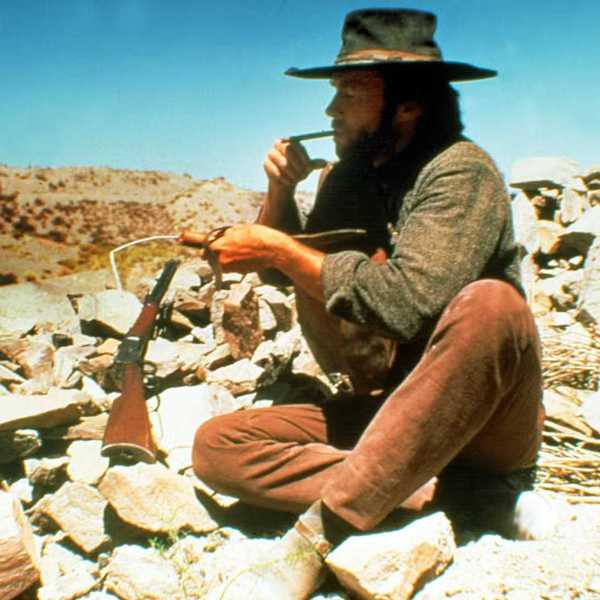
5 Times Leonardo DiCaprio Proved He Was Just as Good at Playing Villains as Heroes
Five villain roles and the lessons they hold for actors and writers.
Leonardo DiCaprio, one of Hollywood's biggest and most recognizable stars, started his acting career as a heartthrob, exploding onto our screens as the handsome and doomed lover to Rose in Titanic. DiCaprio turns 52 today.
For a lot of audiences, he's still Jack Dawson. Through the years, he's never shied away from complicated roles or chances to play the bad guy. The most interesting turn in his career has been his work as creeps, crooks, and killers.
"When I can't immediately define the character, and there's an element of mystery to it and still a lot to be explored, that's when I say yes," he told The New York Times. "I like those kinds of complicated characters. I just do."
Below are five DiCaprio villains, and what each one shows actors and writers about building a bad guy who works.
- YouTube www.youtube.com
King Louis XIV, The Man in the Iron Mask
This was his first big swing after Titanic. He played two roles here, twins—the tyrant on the throne and the brother he keeps hidden behind iron. (Fourteen years later, DiCaprio reached for Louis XIV again when he described Calvin Candie.)
Playing a villain and a hero in the same film makes you define each one by contrast. For actors, it's a built-in exercise and a fun challenge.
He told Australian TV in the '90s, "This is possibly the most fun character I've ever played in my life. So, I've had a couple fun characters to play, but this is like the most flamboyant, and [I] get to be very cocky, which is fun."
Louis XIV of France, also known as the "Sun King," believed in the divine right of kings and absolute power of the monarchy, famously declaring, "L'état, c'est moi" (or "I am the state"). Pretty tyrannical guy.
- YouTube www.youtube.com
J. Edgar Hoover, J. Edgar
DiCaprio took on a tyrant of another kind when he became the FBI's Hoover for J. Edgar.
Hoover spied on fellow Americans and gathered ruinous dossiers on those he wanted to manipulate or silence. Still, Hoover is a contested figure. Historian Beverly Gage told NPR that Hoover began as a reformer, a fact his villainous reputation has buried. That gray area is exactly what DiCaprio wanted to play.
"I wanted him to tell me how he walked, how he talked, what his hands looked like, what his desk looked like, what was above his desk," DiCaprio told The New York Times.
DiCaprio recorded hours of conversation with one of Hoover's last surviving colleagues. And because aging him up took as long as five hours in makeup, he played the older Hoover for only about two of the shoot's 39 days.
- YouTube www.youtube.com
Calvin Candie, Django Unchained
Calvin Candie is easily one of DiCaprio's most contemptible characters. DiCaprio himself has said he hated this man.
He told Eye for Film:
“My character, as Quentin put it, represented everything that was wrong with the South. He was like the young Louis XIV, sort of a prince who wanted to hold on to his position and privilege at all cost. He was integrated his whole life among Black people, he was brought up by a Black man. He had to find the moral justification to treat people this way. He had a plantation to run. There was absolutely nothing about this man that I can identify with. I hated him and it was one of the most narcissistic, self-indulgent, racist horrible characters I’ve ever read in my entire life.”
At the table read, DiCaprio asked whether the film needed to go this far. Jamie Foxx later told Vanity Fair that Samuel L. Jackson pushed DiCaprio past his hesitation.
DiCaprio told Eye for Film:
“And Sam and Jamie said, 'Hey, look man, if you sugar-coat this, people are going to resent the hell out of you. You’ve got to push this guy to the utter extreme.' This is not only historically accurate but it went even farther than that, with worse atrocities. By holding the character back, you’re doing an injustice, and people are going to feel you are not telling the truth. That was the thing that ignited me into going where I did with the character.”
- YouTube www.youtube.com
Jordan Belfort, The Wolf of Wall Street
For Scorsese's tale of Wall Street debauchery, DiCaprio played the antihero the audience could enjoy.
DiCaprio told NPR, "I really came into this film with the attitude of doing a Roman emperor right before the fall of the empire. I mean, I looked at these people as people that had no real sensibility for anything around them except their own indulgences."
He also worked closely with the real Jordan Belfort. He said Belfort even rolled around on the floor to show him what the Quaaludes felt like.
"It's incredibly freeing, performance-wise, to have no moral high ground and nobody really in the film that I had to answer to," he added.
A villain doesn't have to apologize to the audience. Sometimes the job is to make the seduction understandable.
- YouTube www.youtube.com
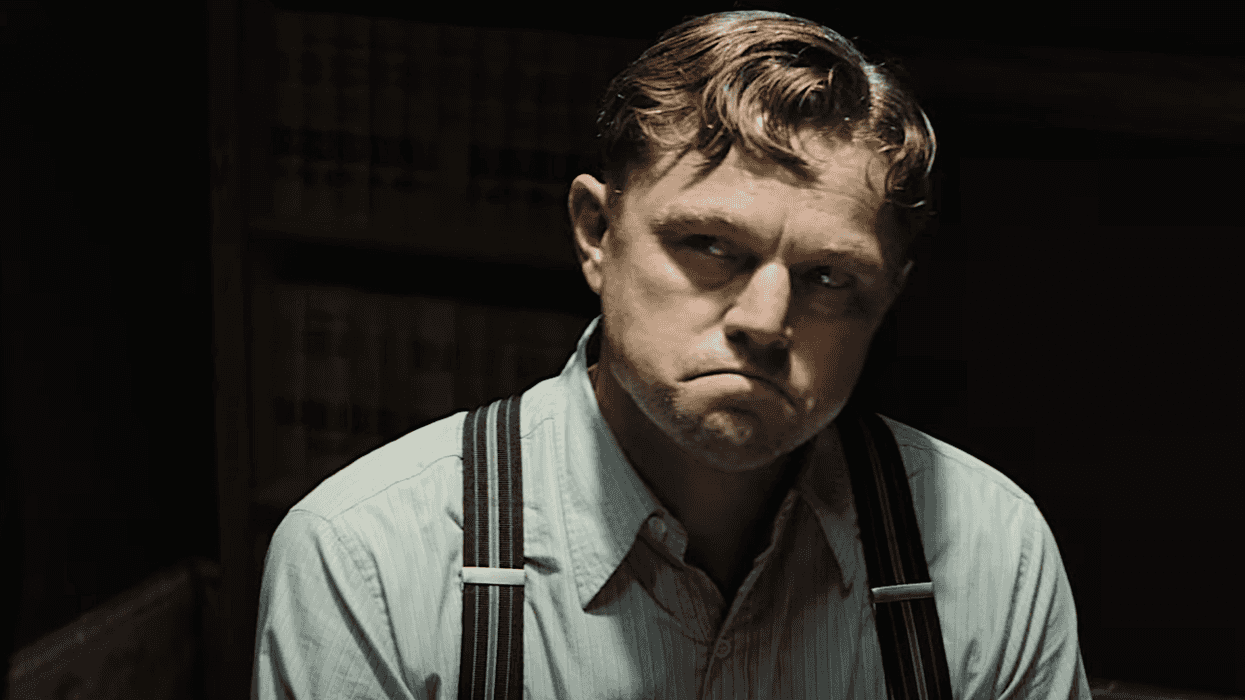
Ernest Burkhart, Killers of the Flower Moon
Most recently, DiCaprio gave life to bumbling Ernest Burkhart, whose cognitive dissonance allowed him to love an Indigenous woman while helping murder her community members. This time, he gave up the hero role on purpose. He was originally set to play FBI agent Tom White, and asked to switch to Ernest during the rewrite process.
DiCaprio told British Vogue:
“It just didn’t feel like it got to the heart of it. We weren’t immersed in the Osage story. There was this tiny, small scene between Mollie and Ernest that provoked such emotion in us at the reading, and we just started to penetrate into what that relationship was, because it was so twisted and bizarre and unlike anything I’ve ever experienced before.”
Scorsese told Time Magazine that, at a certain point, he realized he was making a movie about all the white guys, which the rewrite helped remedy (via Variety). But sometimes the villain's point of view is where the story's truth lies.