I'm currently working on a feature that I also wrote, and between takes, one of my actors specifically called out my first page as something that got him excited about his role. He's not even in the scene, but he understood what kind of movie we were making from the humor I added to some of the description.
I know I've talked about how important that first-page hook is, but I'd never had one of my actors directly compliment something I really do try so hard to do on every script. And that is to get the reader excited as fast as possible while also making the project's tone clear and establishing the world.
So obviously it's important to nail that first page.
Jacob Michael runs Big Red Stripe, a popular screenwriting and storytelling platform where he works as a script consultant and mentor. He says he has read hundreds of scripts over the past decade, from students to professional writers. In a new video, he lists the first-scene mistakes he sees most often, then the five things a first scene needs to work.
We've covered openings that kill a screenplay before, but this time we're focusing on the fixes. Check out the video below.
- YouTube www.youtube.com
Every Bad First Scene Has the Same Problem
Michael runs through five common film beginnings that feel cliche and often do little to set up the world. This doesn't mean you can't use them—just be aware of how common they can be and where you can subvert expectations.
These are beginnings you might want to avoid:
- The wake-up scene. Your character wakes up and starts a normal day. If there's nothing interesting or important about how they wake up, you might want to avoid this.
- The daily-routine montage. We get it—you're trying to establish a baseline for your character before the inciting incident. But if this feels too pedestrian, why would the viewer keep watching?
- The opening flashback. This just often feels like a bait-and-switch, and it's disruptive to your pacing.
- The flash-forward that cuts to "five days earlier." Of these, I feel this is the least egregious, because at least you're establishing where your character is going, and you still have room to surprise the audience.
- Two characters sitting and talking. This had better be the most interesting conversation of all time, otherwise it'll be pretty bland.
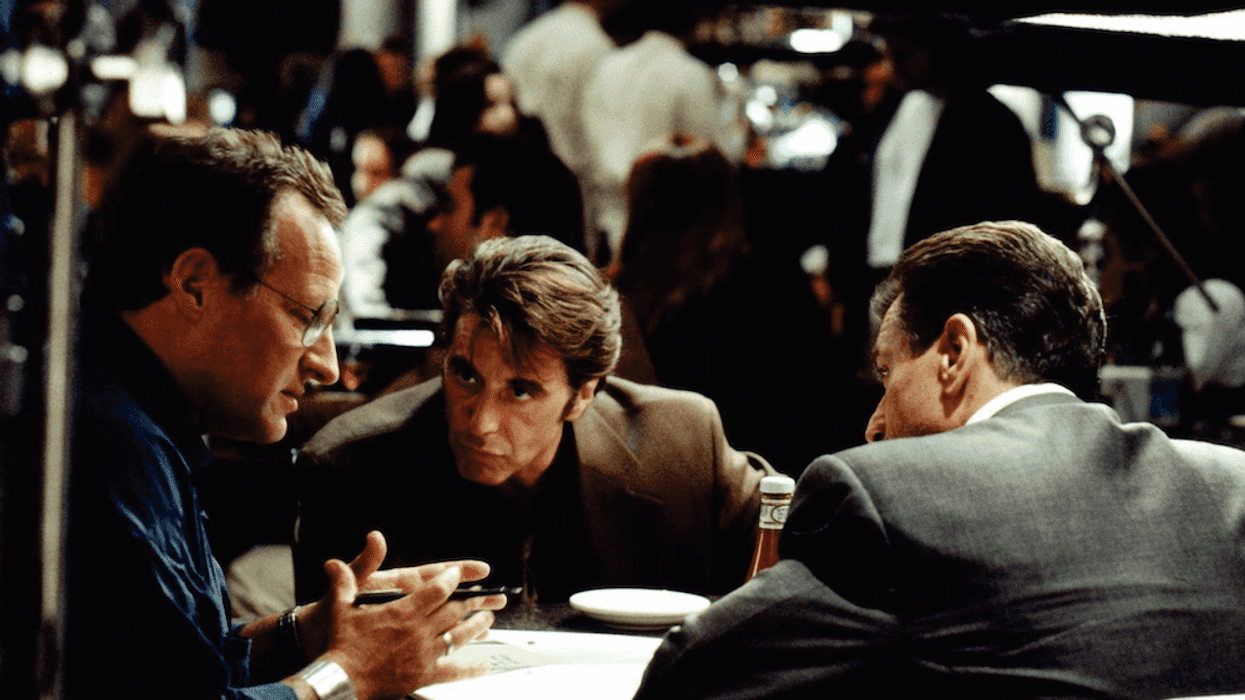
This also doesn't mean you can't have sitting-and-talking scenes later. Michael points to Sicario and Heat. Both have great scenes of characters sitting and talking, but both come later in the film, after the tension has built. Both films also open with action (a cartel raid and an ambulance theft).
The common thread of all these openings is that they're setting up the story without telling story.
"Every single one of them, they are trying to set up the actual story so it'll mean more or feel deeper to the reader or the audience," Michael says. "But ironically, because setup has no conflict, which is a result of characters not having a goal, the reader or the audience doesn't feel anything deeper. They actually feel nothing."
However! These openings can obviously work. The scenes need some key ingredients, which we'll go through below. For example, Project Hail Mary opens on someone waking up, and it works because conflict and stakes are there from the first moment.
Start Inside the Conflict, and Give Every Character a Goal
Your writing will instantly feel alive when characters are at odds and characters are in motion. This doesn't have to be literal motion—it can mean they're working toward something.
Ingredient one is in medias res. The character should already be dealing with something difficult when we meet them. The video's example is the opening of The Social Network, which is technically a sitting-and-talking scene but works anyway.
"Mark is trying to impress someone who is rapidly losing patience with him. There's a goal. There's friction. There's something to watch. That's conflict."
Ingredient two is a goal for this specific scene.
"Every scene needs characters who want something right now in this moment in this scene. They showed up to that scene, to that moment, to get something. And they get it, or they don't by the end of the scene."
The goals can be small. In Erin Brockovich, they're often just getting someone to talk or getting access to a file.
 'The Social Network' Credit: Sony Pictures
Show Their Defining Behavior Under Pressure
If you have no pressure, you don't have conflict. That's one reason the "wake-up" scene can be boring. Unless the character is late or stressed, they're just going through the motions. How do they act when things are going wrong?
Ingredient three is revelation. We learn who a character is from how they handle something hard, not from their description or backstory. It ties the first scene to the character's arc. Page one shows the trait the rest of the script will test.
End Page One on a Question
Ingredient four is the hook. Imagine a tired reader at the bottom of page one deciding whether to keep going. Give them a reason.
It doesn't have to be big. Will they get the job? Can they get out before someone walks in? It just has to make stopping feel wrong. Make the reader keep going.
Ask Whether an Actor Would Want to Play It
Actors want meat. They want the motivation to be clear; they want transformation; they want nuance. Are you giving them all of this? Michael calls ingredient five the one most writers never consider.
"And this is important not because actors are your audience. They're not. But because what actors want to play and what readers want to read are almost exactly the same thing."
Is the role funny? Complex? Powerful? Does it give them somewhere to go? Chances are an actor will enjoy that role, then.
So just remember. Conflict, a goal, how the character handles difficulty, a question at the bottom of page one, and something an actor would want to play. You're off!