Orson Welles' Warning to Filmmakers: Don't Watch Too Many Movies
Sometimes, too much of a good thing can turn out bad (for your originality).
I remember in college learning to write my first screenplay. It was such an exhilarating time for me. Our teacher told us the script could only be five pages long, and it basically counted as our final exam.
My script was a comedy about two best friends, and one was trying to convince the other one to accompany him to his colonoscopy, because he was scared.
It was called "The Ass End of Friendship."
I remember eagerly awaiting feedback from my professor, who, despite giving me a good score, told me to find my own voice on the page and stop channeling Kevin Smith.
This was the most important lesson I ever learned about writing. People cared about me and what I had to say.
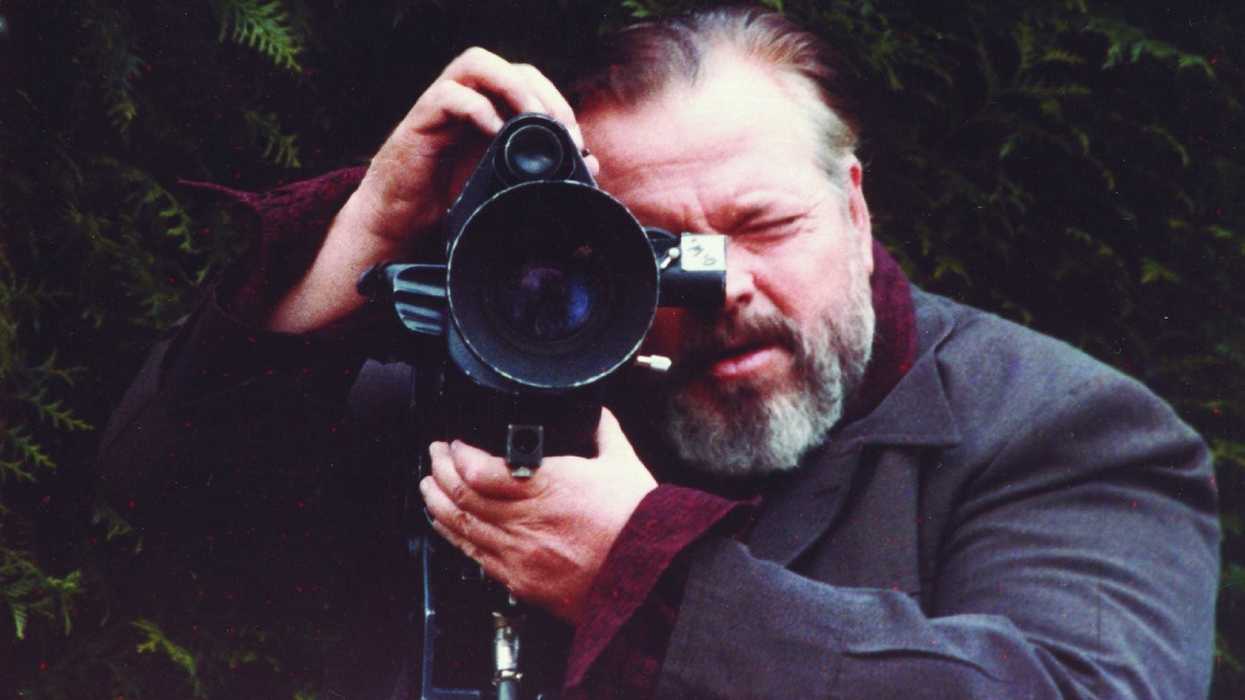
Fast-forwarded to today, I was watching this cool clip of Orson Welles, and it reminded me of that conversation and of finding your voice.
Let's dive in.
Orson Welles on Watching Too Many Films
Welles begins this clip with a strong declaration: "I just don't want to see another homage in anyone's movie," he states.
For Welles, it seems, true artistry lies not in imitation, however flattering, but in originality and in the artist's point of view.
Welles doesn't want to see or hear your take on someone else's idea; he wants to hear your ideas.
And he extends this philosophy to the very act of watching films. You have to go see the great works, but Welles warns against becoming a cinematic sponge.
"Don't marinate yourself in films," he advises, "Don't soak in them".
His fear is that this over-saturation can stifle a filmmaker's unique voice, leading to a derivative style rather than a truly personal one that makes movies special.
Of course....there's always a counterargument to all of this, and Welles actually makes it himself. He recognizes that many successful young directors are avid film-watchers, "remarkable cineastes" who have nonetheless forged their own paths.
This self-awareness brings a layer of complexity to his advice. He's not presenting a rigid rule for you, but rather a personal conviction.
Welles wants you to find your original voice amid all the noise. And he adds a touch of humor when he concedes that he is a speaker who is "not only paradoxical but also confused".
Summing It All Up
In order to survive in Hollywood, you can't just do impressions; you need to find your own voice and get it out there for everyone to appreciate.
So watch a ton of movies, but see how they make you feel and then try to get that on the screen, not something else.
Let me know what you think in the comments.
- Where Does Homage End and Originality Begin Inside 'Kill Bill'? ›
- What the Final 'Joker' Trailer Can Teach You About Originality and Homage ›
- How to Homage Like Wes Anderson ›
- You Gotta See Martin Scorsese Doing an Alfred Hitchcock Homage in a Wine Commercial ›
- 11 Orson Welles Great Films, Ranked for Cinephiles | No Film School ›
- How Orson Welles Turned a "Routine" Script into a Masterpiece ›