How Orson Welles Turned a "Routine" Script into a Masterpiece
We pull some lessons from Touch of Evil and the director himself.
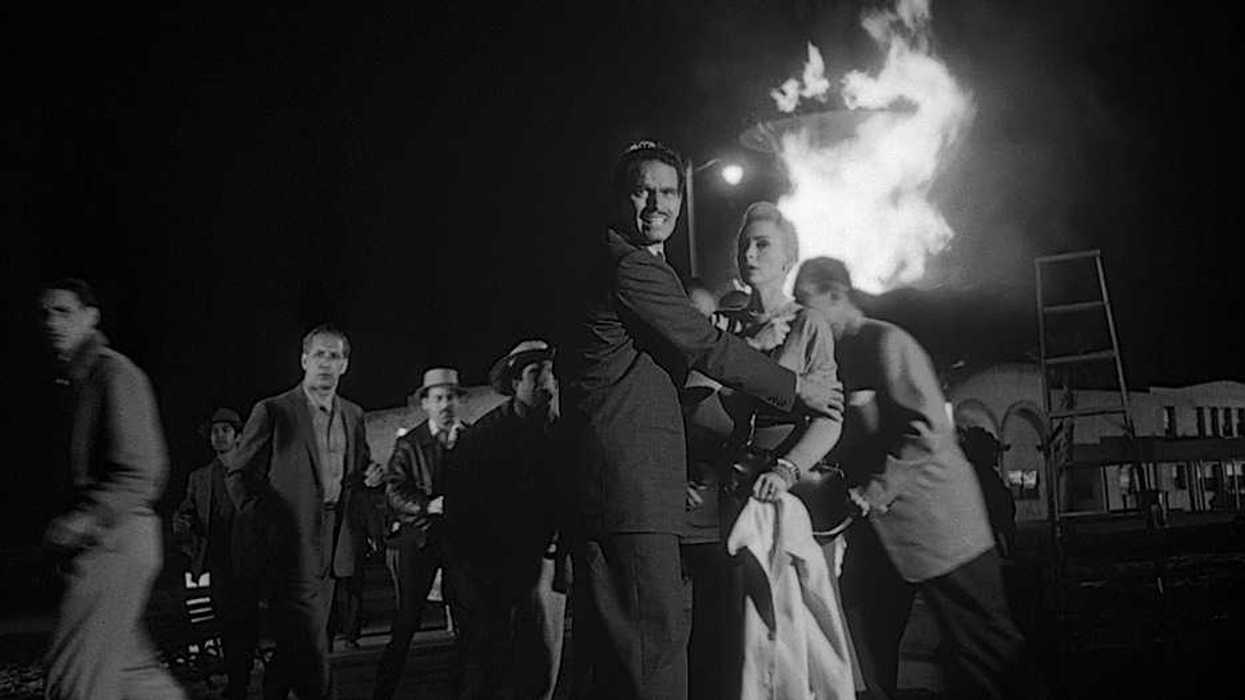
'Touch of Evil'
I could listen to Orson Welles talk all day. And when I find some clips of him sharing insight, you know I'm going to bring it to you.
So when I found Orson Welles and Charlton Heston telling the story of how he turned a "fairly routine police story" into Touch of Evil, I thought you all might be interested.
In this archival footage, Welles and Heston pull back the curtain on the making of that movie, and offer timeless advice on everything from blocking long takes to the philosophy of "monstrous" characters.
Let's dive in.
Orson Welles on 'Touch of Evil'
Part of why I love these clips so much is that they're so rare. Peeking into the process of an auteur of old is not something that happens every day. So I wanted to accumulate some lessons you can take away from it, too.
1. The Power of "Unreal but True"
Welles defines his overarching cinematic philosophy as theatricality that is unreal but true. That is a fancy way of saying these are fake stories, but they have true emotions inside them to help you connect with them.
He cites James Cagney as the gold standard for this kind of performance on screen. Cagney was an actor who behaved in ways no human ever would, yet every second of it was "cinematically true."
We understood why his characters did those things, and sometimes we even rooted for them.
The takeaway for you: Don’t be afraid of giving your movie your own voice. You're the one in charge of the story. Realism isn't always the goal; truth is. If your world is heightened or "grotesque," it can still resonate if the underlying human emotions are honest. And speak to people.
2. Planning the Impossible Long Take
If you haven't seen Touch of Evil, fix that. The opening is pretty astounding. It's a legendary three-minute, 20-second continuous crane shot following a car that's affixed with a bomb we know is set to go off.
Welles revealed that the biggest challenge wasn't the camera movement, but the "small part" actors, meaning the extras.
He says one actor playing a customs inspector kept blowing his lines as the massive camera entourage bore down on him. That caused a lot of takes, and Welles lost his cool.
Welles told the actor, "I don't care if you forget the line... just move your lips... just don't say 'Oh gee, Mr. Welles, I’m sorry'."
The takeaway for you: When executing complex technical shots, prioritize the momentum. You can often fix a line in ADR, but you can’t fix a broken 10-man choreographed sequence. It doesn't have to be perfect; you just have to know how to get it there.
3. Humanizing the Monster
This movie is so fun because you get Welles acting and directing, justl ike he did in Citizen Kane.
In the clip, Welles discusses the "moral ambiguity" of his character, Captain Quinlan.
He even references Jean Renoir’s famous quote: "Everyone has his reasons." Even though Quinlan’s methods are "everything we hate" in a democratic world, Welles argues that the story gains its tension from the fact that the monster is sometimes right.
The takeaway for you: The more human you make your antagonist, the more interesting the story becomes. Don’t write villains because "Mama didn't love them"; write them with a logic that makes sense to them.
4. The "Unreliable" Director Myth
We can't go this whole time and not mention Charlton Heston, whose portion of the clip was poignant and informative.
Heston takes a moment to debunk the myth that Welles was an "unreliable" spender on set and frivolous with his direction.
He points out that Welles hadn't spent as much money in his entire career as some modern directors waste on a single film. Touch of Evil was shot on an incredibly short schedule and came in under a million dollars.
The takeaway for you: Efficiency is a director's best friend. When you bring things on time and on budget, you'll work again. Welles was a magician because he knew how to use every cent to create "patches of brilliance." The more you can do with what they give you, the more they'll trust you.
5. The Studio Battle: Success as "Rage"
Despite the brilliance of the rushes, Universal Studios was "horrified" by the rough cut of Touch of Evil.
They barred Welles from post-production, cut the film, and released it as a "B-picture" with no press screening. It only became a hit after winning the top prize at the World's Fair in Brussels, against the studio's will.
This is a movie I found later that people don't talk about asd much, but it is like this riveting crime movie that was almost forgotten.
The Harsh Reality: Sometimes, the "last thing the studio wants is a success" if it means they were wrong about a director's vision. There's no real lesson here, just an annoying story about old Hollywood and how stubborn it could be for artists.
Summing It All Up
As I said up top, these clips are rare and contain so many lessons and so much information about making a movie and the process.
What were your favorite parts of Welles and Heston in that video?
Let me know what you think in the comments.
- Watch: A Few Reasons Why Orson Welles is the Greatest Director Who Ever Lived ›
- 7 Reasons Why Orson Welles Was Such a Boss at Cinematic Composition ›
- 11 Orson Welles Great Films, Ranked for Cinephiles ›
- Orson Welles' Warning to Filmmakers: Don't Watch Too Many Movies ›
- 10 Best Los Angeles Movies ›
- Watch: How Orson Welles Hid a 12-Minute Single Take in Plain Sight ›
- Touch of Evil Opening Scene ›