Oz Perkins Says He Refuses to Watch Ryan Murphy's 'Gein'
The true crime series has drawn criticism.
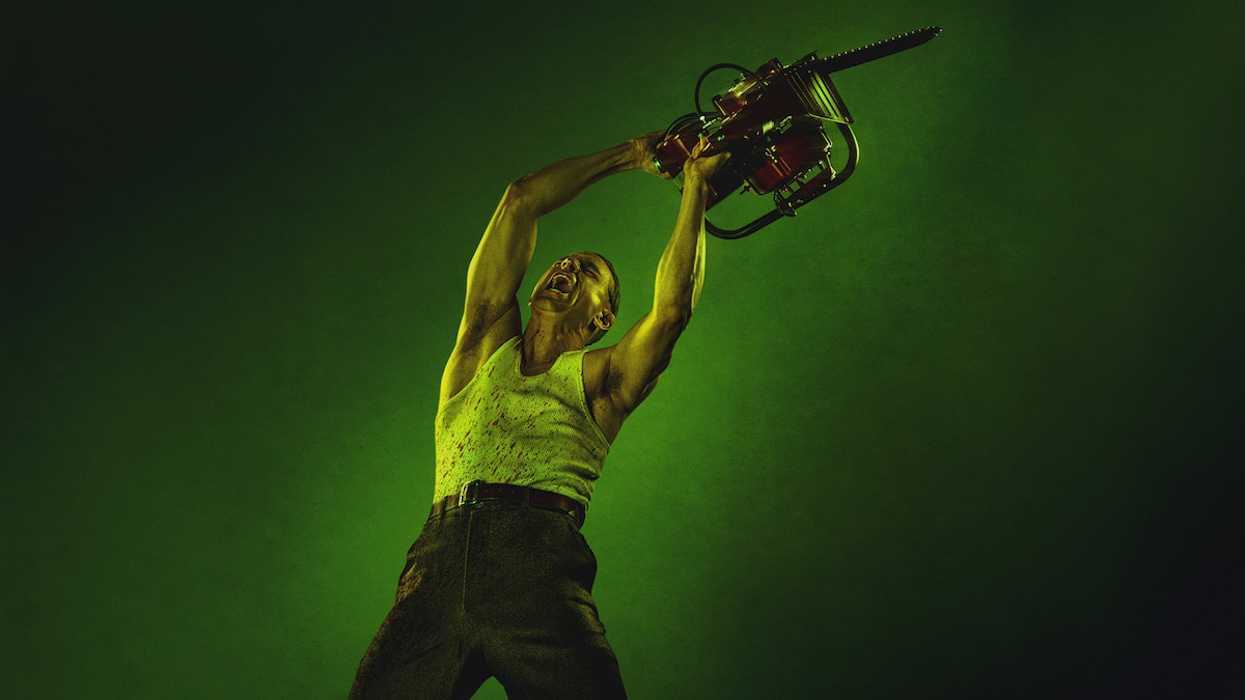
'Monster: The Ed Gein Story'
When a respected horror filmmaker tells you he wouldn't touch your true crime series "with a 10-foot pole," you should probably pay attention.
Monster: The Ed Gein Story is the new true crime series from showrunner Ryan Murphy, the third entry in his "Monster" anthology series for Netflix. It follows the titular serial killer, the real-life murderer and grave robber whose crimes inspired horror films like Psycho, The Texas Chain Saw Massacre, and The Silence of the Lambs.
Charlie Hunnam stars as Gein.
Enter Oz Perkins, the writer/director behind horror films like Longlegs, The Blackcoat's Daughter, and The Monkey.
He also happens to be the real-life son of Anthony Perkins, who famously starred in Alfred Hitchcock's Psycho as Norman Bates.
Apparently, parts of Murphy's new show explore Gein's cultural impact and the creative works he inspired. The second episode of the Gein series, "Sick as Your Secrets," features a portrayal of Perkins from his Psycho era.
In one scene, the dramatized Hitchcock likens Anthony Perkins (who was likely queer and closeted) to Gein, saying they have similar secrets, which is why Hitchcock cast him.
"This secret is making you sick," the character says. "I had to cast you, Anthony. You're like him."
The scene has drawn strong criticism.
TMZ reached out to Oz Perkins to see what he thought of the show, but he declined to comment on specifics, saying he "wouldn't watch it with a 10-foot pole."
- YouTube youtu.be
The Ethical Dilemma of True Crime
Perkins told TMZ that streaming platforms rely on true crime and attempt to make it into "glamorous and meaningful content."
According to TMZ, Perkins said he worries about contemporary culture being "reshaped in real time by overlords" and added that entertainment is "increasingly devoid of context, and that the Netflix-ization of real pain [i.e., the authentic human experiences wrought by 'actual events'] is playing for the wrong team."
The true crime genre overall often gets called out for sensationalizing reality, glorifying the perpetrators of crimes, and failing to handle difficult content with appropriate sensitivity. Murphy's work has been similarly flagged, in this case.
The show's treatment of Anthony Perkins raises questions about telling true stories. The elder Perkins never publicly came out, though his relationships with men (including actor Tab Hunter) were known in Hollywood circles. He underwent conversion therapy and eventually married Berry Berenson, with whom he had two sons.
Oz Perkins has been open about his father's complex sexuality.
"The surprise about it was that it was no surprise. Right? The surprise was that we hadn't been talked to about it," he told The Irish Times in 2024. "I don't know who would have that talk. Maybe, even today, I'm not sure how that conversation goes for people whose public lives don't allow it. I don't know how that conversation happens with children. I certainly don't blame anybody. But I do think that a gauze was put over everything—a membrane. Everybody seemed to know it. Certainly all of their friends. It wasn't like [top agent] Sue Mengers and [top director] Mike Nichols were like: 'Oh, really? You're kidding?'"
Murphy's series dramatizes these struggles, and a character draws parallels between a closeted man and a serial killer. Even if the intention is to examine how Hollywood exploited Perkins' pain, you shouldn't critique exploitation by exploiting.
Monster: The Ed Gein Story has received largely negative reviews. The Guardian called it "lurid exploitation dressed up as a serious drama."
How to Approach True Crime
If you're planning to work in true crime, consider who benefits from your story.
Perkins argued that streamers profit from "real pain" under the guise of meaningful content. Before you tackle a project, ask yourself, "Who does this serve?" If the answer is the bottom line, you might be on shaky ground.
Think about context and consent.
When you dramatize real people—especially those who can't consent because they're deceased—you're making choices about how they're remembered. If they were watching your work, would you be proud and comfortable with what you're putting out?
If you're reaching out to victims' families for a nonfiction project, remember that you're probably not the first or only producer or director to come along. These are real people who have their trauma dredged up, often every year on the anniversary of some terrible event. If they don't want to speak with you, be respectful.
Finally, Oz Perkins said we should be "peering behind the veil into the unknowable and loving each other through expansive, new art." Just because you can tell a story doesn't mean you always should.