As baseball is to America, Lou Gehrig is to baseball. The man didn’t just play the game; he carved his name into its soul. But it’s not just his game stats that make him one of the greatest American idols, but how he faced the final curveball life threw at him.
Sam Wood’s The Pride of the Yankees is not just a sports film encapsulating the journey of a quiet kid born to immigrant parents from New York’s gritty streets to a legacy that hits harder than any fastball. It is a story about heart, resilience, and an infectious perseverance even in the face of the worst.
To this day, Gehrig’s farewell speech at Yankee Stadium (both in the film and reality) continues to resonate as a shorthand for courage, gratitude, and humility.
In this article, we’re examining how Gehrig turned defeat into victory when he said, “Today, I consider myself the luckiest man on the face of the Earth.”
The Story and Theme
The Pride of the Yankees closely follows the life of Lou Gehrig (Gary Cooper), the legendary “Iron Horse,” who became a national hero for his iconic form in baseball, capturing his journey from rags to becoming an enduring legacy and then untimely death after he was diagnosed with a terminal neurological illness.
The movie centers on heroism, humility, and perseverance, embodying the American dream through Gehrig’s rise from a modest background to national prominence, achieved out of sheer hard work, determination, and, of course, talent. The Pride of Yankees reminds us to turn to hope and humility while facing life’s cruel twists and turns. Things might turn out differently, but not all wins look the same.
Knowing Lou Gehrig
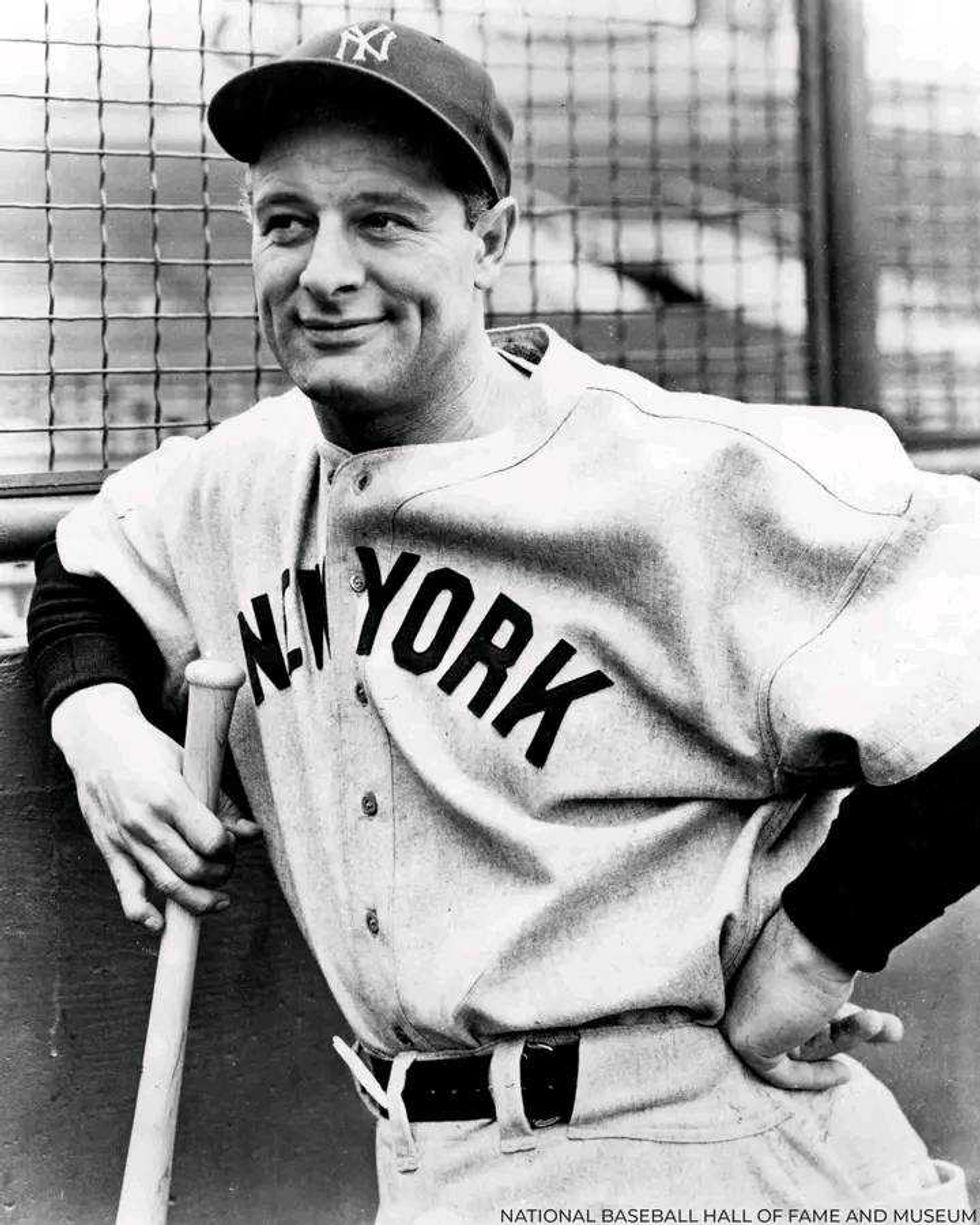 Source: National Baseball Hall Of Fame Museum
It’s not every day that a baseball player like Lou Gehrig comes along. He has a lot of ‘baseball firsts” to his name. Born on June 19, 1903, in New York, Gehrig played his first major league match at a young age of 19, when Wally Pipp dropped out of the lineup due to illness, after spending two years in the role of backup first baseman with the New York Yankees. In his 16-year-long baseball career, Gehrig played 17 seasons and was one of the most prolific first basemen the world has ever seen, taking the New York Yankees to unimaginable heights. A seven-time All-Star, he was the first baseman in the first All-Star Game ever played. Gehrig won the American League MVP twice (1927 and 1936) and the Triple Crown in 1934. With a career batting average of .340, with 493 home runs and 1995 RBIs, he was the first player to hit twenty-plus grand slams across his career. Also, the first ever athlete to appear on a box of Wheaties.
He created a record for most consecutive games played in 1925, earning his nickname “Iron Horse,” — a record that wasn't broken until 56 years later, and today he continues to remain a close second after Cal Ripken, Jr., who broke the record in 1982.
Lou’s performance began to decline during the 1938 campaign, although his stats were still hitting respectable numbers. By the 1938 New York Work Series, his deteriorating form was evident. But Yankee manager Joe McCarthy believed in Lou and kept him in the starting lineup. Finally, upon Gehrig’s own request, he was taken out of the team.
Subsequently, he was diagnosed with ALS and died within the next two years, succumbing to his terminal illness, which now bears his name.
The Scene
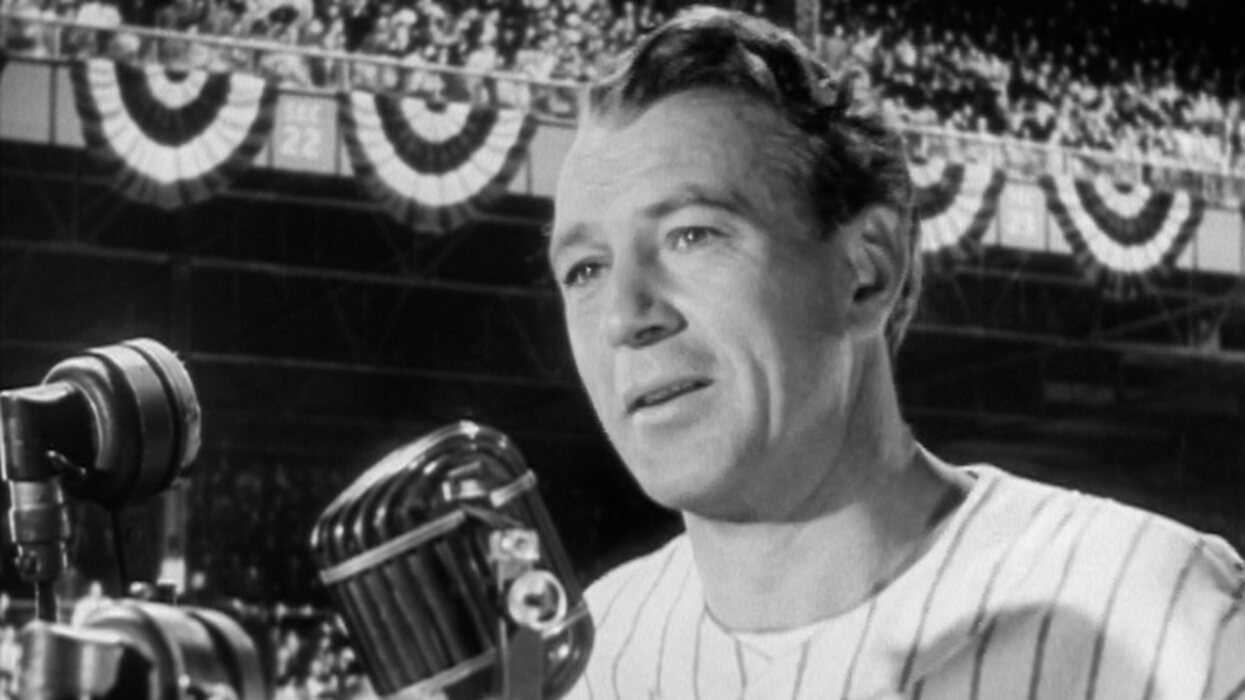
The scene opens with Gehrig walking out into the field to the podium as the audience breaks into cheering and applause. His wife, Eleanor (Teresa Wright), is waiting for him outside the field. Gehrig stands on the podium, facing the mic as the audience cheers him on. He is overwhelmed to see the people’s reaction. As the crowd subsides, Gehrig begins speaking.
In his farewell speech, he talks about his experience as a baseball player and how he’s always been bestowed with kindness by everyone. One by one, he mentions everybody who has touched his life in one way or another, making him the national icon that he is today.
He explains how privileged he has been all his life, despite his struggles. In the end, he says, “Today, I consider myself the luckiest man on the face of the Earth.” Gehrig’s voice is choked by the end of his speech. He is overwhelmed by emotions as he quickly steps off the podium, almost tearing up. The crowd breaks into the loudest applause as the “luckiest man” walks out of the field. The camera focused on the number four on the back of his jersey, glowing in pride, as his steps vanish into the darkness, while the cheering echoes on.
How The Quote Immortalizes Lou Gehrig
The movie and Lou Gehrig’s life emphasize modesty and gratitude. His success is not only a testament to his talent and diligence in the sport but also his humility, courage, and resilience. He became a crucial part of his team not only because of his strike records but also because the team could count on him. He never sulked or whined about the circumstances; he only worked towards confronting each hindrance head-on, no matter how big or small. And when he was diagnosed with a terminal illness, it was no different.
The quote embodies Gehrig and everything he believed in. His words are an inspiration to the nation, as he showed the world how to look beyond adversities–whether it was on the field or while battling a fatal disease, which pulled him away from baseball and ultimately led to his untimely demise. It exudes Gehrig’s expert leadership and a broader perspective towards life and its rules. On his farewell, by concluding the speech with “I consider myself to be the luckiest man on the face of the Earth, Gehrig subtly underscored that he was ready to face the worst because he had nothing to complain about.
The Pride of Yankees will have you cheering through your tears. It is one of the greatest baseball films of all time and a magical meditation on life and destiny through Gehrig’s biography. Have you watched the movie? Let us know your favorite moment from the film.