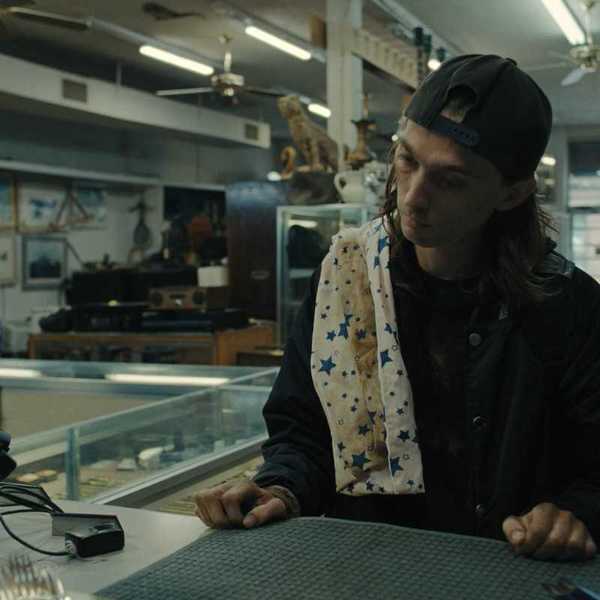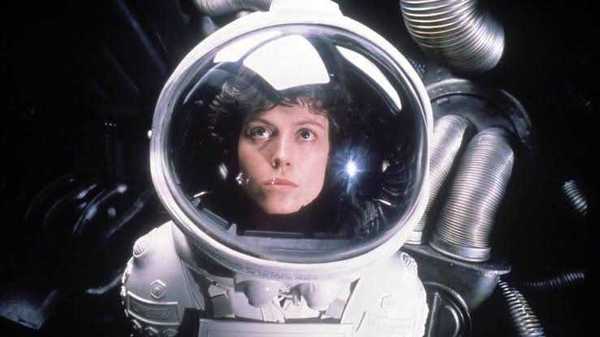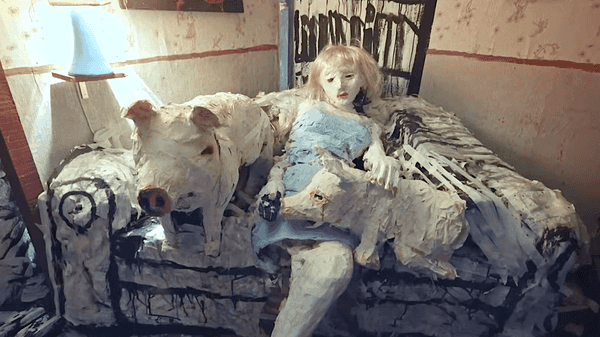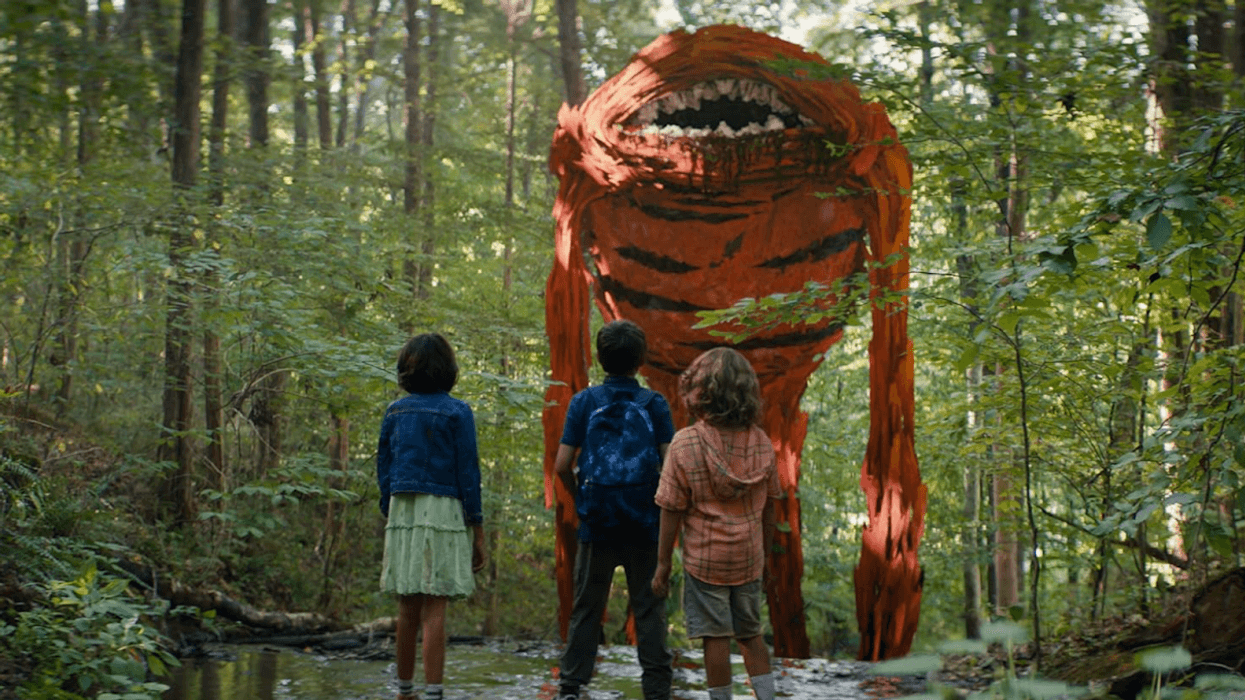
The film follows widowed father, Taylor (Tony Hale), as he helps his two children, Jack and Amber, navigate the death of their mother. When Amber’s sketchbook – where she’s been drawing visual representations of her grief – falls into a strange pond, her unpredictable, chaotic drawings come to life and start terrorizing their town.
We sat down with Worley to get an inside look at the seven-year journey of making the film, including how he leveraged Premiere Pro, After Effects, and a host of customized extensions to craft most of the VFX – including eleven unique monsters – from scratch. Read on for more on Worley’s workflow and creative inspirations, and don’t forget to catch Sketch in theaters on August 6th.
How and where did you get into directing, editing, and VFX?
Seth Worley: I’ve been making movies since I was a kid. In my twenties, I started directing commercials and branded shorts, most notably for Red Giant, where I made a series of shorts that allowed me to establish my narrative voice on a public platform.
How do you begin a project/set up your workspace?
SW: I procrastinate by overorganizing. I am in no hurry to see what a bad job I did as the film’s director. I’ll create individual stringouts for every scene that contain all that scene’s takes in narrative order. Then, I’ll spend as long as possible sourcing temp music and temp sound effects so I have a robust library in the project file to work from once I actually start editing, which, again, is hopefully never. If proxies weren’t generated on set, that would give me something else to do instead of real work. Eventually, I run out of prework and have to actually edit something, at which point I will try and speed run through a first assembly as fast as humanly possible. I’ll take it reel by reel (on “Sketch” there were seven), but I won’t watch the full film yet. I got advice on twitter once from Phil Lord and Chris Miller to never watch first assemblies from beginning to end, only a reel a day and give notes, then second pass all the way through. That advice is probably why I’m still alive typing this.
Tell us about a favorite scene or moment from this project and why it stands out to you.
SW: My favorite moments were all highly specific moments of collaboration with my incredible teams, but there was one personal moment at the wrap party that I think about all the time. I spent five years trying to get this movie made, and then two more years making it. My oldest was in third grade when I started writing it, and now he’s 17. For a huge portion of my kids’ lives, it’s just been this “thing that Dad has been working on.” It’s a very personal story filled with a lot of ideas and elements pulled from both my childhood and my life as a parent. So, it means the world to have so many people who have seen the movie message me or pull me aside to tell me how special this project has been to them.
But the most meaningful one was at the wrap party when my son wrapped his huge teenage arms around me and said he was proud of me. So, my next seven years will be devoted to just weeping incessantly.
What were some specific post-production challenges you faced that were unique to your project? How did you go about solving them?
SW: Well, for one, we had around eleven unique monsters that needed to be created from scratch and an indie budget to do it with. There were also a ton of shots where we intentionally let production infrastructure stay visible in frame rather than eat up precious time moving it just to get the shot. This meant all of that needed to be painted out of a pretty decent amount of shots. For my shots, I used an ever-evolving cocktail of Content Aware Fill, Red Giant King Pin Tracker, Red Giant Spot Clone Tracker, and Lockdown in After Effects, kicking things over to Photoshop often for use of Generative Fill. I tried to do as many of these shots myself as I could (mostly out of guilt because I was the one who said we could fix it in post), but several required the help of more skilled artists.
What Adobe tools did you use on this project, and why did you originally choose them?
SW: I edited the film in Premiere Pro and did all of my compositing work in After Effects. As for third-party tools, I used Magic Bullet Colorista for applying our show LUT and doing temp grades in the timeline.
There’s also a great Premiere extension by Zach Williams and Lucas Harger called Post Notes that I love for compiling and tracking notes from both myself and others right inside Premiere Pro. I also use Frame.io for this, but the Post Notes extension helps when I get notes from people in person or just from myself, and I like having a simple place inside Premiere Pro to log them with direct timecode stamps and checkboxes.
My compositing workflow in After Effects has come to extensively rely on Red Giant Supercomp. All the glitter in the film (and there’s a lot) I created using Trapcode Particular. And as I said earlier, my paint and cleanup work relied heavily on an ever-evolving cocktail of Content Aware Fill, Red Giant King Pin Tracker, Red Giant Spot Clone Tracker, and Lockdown, as well as Photoshop’s Generative Fill.
Who is your creative inspiration and why?
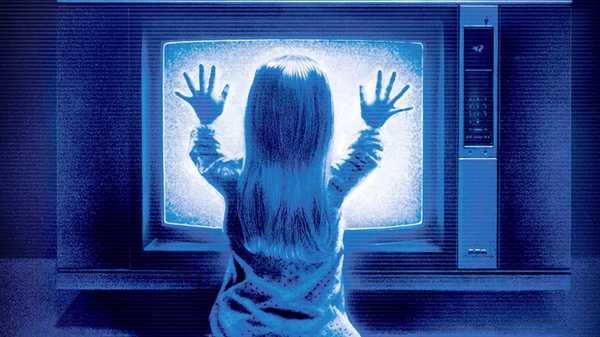
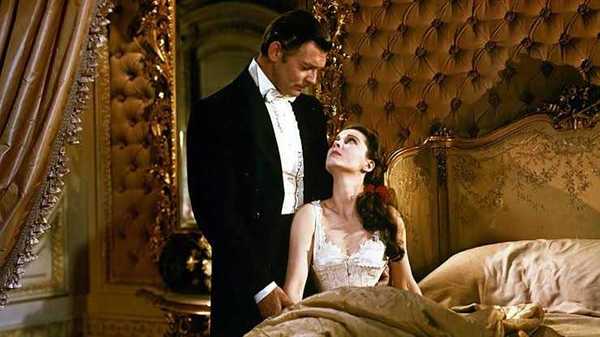
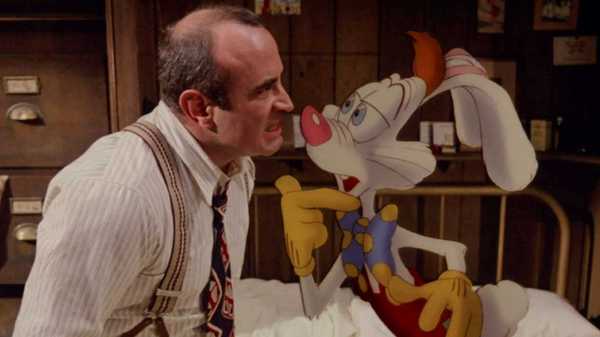
SW: My friend Daniel Hashimoto is a pretty brilliant guy who is constantly surprising and inspiring me. Same goes for my friends Ryan Connolly and Ryan Polly. This movie also channels a ton of Spielberg, so I should probably mention him. Daniel Hashimoto, Ryan Connolly, Ryan Polly, and Steven Spielberg – my best friends.
What’s your favorite thing about your workspace and why?

Worley’s workspace. Image Source: Seth Worley.
My office is a room in my house that used to be a greenhouse. It’s technically at the basement level, but our house is on a slope, so it somehow has more natural daylight than any other room in the house. I built a set of shelves on the back wall to house all my dumb toys and LEGO, and movie memorabilia. My favorite thing about this space is that it reflects my favorite parts of the world – and myself – back at me.