Why Spider-Man’s Entire Ethos Comes Down to Just Six Words
Exploring how the quote came to be related to Spider-Man over the years.
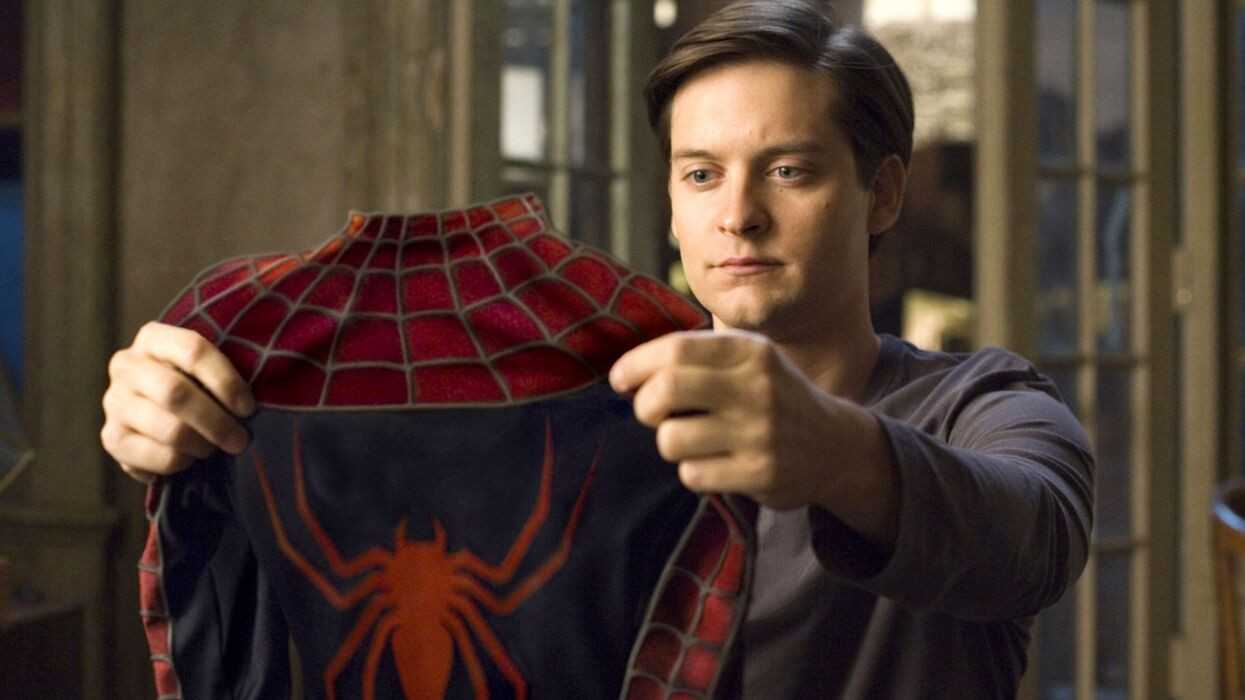
Spider-Man 3
Can you tell me what the main difference is between a superhero and a supervillain? No, it’s not the difference in their physical or cerebral power or their background, or even their actions. Because let’s face it, every superhero is as flawed as the villains (and that’s the beauty of superhero movies). To me, the difference lies in a particular ethos– "With great power comes great responsibility.”
You surely have heard this quote in a variety of contexts–in the Bible (New King James version, Luke 12:48), “For unto whomsoever much is given, of him shall be much required…,” in old maxims, and sayings by the great personalities such as Winston Churchill, Franklin D. Roosevelt, and others. In the comic and cinematic world, the quote stands as Spider-Man's moral backbone.
In this article, we trace the connection between the quote “With great power comes great responsibility” and Spider-Man, and how it has become the “Spidentity” (please pardon the word play here!).
The Quote’s Origin in Cinema and Comics
On screen, the axiom debuted at the end of the first episode (Superman Comes to Earth) of the film series, Superman (1948), as Jonathan Kent explains the onus of the superpowers to his son, Clark. But, he didn’t deliver the exact quote in the scene; he just spoke in its essence as he tried to nudge Clark in the righteous direction, now that he is Superman. This was two decades before Spider-Man even existed.
The quote debuted in the comics with Spider-Man. It first appeared in the closing panel at the end of Amazing Fantasy #15 in 1962, the first-ever Spider-Man comic. Interestingly, it wasn’t given as a dialogue to any character in the edition. The comic follows Peter Parker after he has newly obtained his Spider-Man powers. Like any ordinary man, his first instinct is to abuse his power, and he uses his power to become a TV sensation. When his self-involvement becomes a cause of Uncle Ben’s death, Peter is forced to reflect on how superpowers have changed him as a person.
The quote was directly associated with Uncle Ben later in 1972, in a music-comic fusion, The Amazing Spider-Man: A Rockomic!, when Peter says, “What was it Uncle Ben used to tell me? I remember he used to say, ‘Petey, never forget—the stronger the man, the heavier the load. With great power comes great responsibility.’”
Since then, it has been associated with Uncle Ben multiple times, including The Amazing Spider-Man #274 in 1986, and Spider-Man vs. Wolverine #1 in 1987.
Spider-Man (2002), directed by Sam Raimi, cemented the quote's association with Spider-Man through Uncle Ben, when in a scene, Uncle Ben quotes the phrase as he explains to Peter why it’s not the right thing to beat someone up just because you can.
Although the line is mostly delivered by Uncle Ben, the quote becomes a part of the “Spidentity” (oops, I did it again!)
- YouTube www.youtube.com
Meaning and Significance Of The Quote
The quote’s generic significance is common knowledge. But for Spider-Man, it is his ultimate principle, as he swings across NYC, fighting crime and villains.
In comparison to most of his peers in both the Marvel and DC worlds, I believe that Spider-Man has the least checkered past. Orphaned at a young age, bullied by his peers, yet Peter Parker grew up in a loving home with his Uncle Ben and Aunt May, cared for and appreciated. An intelligent boy, who got superpowers at such a young age, Spider-Man’s naivety in the early stages of being Spider-Man feels real. With his head high up in delusion, just when Peter starts using his newly attained powers for his own selfish benefits, a little act of spite costs him one of his loved ones.
Uncle Ben’s untimely demise becomes a turning point in Peter’s life.
As Peter helplessly holds Uncle Ben’s lifeless body, it triggers the realization encapsulated in the phrase, “With great power comes great responsibility.” If only Peter had stopped the fleeing burglar, which he didn’t do out of sheer indifference and spite against the burglary victim, his uncle would be alive. This one incident becomes the philosophical bedrock of Peter’s existence as Spider-Man, instilling both guilt and a sense of purpose in him.
- YouTube www.youtube.com
Spider-Man is also one of those superheroes who is often mistrusted by the people whom he strives to save daily, unlike many other heroes, who enjoy a celebrity status at least from time to time. Spider-Man? Well, never really.
When the people around you aren’t even slightly appreciative of your contributions in their lives, in this case, Spider-Man is literally saving lives daily, it’s difficult not to go astray. Steeped in guilt, haunted by past mistakes, it’s very easy to lose your head, especially if you have superpowers. Isn’t that the case with most of the supervillains? A thankless yet demanding job is the root cause of all evil after all. But not Spider-Man.
Spider-Man is a metaphor for adolescence and personal growth, marked by heroism that’s defined by the conscious, and not trauma, like in the case of most other superheroes, such as Batman or Wolverine. Spider-Man is a spirit that endures, not because he can but because he is grounded in reality and has a deep understanding of everyday human struggles, despite his young age. He is one of those who has turned his personal tragedy, which was somewhere his own mistake, into the purpose of his life.
Haunted by his past mistakes, yet Spider-Man is not driven by vengeance or a quest for justice, but by his desire to use his powers for others’ good. That's why the quote resonates the most with Spider-Man than with any other superhero. After all, although a faceless protector, Spider-Man is a symbol of responsibility and hope.