What the Scariest Movie Stephen King Has Ever Seen Can Teach Us About Fear
Stephen King knows a thing or two about scaring people.
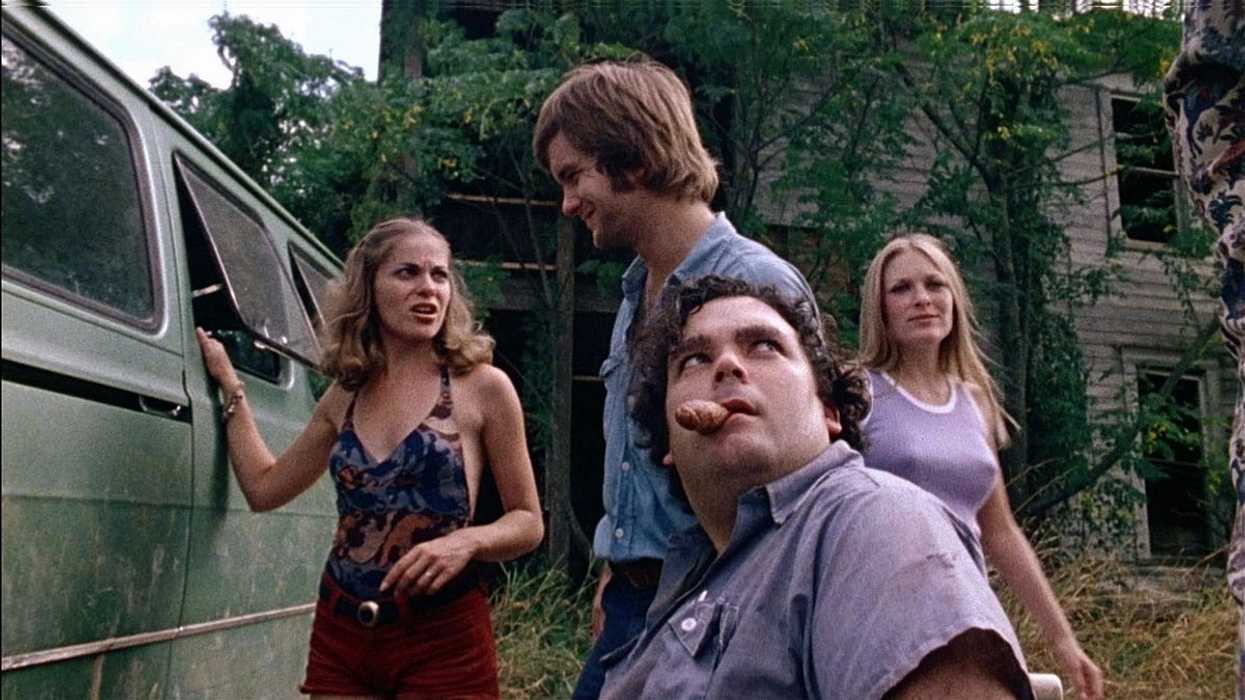
The Texas Chain Saw Massacre
Like Stephen King, I often reflect on my first experiences with horror films. I can remember my first viewings of Carrie and The Shining—and a favorite, The Texas Chain Saw Massacre.
My first time with the movie was a bit disjointed. I started and stopped it, initially put off by the opening because I was in so much physical discomfort at the movie's sweat-drenched, high-contrast scenes and uncomfortable pace. But of course, I returned to it and went on to love it.
Tobe Hooper‘s horror film has inspired filmmakers and the genre for decades. Now, a new documentary explores its impact.
Chain Reactions features interviews with Stephen King, Patton Oswalt, Karyn Kusama, Takashi Miike, and Alexandra Heller-Nicholas.
In the doc, King reflected on watching Tobe Hooper's 1974 classic in 1982 at a nearly empty Colorado theater.
He was a struggling writer then, "writing to stay ahead of the bill collectors," and the isolated viewing experience taught him about how horror operates. Check it out.
- YouTube www.youtube.com
"That's when a movie really has a tendency to work on you," King said, "to get its cold little fingers under your skin."
There's nothing like being in a screening all by yourself. I can't imagine seeing Chain Saw in an empty theater.
"You could tell that this print had been around for a while, and it's better for it because it just looks fucking real," he said.
His print was washed out and grimy. King had a similar reaction to mine, in that he felt the opening scenes felt uncomfortably gritty and realistic.
"It works because there's no artifice about it," he said. "There's no buildup. There's no character nuance."
The graveyard scenes feature people who "look like they came from the nearest little Texas town," he said.
Independent filmmakers, take notes. Those limitations you're fighting against (your tiny budget, your non-professional actors, your less-than-perfect equipment) might actually be advantages. Studios pour endless resources into creating grit, but The Texas Chain Saw Massacre achieved it naturally. The film feels weirdly real, like found footage before found footage existed.
This doesn't mean we should deliberately sabotage our production values. Instead, embrace the possibilities within those constraints. If your locations feel lived-in rather than designed, lean into that. If your cast includes non-professionals who bring natural awkwardness to their roles, that might ultimately serve your story.
Audiences can sense authenticity. The Texas Chain Saw Massacre works because it feels like it could have actually happened to real people in a real place.
Practical Horror Filmmaking Resources
Here are a few resources to help you on your horror filmmaking journey.
PremiumBeat's horror filmmaking survival kit emphasizes that successful horror relies heavily on atmosphere, practical effects, and sound design rather than expensive visual effects.
COLBOR's horror lighting guide offers a few simple techniques, such as uplighting and colored gels, that can create unsettling atmospheres.
If you can, use practical effects instead of CGI. Learn from the best practical effects in horror.
Horror lives in what audiences hear as much as what they see. So learn solid sound design.
Raindance Film School's "Crafting Fear" guide provides a few technical ideas like camera angles, lighting, and editing, to manipulate emotions in viewers. Collider's analysis of horror filmmaking gives you 10 other techniques to try.
Also, Learn from King's Writing Process
While King's directing experience has been limited, his approach to storytelling offers valuable lessons.
In On Writing, King described how he views stories as "found things, like fossils in the ground. The writer's job is to use the tools in his or her toolbox to get as much of each one out of the ground intact as possible."
This archaeological approach to narrative can inform your filmmaking choices. Rather than forcing plot, filmmakers might benefit from excavating the natural drama within their chosen settings and characters, much like Hooper did with the rural Texas locations in The Texas Chain Saw Massacre.
- Basics Tips and Concepts to Keep in Mind as You Make Your Horror ... ›
- How to Write a Slasher Movie | No Film School ›
- RIP Tobe Hooper, Director of the Film That Changed Modern Horror ... ›
- Why 'Texas Chain Saw Massacre' Has One of the Best Openings in ... ›
- 20 Years Ago, The Scariest Movie of the Century Arrived on American Shores ›