Quentin Tarantino Breaks Down Hong Kong vs. American Fight Scene Styles
And how it affected the way he shot Kill Bill.
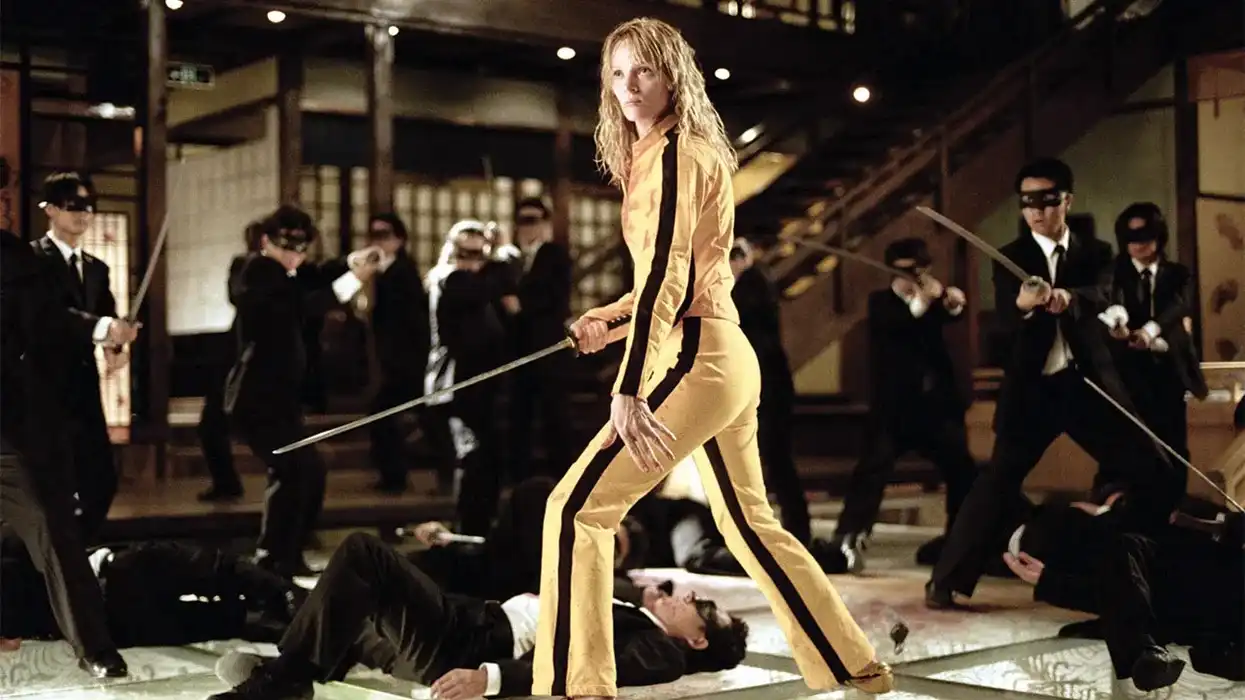
'Kill Bill'
I recently got to sit down to watch Kill Bill: The Whole Bloody Affair at Quentin Tarantino's Vista Theater in Los Angeles. It was a fantastic way to watch the movie and brought me back to my deep love for martial arts movies.
I've been seeking out behind-the-scenes stuff from Tarantino to see how he made the movie and the choices he took for some of the choreography.
That's when I stumbled on this incredibly informative video of Tarantino talking about the Hong Kong way of shooting and how he mimicked it for Kill Bill.
Let's dive in.
Tarantino on Hong Kong Action
According to Tarantino, Hong Kong filmmaking is characterized by its fluidity and organic nature of shooting.
Unlike in the West, where we set up one direction, get all the shots, and then flip around, directors in Hong Kong might film a scene from one angle and then, on the spur of the moment, completely change their setup to capture the next shot.
This style is particularly well-suited for action sequences. The camera becomes an active participant in the action, rather than a passive observer.
For these fights, they try to plan this via movements or attacks within the fight scene.
Each attack is done in three fluid motions, and then those are all the shots they get.
The fourth motion bridges the gap or edit, and also starts the next series of three fight movements that are shots as well.
In that way, you're trusting that you're getting the shots you need for the edit, so it saves time. But you aren't really planning it until you're in the final space with the fight choreographer, so that can be a little stressful.
Other benefits include costuming. Since you're shooting the fight in sequential order, any rips of mud or blood that get on costumes are fine, since there's no continuity to keep track of.
According to Tarantino, they also shoot every other scene this way. So, their actors can feel more natural on set and not have to worry as much about hitting a mark.
That approach honestly sounds really stressful, especially as you try to figure out movements and angles in real-time, but I am sure that after years of practice, filmmakers become accustomed to it.
Summing It Up
I love it when Tarantino gets nerdy about the things he's interested in. His insights here are fun and open up a new way to talk about the action in Kill Bill, which truly is steeped in the martial arts history and style of the movies it's referencing.
Let me know what you think in the comments.
- Tips on How to Shoot a Killer Fight Scene ›
- Why the Bus Fight in 'Nobody' is Such a Pivotal Scene ›
- 3 Things Every Great Fight Scene Has That Bad Ones Don't ›
- The Best Fight Scenes In Movies ›
- The Very Best American Martial Arts Movies | No Film School ›
- King Kong’s Most Famous Line And the Meaning Behind It ›