The Meaning Behind the Most Famous Line From 'King Kong'
How one haunting line in King Kong (2005) became a timeless symbol of love, tragedy, and cinematic poetry.
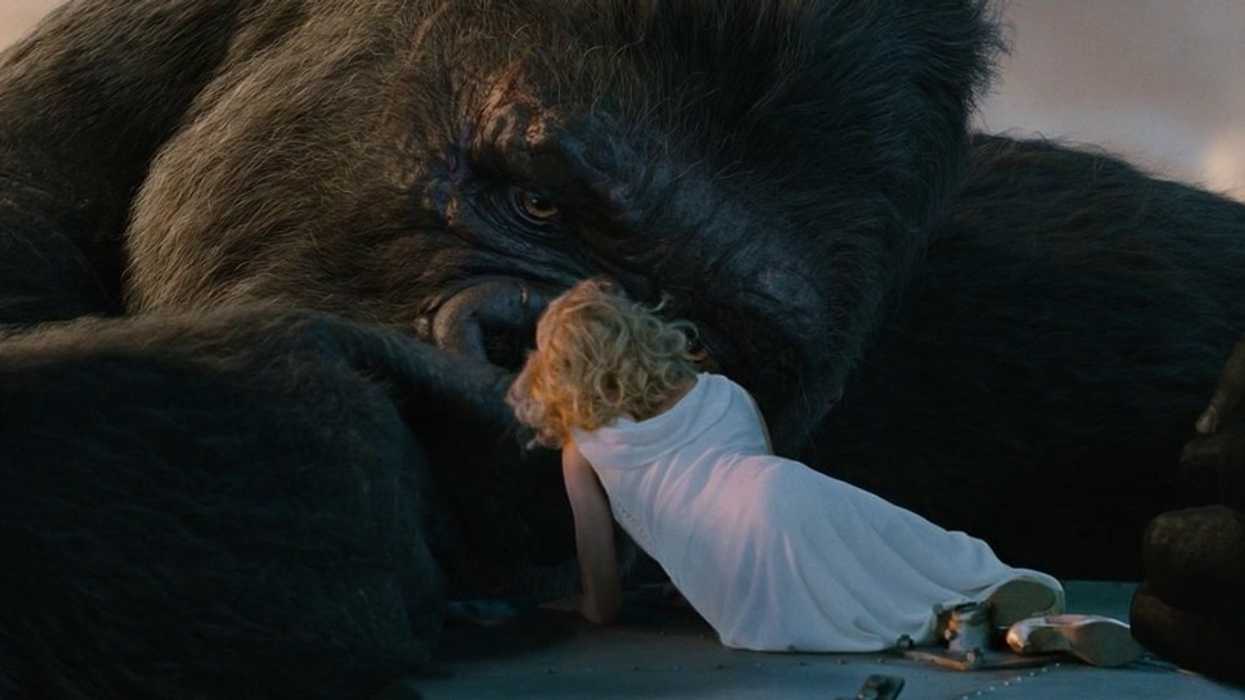
King Kong (2005)
A giant hand slips from the ledge, a body plummets through the air, and the crowd below gasps as Kong crashes onto the New York City pavement. The most improbable victim of the Empire State Building has been identified. Then the quiet, almost melancholic words:
“It wasn’t the airplanes… it was beauty killed the beast.”
The final words of a monster’s tale. And yet, they solidify King Kong’s status as more than just a creature.
Why, almost a century after it was first uttered, does this line, spoken in the wake of devastation, still reverberate throughout movies? Why did Peter Jackson use it as the emotional focal point of his entire 2005 film rather than as a required callback?
This article solves the mystery of how a line became an epitaph and why it endures in our collective memory.
A Line Through Time
1933: The Original Prophecy
The ambitious filmmaker Carl Denham (Robert Armstrong), who dragged the beast from Skull Island to Broadway, first uttered the line in King Kong (1933).
It functioned at the time on two levels: a clever tagline that could sell tickets and a clear synopsis of the story. Kong was more than just a monster; he was also a victim of his love for Ann Darrow (Fay Wray), a woman who never intended to harm him. The words skillfully encapsulated tragedy within spectacle, providing viewers with both the moral reckoning and catharsis.
There was an inherent cynicism in the line in that initial outing. By attributing Kong’s death to “beauty,” opportunity Denham avoided accountability. More than a sincere admission, it was poetic marketing.
Be that as it may, it still had the staying power. It persisted because it implied something greater than the chaos of a monster: that love and desire can topple even the strongest.
2005: From Prophecy to Eulogy
Fast-forward to Peter Jackson’s King Kong of 2005. He maintained the line, but changed its meaning and delivery. Denham (Jack Black) murmurs it over Kong’s fractured body—not as a businessman concluding a deal, but as a man shaken by the fallout from his ambition.
Here, the line becomes a eulogy with this small change.
Jackson presents it as a painfully honest moment, whereas the 1933 version was an ironic remark. The cynicism dissolves into understanding as Denham realizes that this result was caused by his avarice, his manipulation of Ann (Naomi Watts), and his exploitation of Kong. It is now a confession rather than a deflection.
The Architect of Tragedy: Peter Jackson’s Version
More Than a Remake: Interpretation
In his early years, Jackson developed an obsession with King Kong. He wanted to explore the core of the story rather than a shot-for-shot remake. His intention was to transform Kong’s demise from an adventure into a tragic love tale. The last line was reframed by that decision, which gave it greater emotional weight than it had ever had before.
Jackson took the story above the level of spectacle by focusing it on the relationship between Kong (Andy Serkis) and Ann. Kong was more than just the eighth wonder of the world; he was a compassionate being. And it added to the tragedy of his fall.
Crafting the Moment: Directing the Final Scene
It’s a dirge-like scene. Jackson slows everything down after the aerial assault’s chaos. Before Denham speaks, the audience changes from fear to wonder; the camera stays on Kong’s motionless body, and there is a long pause. It’s important to pause because it gives the line some room to resonate.
The occasion feels more like a funeral than a triumphal anthem. The audience is drawn toward sadness by the director’s choices—muted sound, deliberate pacing, and an emphasis on Kong’s face. Denham’s words have a tragic finality by the time he delivers them.
The Voice of Sorrow: Carl Denham’s Redemption
It was a bold move to cast an actor known for his comedic roles in the role of Denham. Black had to portray a man whose charm belies his selfishness and whose greed ruins everything he touches. He couldn’t play a smirking opportunist by the last scene; he had to sound broken.
Black delivers. His line-reading is quiet—almost stunned. Not a hint of his on-brand arrogance. Because of that tonal decision, Denham changes from a villain to a sorrowful bystander who has realized his complicity. This recognition is more powerful than redemption in this scene.
The Line’s Multilayered Meaning
The Surface Reading: Literal and Ironic
The line appears straightforward: Kong was drawn to Ann, and that attraction enticed him into captivity, which ultimately led to his demise. Audiences, however, are more aware. He was killed by bullets and airplanes; human greed planned it. The line persists because of its irony—it conveys one meaning while expressing another.
The Deeper Truth: Love as Destruction
Kong’s affection for Ann was his defining characteristic, not a sign of weakness. But he was vulnerable because of that same love. It pulled him into a world he would never fit in. Heroes in classical tragedies fail due to a noble defect. In just five words, the line captures the essence of Kong’s flaw—his love.
“Beauty” and “the Beast”: Redefining the Terms
The way the line reconfigures the archetypes is what makes it so brilliant. Kong never acts as beastly as humans do when they are armed with bombs, greed, and fear. He demonstrates traits typically associated with “beauty,” such as compassion, loyalty, and restraint. The sentence challenges us to reevaluate the identity of the true monster.
The Unkillable Truth of a Timless Quote
Originally a clever bow in a monster movie, the quote developed into something much more. It evolved into an elegy, a confession, and a reflection on love and exploitation under Peter Jackson’s direction. Its layers—tragic flaw, surface irony, and reinterpreted archetypes—make it one of the richest endings in film.
It says more than it first appears to, which is why we go back to it. These five words capture the tale of ambition, beauty, and devastation. The line survives because it touches a truth we all recognize: sometimes what makes life meaningful is also what makes it fragile.
And in that paradox, Kong never dies.