What ‘There Is No Spoon’ Really Means in 'The Matrix'
A closer look at the spoon-bending scene that reveals the core truth about reality, illusion, and Neo’s transformation.
The Matrix (1999)
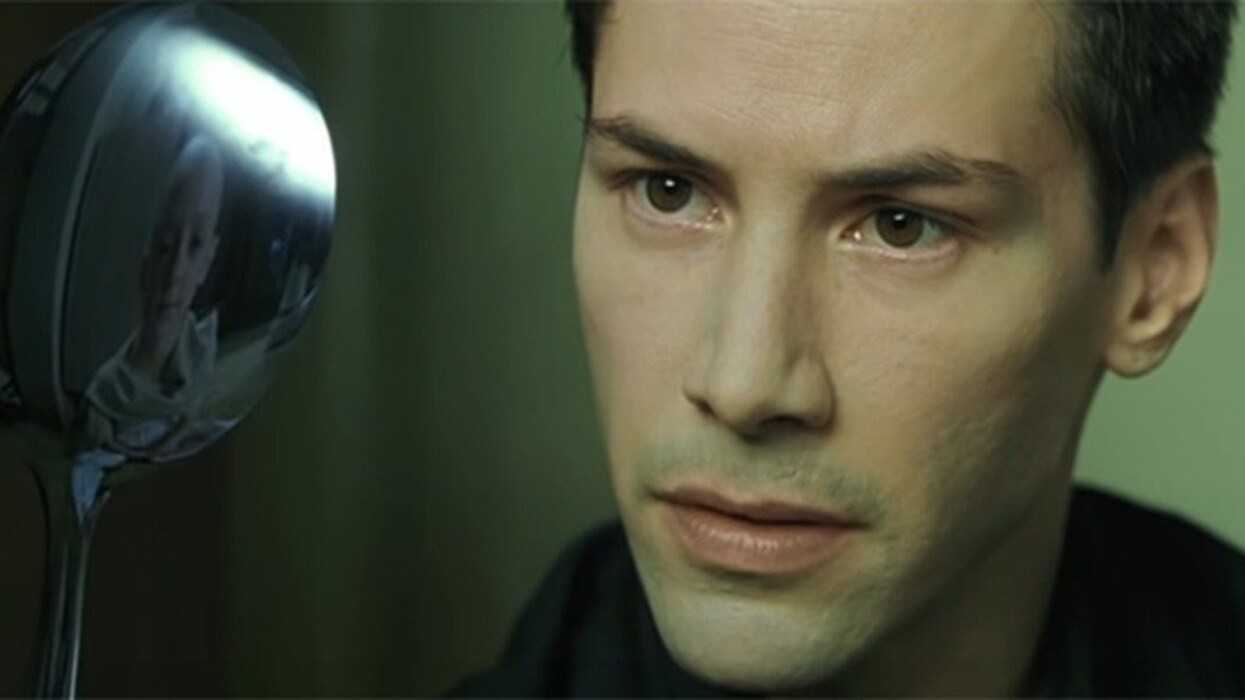
Even if you haven’t seen The Matrix (1999) in years, you probably remember this scene: a bald kid in monk-like robes sits with Neo (Keanu Reeves), holding a spoon that bends and twists like liquid silver. Then comes the line—calm, almost playful: “There is no spoon.”
For a movie loaded with unforgettable visuals, this quiet moment somehow lingers just as strongly as the bullet-dodging or rooftop chases.
But why?
Because this spoon-bending scene is not really about a spoon. It’s the Wachowskis slipping the film’s entire philosophy into three simple lines. It’s Neo’s first real key to unlocking his role as The One, and it delivers the thematic paradigm for the rest of the movie.
In this article, we are going to try and peel back the layers of that scene: the dialogue’s meaning, its philosophical roots, the filmmaking craft that made it feel real, its role in Neo’s journey, and why this one simple line is still resonating through pop culture decades later.
Deconstructing the Dialogue: A Lesson in Three Lines
“Do Not Try And Bend the Spoon—That’s Impossible.”
The first part sounds like a riddle designed to frustrate Neo. He’s being told not to attempt the very thing happening before his eyes. That’s the point. This line represents the old way of thinking—believing that objects, rules, and limitations inside the Matrix are fixed. From a human perspective, bending metal with your mind is impossible. The spoon is the metaphor for the limits people accept without question.
“Instead, Only Try to Realize the Truth.”
Here, the shift happens. The child guides Neo away from brute effort and toward awareness. The spoon won’t bend because Neo “tries” harder—it bends once he understands the Matrix isn’t bound by physical laws but by perception.
The focus moves from external struggle to internal realization. It’s not about doing, it’s about seeing.
“There Is No Spoon.”
The kicker. This line isn’t nihilism; it doesn’t mean nothing matters. Instead, it’s the film’s most concise statement about reality: the spoon is only a projection, code translated into perception. Once Neo accepts that, the impossible becomes possible.
The truth isn’t that the spoon bends—it’s that the spoon doesn’t exist in the first place. The only thing that bends is his mind.
The Philosophy of the Spoon
Eastern Philosophy
The scene borrows heavily from Eastern philosophies, especially Hinduism. Hindu philosophy explains the concept of Maya—illusion. To reach enlightenment, one must see beyond attachment to material forms. The child monk embodies this philosophy, teaching Neo not to fight reality but to recognize it as a construct.
It also adds the idea of harmony: instead of forcing change, align with the flow of the universe. The spoon bends when Neo bends with it.
Western Idealism
Western philosophy plays its part too. Plato’s Allegory of the Cave describes people mistaking shadows for reality, much like humans in the Matrix mistake code for the physical world.
Descartes, with his radical doubt, questioned everything but the mind itself: “I think, therefore I am.” Neo faces the same leap—the body may be trapped, but the mind is the undeniable center of experience.
Practical Application
But this isn’t just abstract. In the Matrix, understanding reality’s illusion means rewriting its rules. The spoon-bending isn’t a party trick—it’s training. Neo learns that he can manipulate the code not by force but by perception.
The lesson is literally a manual for hacking the system.
Filmmaking Magic: How They Made Us Believe There Was No Spoon
Special Effects (Then and Now)
The effect wasn’t a rubber prop gag—it was digital. Australian VFX house Dfilm created a CGI spoon, which lets the team control how a reflective metal surface bends and warps the room and faces around it.
That choice keeps the moment grounded in real photography while letting the reflection behave impossibly clean. If the shot were built today, the approach would still be CGI, just with higher-fidelity rendering and deformation tools; the original holds up because the animation is restrained and the compositing is invisible.
Direction and Performance
Rowan Witt, the young actor playing the spoon boy, delivers his lines with quiet certainty—never smug, never theatrical. The Wachowskis’ writing and direction frame Neo’s reactions with close-ups, letting us see confusion give way to realization.
The sound design strips the scene down—no thundering score, no explosions—just stillness. In a film packed with action, this pause hits harder because of its restraint.
Hidden Detail - The Set Design
Most people focus only on Neo and the spoon, but the room is filled with other gifted children, each experimenting with bending the Matrix in their own way.
This detail reframes the moment: Neo isn’t uniquely chosen yet. Others are learning, too. The power is not in destiny but in knowledge—it’s a skill that can be taught.
The Narrative Crucible: Neo’s Turning Point
The Failure Before the Lesson
Earlier, Neo attempts the impossible building jump and falls flat—literally.
Why does he fall? That’s because he’s still trying to bend the spoon through effort. He hasn’t yet understood the truth. His failure primes him for the spoon lesson; contrast makes the meaning stick.
The Application: Stopping Bullets
The lesson finds its climax when Neo faces a barrage of bullets. He doesn’t grunt or strain to stop them. He simply sees the code and accepts: “There are no bullets.”
“There are no bullets”—that's the shift. The shift from trying to do the impossible to realizing the truth completes the arc seeded in the spoon scene.
From Student to Master
This moment bridges Neo’s role. He no longer follows Morpheus’s teachings step by step. The spoon has shown him the path: once he internalizes the truth, he moves from student to master.
From believer to embodiment of The One.
Cultural Impact: Beyond the Movie
A Pop Culture Phenomenon
“There is no spoon” quickly slipped into everyday language. Tech culture, self-help books, and even corporate talks adopted it as shorthand for “change your mindset to change the game.”
It’s rare for a line of dialogue to leap this far beyond its origin, but it fits perfectly with a digital age grappling with what’s real and what’s constructed.
The Ultimate Quote of Empowerment
Unlike Morpheus’s more cryptic or fatalistic lines, “There is no spoon” lands as empowering. It tells us the rules we think are fixed may not be rules at all.
In that sense, it’s not just a sci-fi one-liner—it’s a rallying cry for personal agency.
The Truth You Take Away
The spoon scene is deceptively small, yet it condenses The Matrix into its purest form: philosophy, storytelling, and craft working seamlessly. It shows us that reality is a construct, that perception defines power, and that sometimes the biggest revelations arrive in the quietest moments.
The truth is, the spoon is just a mirror—reflecting the limits we place on ourselves. Its enduring brilliance lies in how it forces us to ask: which of our own “spoons” are illusions? Which rules do we follow simply because we haven’t questioned them?
So maybe the real question isn’t whether the spoon exists—it’s whether we’re brave enough to let it disappear.
- Did Hollywood Miss the Lessons from 'The Matrix'? ›
- How Did the Wachowskis Write 'The Matrix'? ›
- The Surprising Inspiration Behind the Matrix’s Digital Rain ›
- The Matrix’s Most Iconic Move Was Almost Impossible ›
- The Awesome Action In 'The Matrix' Was More Important Than You Might Realize ›
- Watch: Why 'The Matrix' is a Perfect Example of How to Start a Movie ›
- Breaking Down the Philosophy of 'The Matrix' Trilogy ›
- 'The Matrix' Explained ›
- Neo vs. Paul Atreides: What It Takes To be “The One” ›