The Surprising Inspiration Behind the Matrix’s Digital Rain
The ‘digital rain” code had nothing to do with coding!
The Matrix (1999)
What especially fascinates me about filmmaking is that it is nothing but making the best out of whatever you have. It is not always about budget or having limited resources—it’s only about finding the best fit to your story. Especially when it comes to production design. You’d be amazed to learn about the backstory of hero props or visual elements that are used in any film. So if you are close to a filmmaker, just remember not to freak out if they enthusiastically beg you for that old briefcase that’s lying abandoned in your attic or your old rough notebooks from high school.
Because that’s exactly what Production Designer and visual effects supervisor, Simon Whiteley, did in The Matrix (1999). The running green codes in The Matrix, a.k.a “digital rain,” were anything but real codes.
In this article, we’re going to tell you the backstory of the “digital rain” code in The Matrix.
Story and Themes
To quickly refresh your memory, The Matrix revolves around the concept that the world we live in is nothing but a computer simulation designed to control mankind. The narrative explores a wide range of existential themes, including reality vs. illusion and free will vs. systematic control.
The Visual Language of The Matrix
Directors Lana and Lilly Wachowski’s The Matrix not only became a milestone in the genre of sci-fi with its out-of-the-box concept, but also, the film’s visual language came to inspire many films that came after.
The Matrix’s visual language screams of immaculate design. The Wachowski sisters meticulously design each frame to reinforce the narrative’s core themes of illusion and control. From color coding the visuals to recurring symbolic visual motifs such as sunglasses, doors, the blue and the red pills, and “digital rain” code, The Matrix is a masterclass in both world-building and visual storytelling.
Symbolism of “Digital Rain” Code
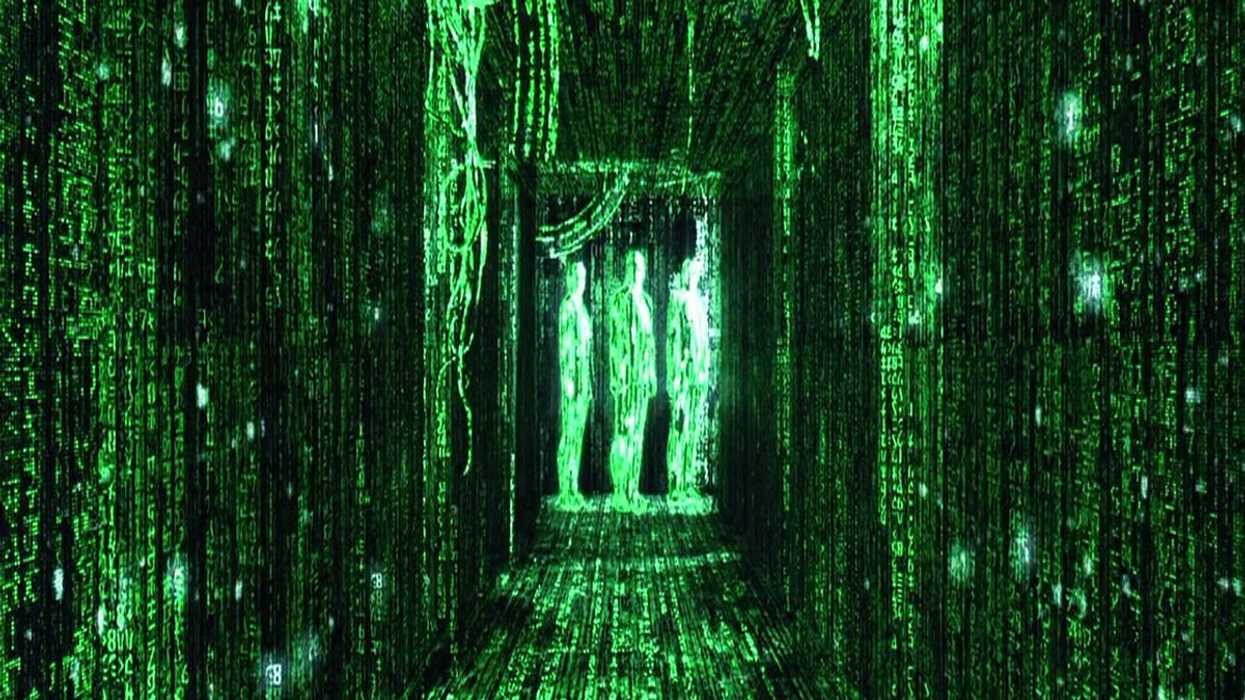
The “digital rain” code is one of the central visual motifs of The Matrix movies. It appears early on in the first film, right in its opening sequence, which sets the tone of the narrative, acting as a visual cue that the story will explore a world of computer simulations. It has been consistently used across all four films in the franchise and The Animatrix as a hallmark of The Matrix world.
The “digital rain” code is the visual representation of the central theme of The Matrix, i.e., nothing is real; everything is an illusion programmed inside the Matrix.
What Inspired the Design For the “Digital Rain” Code?
Whiteley told before & afters VFX magazine that the Wachowski sisters’ love for Japanese animation and martial arts films was the first inspiration for the digital code. The idea was to give an ancient essence to the code, and the original design, “a three-dimensional type that clicked over as it tumbled,” wasn't quite suiting the visual flavor of the story.
Being married to a Japanese wife, Whiteley was familiar with Japanese typography, and he used the knowledge to crack the code. All three Japanese alphabets were studied as per their visual complexity, and finally, Katakana was chosen for the code. Later, some Arabic numerals were also added to the code.
Whitely’s primary design reference for the code was his wife’s Japanese cookbooks and magazines, followed by his kids’ Japanese alphabet books. Each of the graphics is hand-drawn by Whiteley. A couple of options for the code’s design were sent to the directors, out of which they picked what they liked the best.
The green hue was added later to match the look and feel of an old IBM CRT monitor. Whiteley also turned all the graphics back to front, i.e., sort of laterally inverted them to create an illusion of being trapped inside the code.
Once the design was locked, it was first placed horizontally across the screen, but somehow it didn’t work well. Whitely, further inspired by the Japanese writing style, placed the code vertically down the screen, having it run down the screen in line, to resemble rain, to evoke melancholy. The “digital rain” codes do not resemble regular codes visually—they serve the purpose of a visual motif that reflects the melancholy of the situation. “I think that’s why it works, because it doesn’t look like code. It looks like rain running down a window as if you’re looking out onto a cold, bleak world, which is basically what the Matrix is,” said Whiteley.
The “digital code” features real artistic flaws that only come with a human touch. Since Whiteley hand-drew everything, the designs had to be scanned into the computer for further retouching. The scanning resulted in clipping off some of the tops and bottoms of some of the characters, which were further soiled by line strokes, dots, and graphics icons that were added further in the detailing. As a result, many of the characters in the code are not clean pieces of type, and I personally love it (and so does Whiteley).
The backstory of the “digital rain” code reflects absurdism in filmmaking. At the same time, it establishes films as a space for cultural confluence.
Let us know your favorite moments from the movie.
- The Awesome Action In 'The Matrix' Was More Important Than You Might Realize ›
- Did Hollywood Miss the Lessons from 'The Matrix'? ›
- The Matrix’s Most Iconic Move Was Almost Impossible ›
- Breaking Down the Philosophy of 'The Matrix' Trilogy ›
- Decoding The Line That Defines The Matrix’s Reality | No Film School ›
- You’ll Never Believe How This Shot In 'The Matrix' Was Shot | No Film School ›