Write the Truth: Toni Morrison’s Guide for Writers
How the Nobel winner's "no comfort zone" approach can create stories that last.
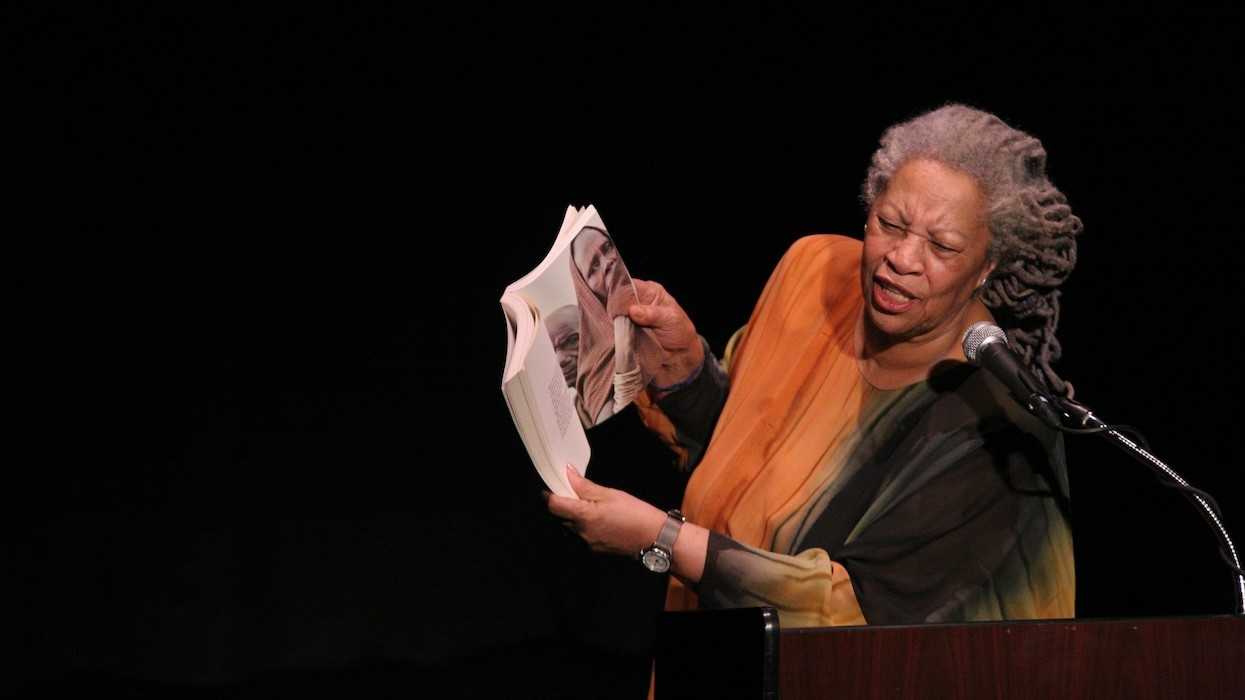
Toni Morrison speaking at "A Tribute to Chinua Achebe - 50 Years Anniversary of 'Things Fall Apart'"
Why do some films disappear from memory the moment the credits roll, while others haunt audiences for decades? The difference isn't budget, star power, or marketing muscle—it's truth.
What would Toni Morrison (who never wrote a screenplay) have to say to screenwriters?
Perhaps a lot, because she understood the secret to literary longevity. If you're tired of writing "content" and want to write stories that matter, this Nobel Prize-winning author would give you a simple but radical principle: center the truth, not the reader.
Morrison's approach offers guidance for screenwriters drowning in notes about relatability and "broad appeal.”
A literary heavyweight, Morrison built her career on refusing to dilute, dumb down, or sidestep uncomfortable truths—especially regarding race, history, and identity. She vehemently refused to chase reader approval. She demanded reader accountability.
Let’s learn more writing lessons via Morrison.
Morrison Mandates Truth Over Convenience
Toni Morrison’s literary career suggests she, perhaps, was never all that concerned with indulging the reader. She had her truth—it’s up to you, take it or leave it. Some might call that snobbery, but look closer: it’s strategy.
She refused to spoon-feed or cater to imagined expectations. Instead of letting her work make the audience feel good, she turned it into a lens sharpened on reality.
Writing to appease the reader leads to softened edges and safer choices. You start dodging complexity, wrapping nuance in feel-good packaging. Similarly, writing for studios, producers, or the imagined viewer can water down originality. Morrison sees that as artistic treason.
The White Gaze
Morrison coined the phrase “white gaze” to describe the pressure to filter Black experiences through a white lens. This was a larger warning against writing with any external validation in mind.
In Beloved, Morrison tells the story of a mother who kills her child to spare her from slavery. There’s no cushioning for that. No moral hand-holding. Just an unblinking look at a historical horror.
In The Bluest Eye, a Black girl prays for blue eyes until she unravels, because whiteness has been sold to her as salvation. It’s not easy to read, and it’s not supposed to be.
In filmmaking, this white gaze may translate to “studio notes” that sanitize scripts to appeal to the four-quadrant audience. In this context, it might benefit you to take inspiration from Barry Jenkins (Moonlight) or Chloé Zhao (Nomadland), who ignored commercial formulas in favor of specificity and won big.
What Makes a Story Last?
Trendy thrillers and book-club romances can fly off shelves, but where are they five years later? Or, what is the difference between box-office hits and films that show up on film school syllabi decades later? Maybe that’s why Morrison always propagated the idea of writing the truth that lasts, and not just chasing a flavor of the season. That’s why her novels are built to last.
There’s a reason Song of Solomon is still taught, debated, and devoured decades after its publication. Instead of aiming to be liked, the book aimed to say something that mattered.
The same logic applies to why Get Out (2017) resonated and stood apart from other horror flicks. It wasn’t watered-down horror. It was razor-focused on a cultural experience.
Truth ages better than hype, and specificity is the key to universality. Morrison knew that from day one.
She challenged the idea that stories must be universal to be meaningful. Watered-down characters and cultureless plots don’t really tell anyone’s truth, and they don’t make anything relatable.
Instead, she doubled down on specificity. In Song of Solomon, Black folklore, ancestral trauma, and spiritual myths are baked into every line. That depth made it more, and fiercely human. Generalizations flatten people while details bring them to life.
The Benefits of Centering Truth
When Morrison first started, some critics, such as Sara Blackburn, while reviewing Sula in her New York Times review (1973), dismissed her work as “narrow.” What critics really probably meant was “too honest.”
- YouTube
Morrison understood what many writers miss. Truth-centered stories resonate.
Her novels have been translated into over 40 languages and resonate with readers worldwide. In one generation, she went from being dismissed as too narrow to essential reading.
Several modern films demonstrate this in action.
Moonlight itself was an ultra-specific story about a Black gay character in Miami. It won three Oscars. Parasite was a deeply Korean story with subtitles and won four Oscars. And remember when Everything Everywhere All at Once swept seven Oscars? It’s a hyper-specific immigrant family story.
The pattern is clear. Authenticity travels.
Morrison’s Toolkit for Writers
Simply put: do what Morrison did and write as if no one is reading. Bring that bathroom-singing spirit into your writing. Having said that, that’s not a call to be careless. Take it as a call to be fearless.
Ask yourself:
- Am I writing for applause or honesty?
- Whose gaze am I performing under?
- What truth am I avoiding because it might make someone squirm?
If you can answer those without flinching, you’re on the right track. Then you are ready to convert Morrison’s tools into screenwriting exercises:
- Write a scene where your character tells the truth that no one else will say.
- Remove every moment in your script that tries to please an imaginary gatekeeper.
Morrison treated language like sacred ground. Every word had weight. Language “arcs toward the place where meaning may lie,” she said in her Nobel Prize lecture—emphasis on “may.” There are no guarantees, just effort and intention.
Even fiction has a moral responsibility, not to preach but to probe. Morrison never bothered to make her writing neutral. She definitely aspired to be right.
Conclusion
If a story avoids discomfort, it usually avoids depth, too. Morrison understood that writing has consequences, and avoiding them isn’t the same as being neutral. Her work never ducked the hard parts, and that’s why it still holds power.
Writers who want to last need a gut check. Is the story shaped by honesty, or by what feels safe? Is the voice yours, or borrowed to please someone else?
The point isn’t to alienate readers. It’s to respect them enough to tell the truth, even when it stings.
Morrison left behind more than great novels. She left behind a way of thinking, one that values clarity over comfort and purpose over performance.
She said in 1981, “If you find a book you really want to read, but it hasn’t been written yet, then you must write it."
So, go on, write it. But not for applause. Not for trends. Write it because the truth you carry is still waiting to be put on the page.