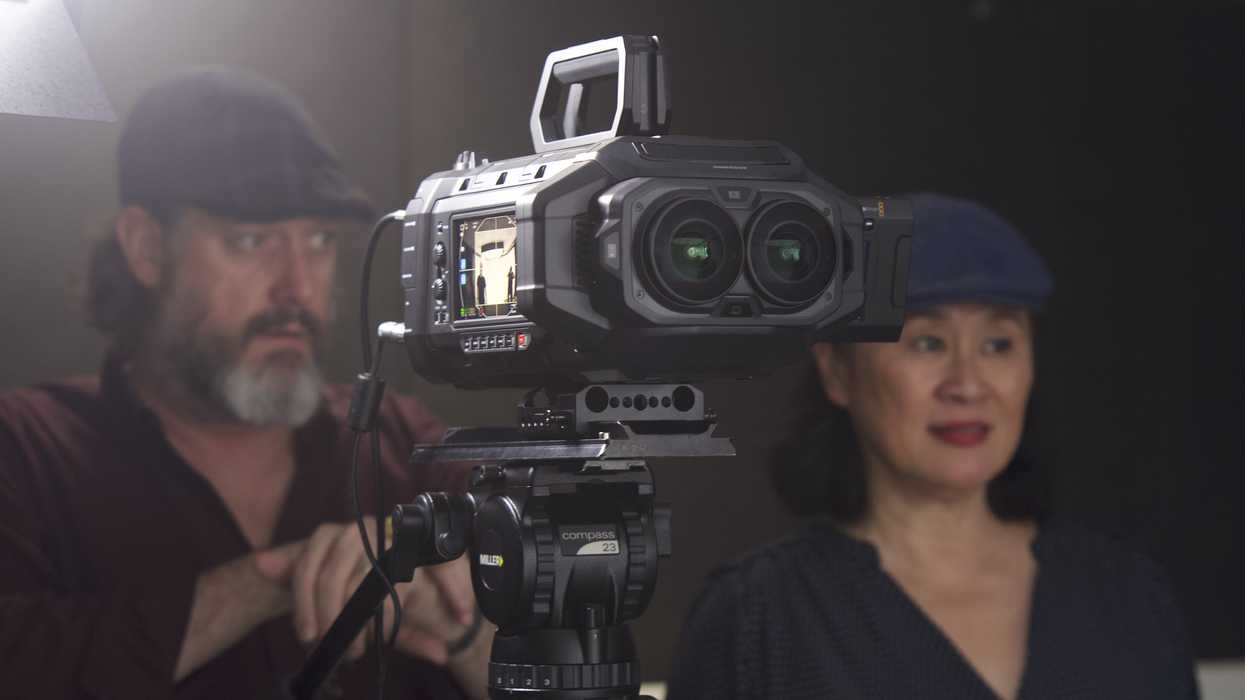
As is the case with most big ideas, the best place to start is usually somewhere small. In an interview with Clara Chong and Ben Allan, ACS CSI of Main Course Films, we chatted about the husband and wife filmmaking duo’s experience working with the new Blackmagic URSA Cine Immersive camera.
The URSA Cine Immersive is a massively ambitious camera that lets filmmakers enter the realm of 180° media with Apple Immersive Video support with dual 8160 x 7200 58.7MP sensors capable of capturing immersive 8K images at up to 90 fps (and with impressive 16 stops of dynamic range).
Yet, while the workflow might seem staggering, it can actually be quite simple as long as you plan accordingly. Here’s what you need to know about shooting big with the new Blackmagic URSA Cine Immersive.
NFS: Tell us a bit about Main Course Films and how you both came to the world of film and video?
Main Course Films: Main Course Films is a full-service production and post-production company based in Australia. We’re a husband and wife team, each with over 30 years of experience in the industry and over 20 years working together as a Writer/Director and Producer/Cinematographer team. Between us, we like to stay hands-on with almost all aspects of the filmmaking process from script through to delivery, and we love how technology has increasingly made this practical.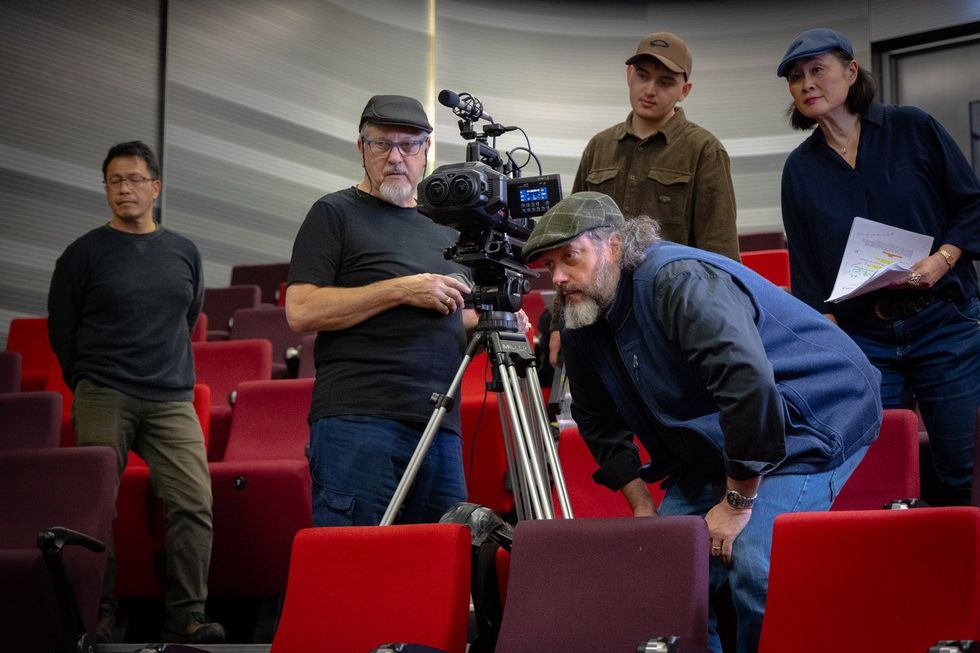
On set Apple Immersive drama shoot “The Dobos Connection” produced by Main Course Films in collaboration with Sydney University Motus Lab & fxguide
[L to R: Luke Torrevillas (1st AD), Paul Malaith (Camera Operator), Ben Allan ACS CSI (Cinematographer), Luke Broadhurst (Camera Assistant) and Clara Chong (Director).
Photo: Katherine Seymour for fxguide
NFS: What camera systems have you traditionally worked on?
Ben Allan: While we have experience with most of the major camera systems, our in-house facilities are built around our ARRI and Blackmagic Design cameras.
Clara Chong: Blackmagic’s RGBW sensor technology has led us to rely more and more on those cameras more recently, including the URSA Cine 12K LF.
NFS: When did you first hear about the URSA Cine Immersive? What were your thoughts and expectations before you tried it out?
Clara Chong: We had heard rumours that one of the major manufacturers was working on a professional camera system for Apple Immersive, but we were thrilled when it was announced that it was Blackmagic. This is partly because of the RGBW sensor, but also because this meant there would be tight workflow integration with DaVinci Resolve.
Ben Allan: Our in-house color grading has been fully built on DaVinci Resolve since 2011, and in more recent years, we’ve switched our editorial to Resolve and audio post to Fairlight in Resolve. We’ve recently taken two feature films, Dark Noise and The Holy Scoundrel, through a full Resolve and Fairlight post path, so we could see the huge advantages to being able to do post for Apple Immersive fully within Resolve. We’re also big fans of the BRAW format, because it’s efficient, practical, and very robust.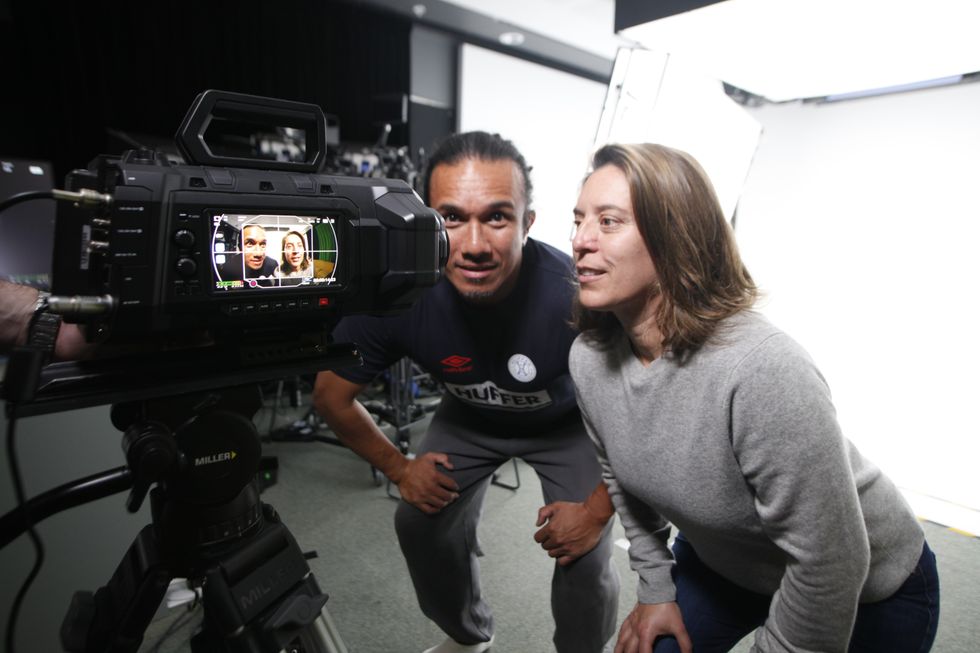
Actor Thomas Ah Kuoi and Elena De Bruijne on set for Studio Tests with the Blackmagic URSA Cine Immersive produced by Main Course Films in collaboration with Sydney University Motus Lab & fxguide.
Photo: Graham Davidson
NFS: What were your initial thoughts about the URSA Cine Immersive once you got to work with it?
Ben Allan: We were expecting the URSA Cine Immersive to be more complicated to set up and use than it turned out to be. Our previous experience with immersive camera systems, multi-camera arrays, and stereoscopic sets our expectations of a level of complexity that Blackmagic has almost entirely automated inside the system.
Clara Chong: Apart from the data rate, being able to handle the files virtually like any 2D BRAW also makes it a very straightforward process.
NFS: How have you found the workflow for working with Immersive video? Any quirks or challenges?
Clara Chong: On a technical level, the workflow is remarkably smooth, especially for such a new format. The quirks and challenges are mostly in how to plan and assess the material, and a combination of different monitoring setups, rendering previews for the Apple Vision Pro, both on set and in rehearsals or location scouting.
Ben Allan: It also means consciously looking all around with the naked eye is by far the most effective technique. Probably the biggest challenge is in learning to understand the physiological effects on the viewer from this ultra-realistic format.
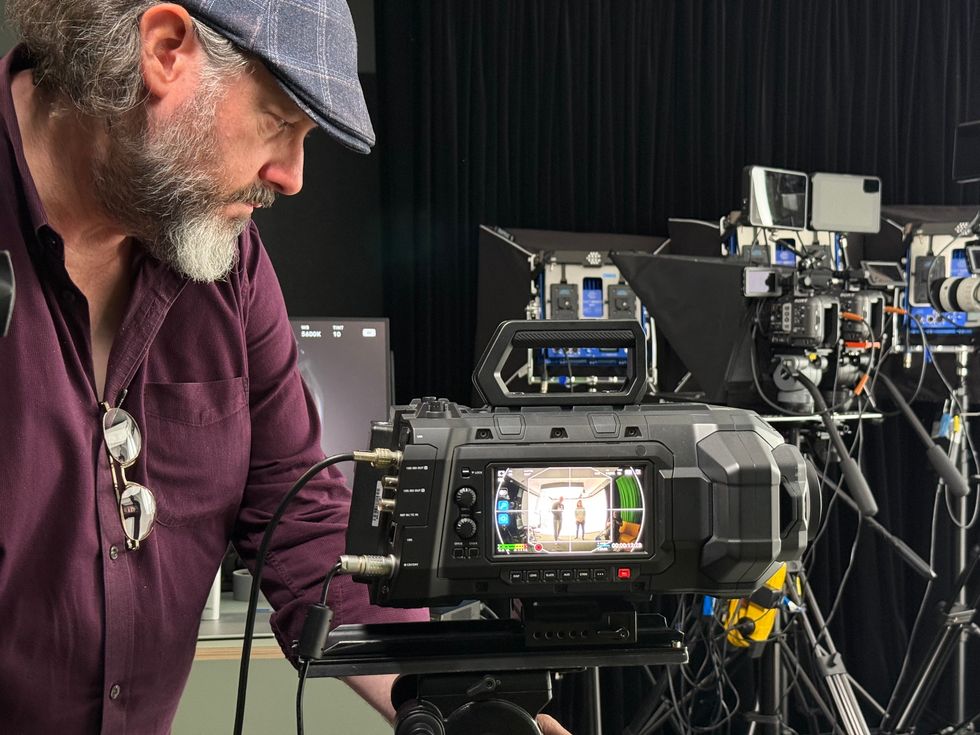
Cinematographer Ben Allan ACS CSI on set with the Blackmagic URSA Cine Immersive camera
Photo: James Esson
NFS: If someone were to try out the URSA Cine Immersive for the first time, what advice would you give them before diving in?
Clara Chong: Start small. Get a feel for how the format functions, and start to get used to imagining how the images on the monitor will be experienced in full Apple Immersive in the Vision Pro. Also, expect to fill up a lot of hard drives! Simplicity is key. Too much complexity can be overwhelming, as viewers not only see your film, but they also experience it biologically.
Ben Allan: The other big thing is to understand that it has things in common with and also key differences to both VR and traditional filmmaking. Kind of like the way that TV has common ground with both live theatre and radio, but there are things that work in TV that you would never try if based on the assumption that it was either radio or theatre. In Apple Immersive, we have found that a lot of things that we thought wouldn’t work, based on the conventional wisdom of either film or VR, actually do work. In contrast, there have been only a few things we thought would work but don’t. In short, preconceptions are the biggest risk to making the most of this new medium.
NFS: What are y'all working on next? Where can we keep up with Main Course Films?
Ben Allan: We have both a documentary and a short drama, both shot entirely on the URSA Cine Immersive, currently in post-production.
Clara Chong: Our documentary is about the creator of the most Instagrammed cake in the world and pushes the boundaries of the ways spatial awareness in both picture and sound can stimulate the senses beyond what you would expect, while our drama explores how much the tangible sense of space and proximity can heighten the experience of emotion.
Ben Allan: We’ll be posting regular updates on both projects to the Main Course Films pages on Instagram, Facebook, and LinkedIn.
You can find out more about Main Course Films on their website here.
- Blackmagic URSA Cine Immersive Camera Debuts at SXSW 2025 ›
- Blackmagic URSA Cine Immersive Camera Revealed by Apple at WWDC 2024 ›
- Blackmagic URSA Cine Immersive Camera Gets Price and Release Date ›
- Is the Blackmagic URSA Cine One of the Most Important Cinema Cameras Ever? ›
- The First Hands-On Reviews of the Blackmagic URSA Cine Immersive Are In ›
- 'Don’t Let the 17K Scare You': First Impressions of the Blackmagic URSA Cine 17K Are In ›
- A Hands-On Interview Review of the Blackmagic URSA Cine 12K ›