Hugh Laurie’s Perfect Clapback Is a Defense of Procedural TV
Procedural shows get a bad wrap but they are art!
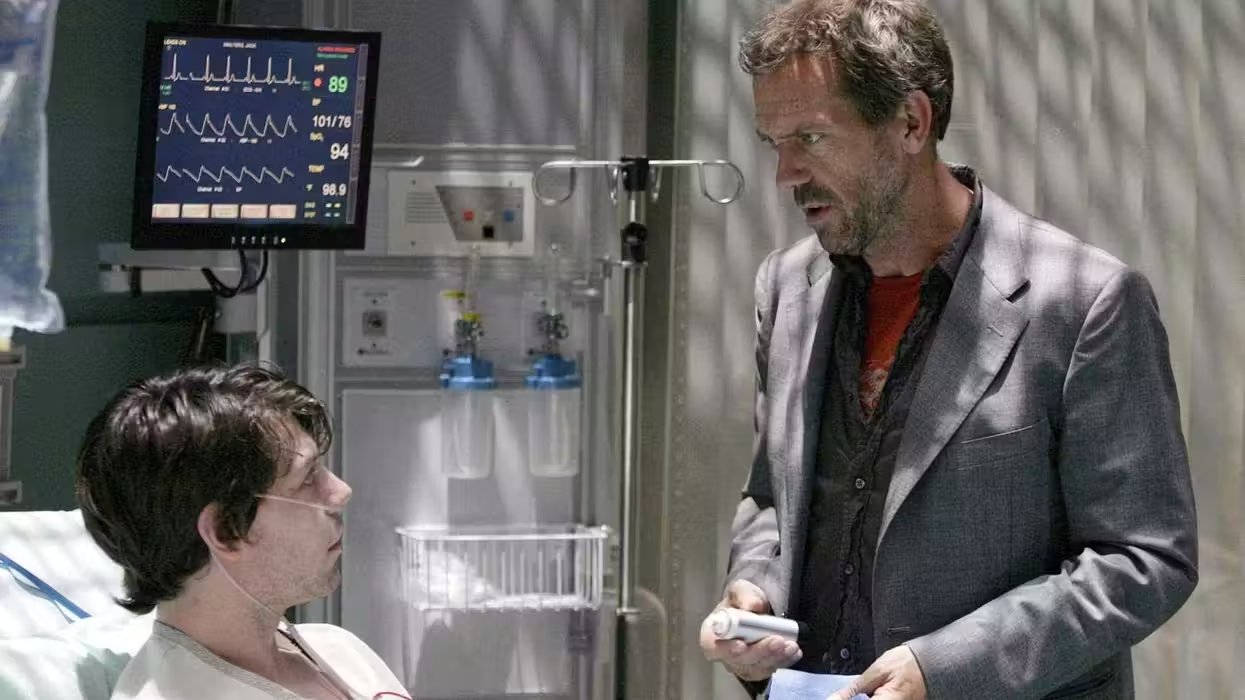
'House'
If you spent any time on Twitter this weekend, you probably saw actor Hugh Laurie deliver a clapback to someone burning his former TV show, House.
It was epic.
What happened was that a viewer tuning into House for the first time posted a critique of the show’s formula. They pointed out that every single episode follows the same pattern: a mysterious illness, two incorrect diagnoses that almost kill the patient, a near-firing, and a last-minute epiphany that saves the day. "Eight seasons of this?" she asked.
Well, Laurie’s response got to the core engine of episodic television and destroyed the critique in its wake.
Let's dive in.
The Power of the Procedural Engine
I have seen many mean versions of this tweet, and I feel like they always miss the point Laurie made.
First, let's talk about a truth. When we hear the word "formula," we usually cringe. That's because people make the mistake of wanting it ot be formulaic.
And yet, that's not always a bad thing.
I love using Save the Cat when I'm breaking a story just to see the beats. And I have to admit, I have a comfort level when it comes to sitting and watching a procedural TV show.
Those shows are the ones that use a formula to tell a story week in and out.
Some examples of procedural shows are House, Law & Order, and Chicago Fire. They all use a formula week in and out to tell what feell ike similar stories, but they have great writers who come up with new situations and characters to keep them feeling fresh.
The formula is an asset because it allows for experimenting within the lines, and it lets people tune into any episode and kind of understand from the get-go what's going on.
A great procedural engine does three things simultaneously:
- It establishes a repeatable external conflict.
- It forces the protagonist to clash with their environment weekly.
- It reveals character development through that repeatable conflict.
When you are writing a television pilot, your primary goal isn't just to tell a great story; you also have to build a machine that can generate a hundred more stories.
TV shows need legs, or an ongoing story, so an idea that feels replicable is the best sign of those legs.
The audience comes back week after week because they expect their favorite character to navigate a familiar gauntlet.
There's comfort in that watch.
- YouTubewww.youtube.com
Finding the Art Within the Formula
If House were just about the medical mystery, it would have been unwatchable after season one. But the medical jargon is basically a MacGuffin for them to tell a deeply human story, which they hide inside the formula.
At its heart, the show is really about a misanthropic genius wrestling with chronic pain, addiction, and his utter inability to form healthy human connections.
That's the stuff that makes it feel unique and interesting. Because the procedural beats are predictable, any slight deviation from the norm carries massive emotional weight within the series.
This is a crucial lesson for anyone studying script structure.
House was a show with a really well-defined structure, which was not a fault. It was a feature that got audiences hooked and led to eight seasons of TV, where its creators, star, and crew made great money and entertained audiences.
It was a massive success!
That's what should be celebrated.
If a procedural show is not for you, then okay...don't watch it.
The Takeaway for Creators
Don't run away from genre conventions or structural templates. They're worth trying out and seeing if you can hang.
Jobs in those rooms pay well, and there's satisfaction in building a world with rules so specific and an engine so efficient that you could run it for a long time.
What are your favorite procedural shows?
Let me know in the comments.