Universal Heart and Soul: Why 'A Winter’s Song' is More Than Just a Rom-Com
The film’s creators discuss making the first English-language romantic comedy filmed in Armenia, finding joy after grief, and why the "Holiday Movie" was the perfect vessel for a cultural revolution.
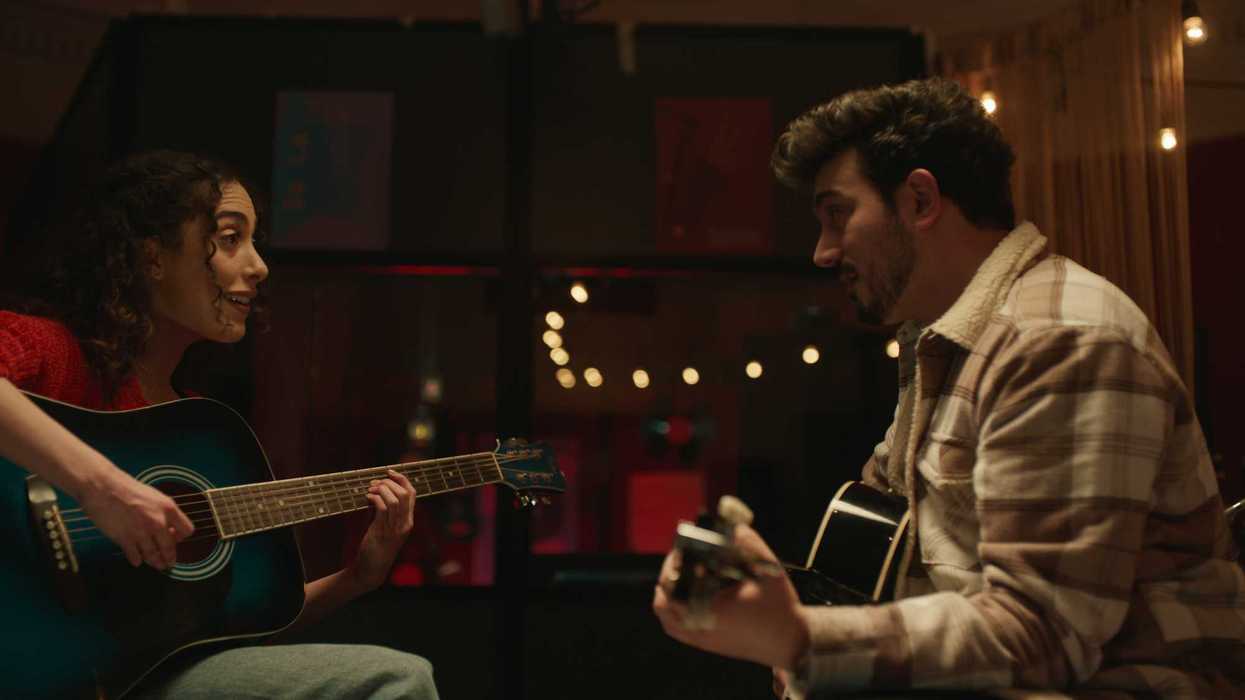
A Winter’s Song
In the world of independent cinema, we talk a lot about "specificity." We’re told that the more specific a story is, the more universal it becomes. But rarely do we see that theory put into practice as beautifully as in A Winter’s Song.
We sat down with producers Annie Dashtoyan (producer) and Edgar Damatian (who also stars in the film), composer Arman Aloyan, and editor/producer Yvette M. Amirian, ACE to discuss the technical and emotional hurdles of filming in Armenia and helping tell the story of their culture.
From the "slow rhythm" of the landscape to the intentional choice to find humor in the gray areas of life, the team breaks down how they crafted a "love letter to Armenia" that speaks to anyone who has ever felt caught between two worlds.
Let's dive in.
- YouTubewww.youtube.com
NFS: What was the moment you knew A Winter’s Song had to be made as a feature film?
Annie Dashtoyan: I came onto the project after it had already been shot, after spending nearly fifteen years on the studio side working on massive IP. And as much as I loved that world, it had started to feel distant from why I fell in love with filmmaking in the first place.
When I read A Winter’s Song, it had heart, humor, romance, and emotional weight, but it also carried something rare: it was the first English-language romantic comedy ever filmed in Armenia. That alone felt historic.
I knew instantly that this wasn’t just a sweet love story; it was a cultural moment. It was a chance to introduce an underrepresented audience to the world through joy, instead of trauma, which a lot of Armenian films have historically been about. That’s when I knew it deserved to live on a big screen, not just as a niche independent film, but as a true feature that could reach mass audiences.
NFS: How do you feel the film’s story resonates with people beyond the Armenian community?
AA: The film is rooted in a very specific culture, but the emotions it explores – love, displacement, family, longing, humor, and the search for belonging – are universal. Anyone who has ever missed home, fallen in love across boundaries, or felt caught between two worlds will recognize themselves in these characters.
We were very intentional about not turning the film into a history lesson. Instead, we wanted audiences to feel the culture through the relationships, the warmth, the food, the music, and the way people love each other. That emotional entry point is what allows anyone in the world, from any culture, to connect just as deeply as someone who is Armenian.
NFS: In what ways does the journey of the protagonist reflect universal themes of belonging and self-discovery?
Yvette M. Amirian, ACE: I think Liana goes into this experience as a struggling young woman who is chasing a singular dream. What she doesn’t realize yet is that a big part of throwing herself into that is not having dealt with the grief of her father’s passing. She thinks this record deal is going to bring her some sort of closure, or give her some confirmation that she is as talented as her Dad was, and that this very surface-level achievement would have somehow made him proud.
We never mention the dark history and loss that Armenia has experienced throughout its history, including very recently, in the movie. That was intentional because we wanted to focus on the positive parts of the culture. But as a metaphor for myself as I was crafting the performances and story, I always thought of Liana’s journey as being reflective of the loss Armenians have gone through as a community in recent years, and how we have had to find our joy again by leaning on each other and giving ourselves permission to be happy.
Going to Armenia, meeting David, reconnecting with Sophia – this support system snaps her out of this old mindset and opens her eyes to the fact that success and failure aren’t definitively black and white. There is this beautiful gray area where she finds her unique voice and thrives.
That’s a really universal story. I think we all go through that as individuals – whether it’s bouncing back from the loss of a loved one, or the loss of a job, a partner, a long-time dream. As Liana’s aunt says in the movie, you just have to keep moving forward, and you’ll find your way.
NFS: How did the experience of filming in Armenia influence the tone and heart of the story?
Edgar Damatian: Filming in Armenia fundamentally shaped the soul of the film. There is a stillness to the country that encourages reflection. I feel like the environment invites honesty, asking you to be present. As a result, time feels slower there, more intentional. And Liana’s character has to adjust her frenetic, deadline-driven life to fit this.
That slower rhythm naturally informed the pace and tone of the story, allowing moments to breathe. One of the characters actually says this beautifully in the film, referencing the Armenian mountain range seen in Liana’s coffee cup. Reading coffee grounds is an Armenian pastime, and in this case, her aunt translates that Liana is in such a rush to achieve her dream, but she needs to remember that the journey is just as important as the destination.
Armenia carries its history proudly. You feel it in the landscapes, the architecture, and the friendly interactions with its people. That organically brought a grounded weight to the film that adds depth and sincerity beyond a typical holiday film. And I think filming there just brought a real authenticity to the story. Our performances didn’t feel forced; the atmosphere inspired how we approached our scenes or how moments were framed, how the story unfolded. It grounded the film in something real and lived-in, and I believe that shows up in every frame of the movie.
NFS: What role does the holiday setting play in reinforcing the film’s emotional core?
AD: There is an inherent warmth and openness that comes with the holidays, and that energy helped amplify the story’s sense of connection, reflection, and hope. Emotions tend to feel closer to the surface during this time, allowing moments to land with more sincerity. From a production standpoint, the holiday setting allowed us to showcase Armenia in a fresh and cinematic way.
YMA: Armenia is typically portrayed in the summer months when tourist travel is highest. But the holidays reveal a different side of the country – snow-covered landscapes, Christmas decorations everywhere you look, and some of the most amazing lights you’ll see in any major city (according to one of our non-Armenian actors, even rivaling New York and Europe!). That naturally added a beautiful texture to the film, allowing Liana to experience Armenia, not as a tourist passing through, but as a young woman in the midst of her own transformation, caught up in the rhythm and emotion of a place during its most reflective time of year.
NFS: Edgar, how does your work both on camera and behind the camera inform one another in this film?
ED: Being both in front of and behind the camera forced me to listen more than I ever had before. As an actor, I am trained to be present, to respond truthfully, and to stay connected to the emotional core of a scene. As a producer, I am responsible for the entire ecosystem that allows that moment to exist.
In this film, those roles fed each other in a very intentional way. Acting kept me grounded in the humanity of the story. Producing kept me aware of the responsibility to protect that humanity at every stage. From casting to forming crew to the tone on set, I was constantly asking whether decisions were serving the emotional truth or just the logistics.
Being a producer also made me a better scene partner. I understood the constraints, the pressure, the moving parts. That awareness allowed me to show up calmer, more focused, and more generous on camera. I was not just performing in the story. I was safeguarding it.
At the same time, acting reminded me why the film needed care behind the scenes. When you are emotionally exposed in front of a camera, you need an environment built on trust. I carried that understanding into every producing decision.
In the end, the dual role was not about control; it was about alignment – making sure the story we were telling emotionally was supported by the practical elements it took to make the film. When those two things are in sync, the work feels honest, and audiences can sense that.
NFS: What do you hope audiences walk away thinking about after seeing the film?
YMA: Edgar said in a recent interview that this movie was like our “love letter to Armenia,” and I thought that was so accurate. As an Armenian, my hope is that audiences walk away with a deeper appreciation for the culture and maybe even a curiosity to experience the country for themselves. As a filmmaker, I hope they connect with the story on a human level. I hope they see some part of themselves in the characters we worked really hard to build. And ultimately, I hope it opens a door, allowing people to want to learn more about who we are and the beautiful country we come from.