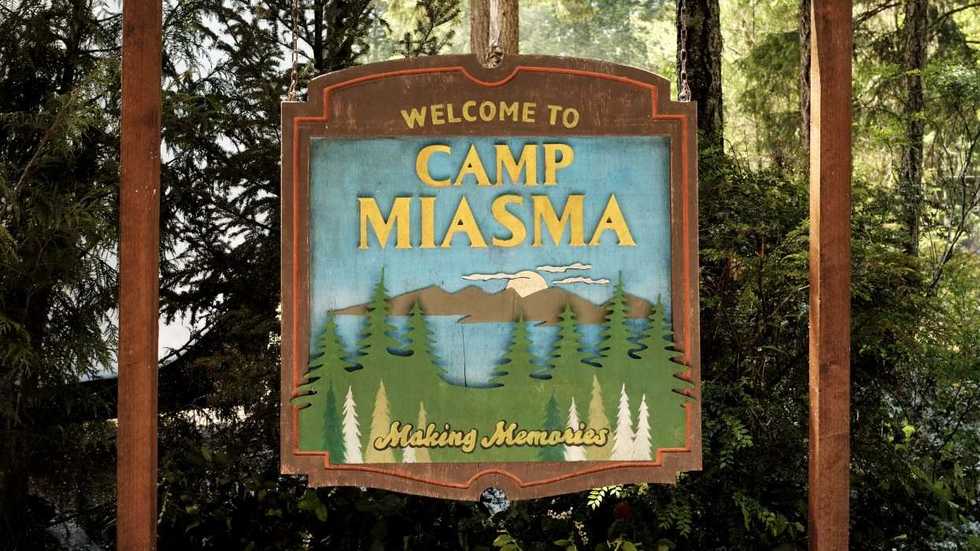
One of the posters for Teenage Sex and Death at Camp Miasma, the new movie from I Saw the TV Glow writer-director Jane Schoenbrun, boasts the tagline “a new kind of horror remake…” It’s actually a completely original movie, as it tells a meta story about a filmmaker hoping to mount a reboot of the fictional Camp Miasma slasher franchise. While that faux 14-film series isn’t real, Schoenbrun clearly drew inspiration from a number of slasher classics of the 1970s, 1980s, and 1990s, leading them to pepper the movie with Easter eggs.
Here, we’re going to break down 10 references to classic slashers hidden throughout the new movie that hint at the real-life movies that inspired TS&D@CM.
1. The Friday the 13th Franchise
 ‘Teenage Sex and Death at Camp Miasma’ (2026)Credit: Mubi
By far, the franchise that is referenced the most in Teenage Sex and Death at Camp Miasma is Friday the 13th. The 12-part slasher franchise, which is set to receive a prequel spinoff series later this year with Peacock’s Crystal Lake, lends Miasma its summer camp setting. The Schoenbrun movie also tackles many slasher tropes that were cemented (though not invented) by Friday the 13th, including the masked killer (the murderous Jason Voorhees didn’t get his hockey mask until the third installment, but it instantly became an iconic symbol of the character), the final girl (aka the usually virginal female character who survives at the end of the movie), and the fact that characters who have sex often die at the hands of the killer.
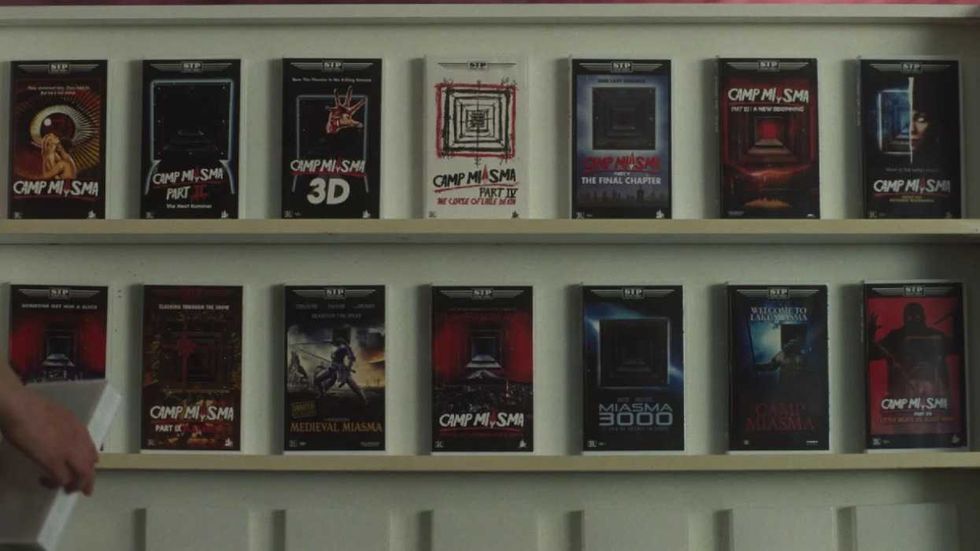
Friday the 13th also gives TS&D@CM many of its aesthetic signifiers. The sign advertising the summer camp, for instance, is clearly inspired by the sign for Camp Crystal Lake that can be seen in the original 1980 Friday the 13th. The majority of the VHS covers for the Camp Miasma movies are also directly inspired by Friday the 13th posters, including 1981’s Part 2, 1982’s Part 3-D, 1985’s A New Beginning, and 1988’s The New Blood. The score also draws inspiration from Friday the 13th in multiple places. As do the kills, which include direct references to Part 2 and The New Blood.
2. The Burning (1981)
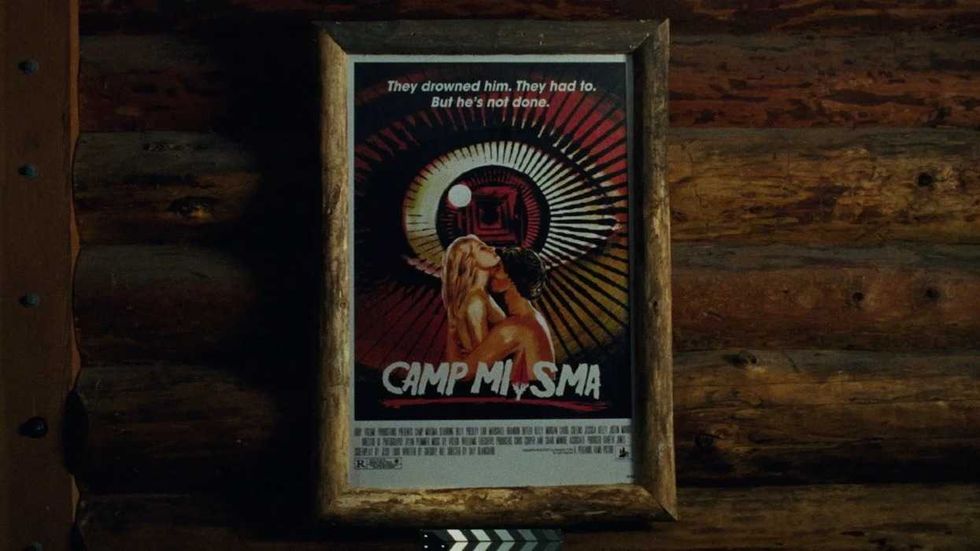 ‘Teenage Sex and Death at Camp Miasma’ (2026)Credit: Mubi
While the tagline on the poster for the original Camp Miasma is another Friday the 13th reference (The original movie featured Jason’s mother seeking revenge for his drowning as a child… How did he come back as an adult to murder people in further installments? Don’t ask.), the design of the poster itself is inspired by the artwork for 1981’s The Burning, another classic slasher set at a summer camp.
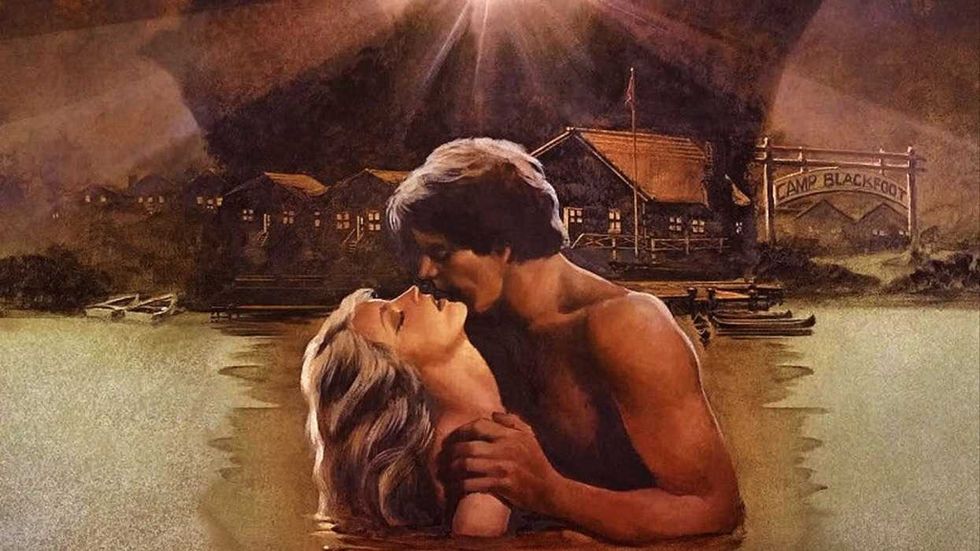 ‘The Burning’ (1981)Credit: Filmways Pictures
The Burning is also referenced by name in TS&D@CM, when former actor Billy Presley (Gillian Anderson) mentions that she auditioned for the movie during a conversation about “Me Too,” referencing the darker side of the movie’s history. Although no known misconduct occurred on the set, The Burning was produced by Harvey Weinstein (whose brother Bob Weinstein co-wrote the screenplay).
3. The Nightmare on Elm Street Franchise
The opening credits use images of movie memorabilia to trace the rise and fall of the Camp Miasma franchise. The objects that are specifically used to reference the franchise’s decadence and descent into campiness are a cheesy anti-drug poster that says that the killer, Little Death (Jack Haven), is “terrified of drugs” and a Little Death rap album.
This is a reference to the fact that the killer in the Nightmare on Elm Street franchise, child killer Freddy Krueger (Robert Englund), became so popular throughout the 1980s that he was ultimately defanged by becoming a part of mainstream pop culture, which made him a pseudo-celebrity thanks to bizarre pop culture artifacts such as appearances on MTV, a collaboration with the rap group The Fat Boys, and the cheesy album Freddy’s Greatest Hits.
4. Sleepaway Camp (1983)
Sleepaway Camp is referenced by name during a moment where filmmaker Kris Williams (Hannah Einbeinder) is quizzed about slasher actors by her agent (Sarah Sherman). However, it has deeper ties to the overarching story as well. Kris recognizes that the original Camp Miasma movie is transphobic, even though it was instrumental in her queer awakening. The fact that the killer is a trans character is a reference to the famous and controversial twist ending of Sleepaway Camp, where it is revealed that [SPOILER ALERT], the sweet camper Angela (Felissa Rose) is actually the killer, because she was forced to present as female even though she was assigned male at birth.
Kris’ reckoning with the implicit and explicit anti-queerness of 1980s slasher movies forms the backbone of the entire movie, so Sleepaway Camp is integral to the thesis of TS&D@CM, even though the fictional Camp Miasma franchise is more closely modeled on Friday the 13th.
5. Friday the 13th Part 2 (1981)
Speaking of our good pal Jason, a scene from Camp Miasma features Will (Zach Cherry) telling the story of Little Death around the campfire. This scene is a direct reference to a similar moment where Paul Holt (John Furey) tells his camp-counselors-in-training the story of Jason in Friday the 13th Part 2. Both scenes even end with another character dressing as the killer in order to scare the others.
6. Leatherface: The Texas Chainsaw Massacre III (1990)
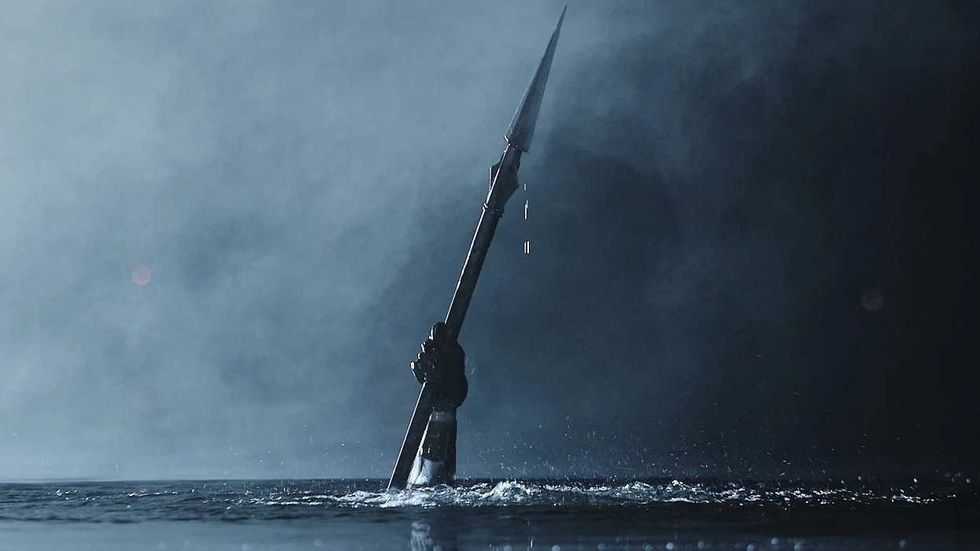 ‘Teenage Sex and Death at Camp Miasma’ (2026)Credit: Mubi
While the fact that Little Death lurks at the bottom of the lake is a reference to Jason Voorhees (with a little bit of Godzilla mixed in), the shot of the killer’s spear-wielding hand bursting from the water is most likely a reference to the teaser for the third Texas Chainsaw Massacre movie, which was a parody of Arthurian legend featuring a hand wielding a chainsaw emerging from a lake.
7. Psycho (1960)
Alfred Hitchcock’s seminal horror film Psycho, which is the granddaddy of the slasher genre, is referenced both directly and indirectly multiple times throughout Teenage Sex and Death at Camp Miasma. In addition to a joke about Kris’ debut film being a retelling of Psycho from the perspective of the shower curtain, the movie is referenced when Kris jokes about Billy hiding the desiccated corpse of her mother in her bedroom. Psycho’s transphobic ending also provides similar fuel for TS&D@CM’s themes, though Sleepaway Camp bears the brunt of its ire. The Schoenbrun movie also makes multiple references to Ed Gein, the real-life serial killer who was the inspiration behind Psycho’s Norman Bates (as well as The Texas Chain Saw Massacre’s Leatherface and The Silence of the Lambs’ Buffalo Bill).
8. Halloween (1978)
John Carpenter’s 1978 hit Halloween was every bit as influential as Psycho in the popularization of the slasher genre and the development of the slasher formula. As such, it is also referenced multiple times, including multiple direct title drops (when Kris talks about Jamie Lee Curtis starring in the new Halloween trilogy and when a producer with whom she has a Zoom meeting makes a photo of Halloween killer Michael Myers appear on-screen), a moment where Little Death pauses in the middle of a bloodbath (which mimics Michael taking a moment to inspect his work after stabbing a teenager so hard that he’s pinned to a wall), and the fact that the cop who shows up at the end of Camp Miasma behaves similarly to Michael’s psychiatrist and nemesis Dr. Loomis (Donald Pleasence).
9. Scream (1996)
In addition to Neve Campbell (who plays Scream lead Sidney Prescott) being name-dropped in a conversation about final girls, Little Death wiping blood off his visor is most likely a reference to the Scream killer Ghostface famously using his glove to wipe blood off his knife.
10. Wes Craven’s New Nightmare (1994)
The seventh Elm Street movie, Wes Craven’s New Nightmare, follows Freddy Krueger escaping into the real world to attack the people who made the Freddy movies. In addition to being name-dropped in a hilarious running gag, its plot bears many similarities to the meta storyline at the center of TS&D@CM.
Teenage Sex and Death at Camp Miasma also references plenty of non-slasher movies, including The Last House on the Left (its tagline “to avoid fainting, keep repeating it's only a movie…” is mimicked by the VHS tagline for the first Camp Miasma) and Videodrome (the fleshy VCR is a direct riff on a similar techno-organic orifice in David Cronenberg’s classic). Are there any references that you caught in Jane Schoenbrun’s new movie that weren’t mentioned on this list? Please shout them out in the comments below!