13 Genre-Bending Movies You Won’t Forget
These movies start in one lane and swerve into another midway, changing tone, style, and audience expectations.
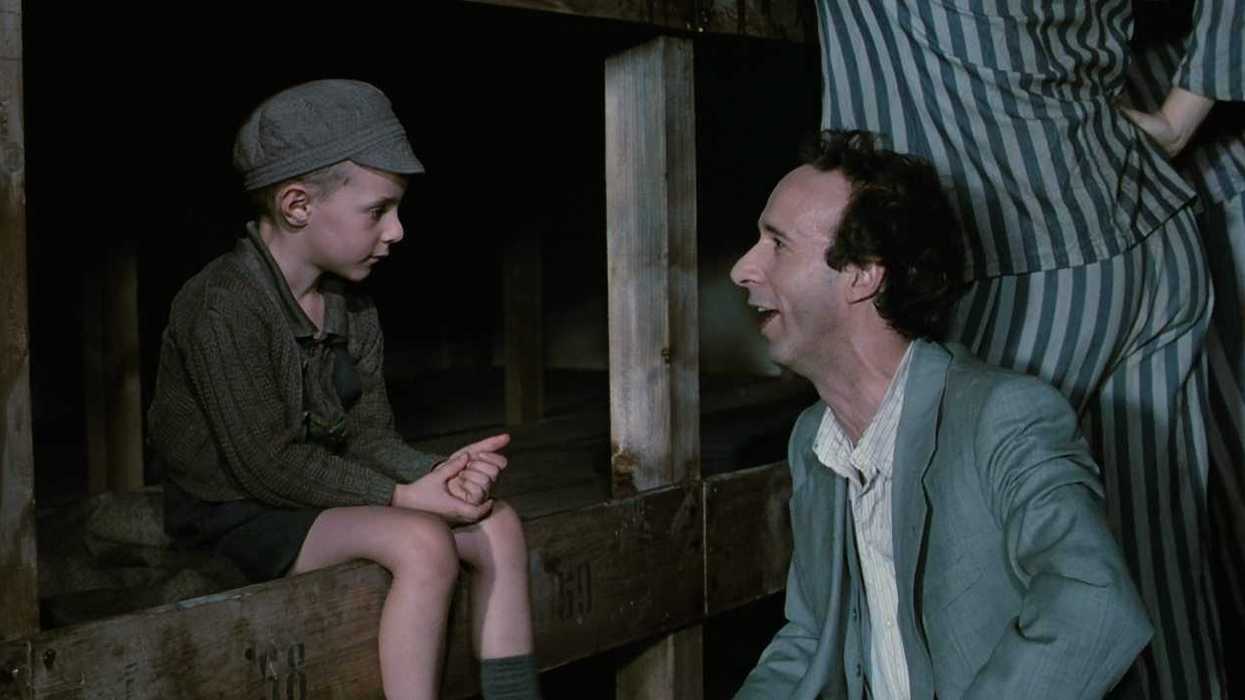
Giorgio Cantarini and Roberto Benigni in Life is Beautiful (1997)
Every once in a while, a film will trick you into believing you have everything worked out. With popcorn ready, you settle in, thinking you understand the plot.
And bam! Suddenly, it takes a different turn, leaving you scratching your head and a little excited, too.
These are the movies that play with the concept of storytelling itself rather than merely telling a story. In movies, genre shifts are the equivalent of a prank on the audience—albeit executed with skill and purpose.
What’s a Genre-Bend?
It’s crucial to explain what makes these movies—the ones that shift genres—so captivating. Here, we are not referring to a single plot twist or unexpected conclusion. A genre-bend occurs when a movie’s core elements shift midway through: a thriller devolves into an absurdist satire, a romance transforms into horror, or a comedy becomes a tragedy.
This is a radical change in tone, mood, and style, not just a plot change. It’s what causes you to pause and ask yourself, “Are we still watching the same movie?”
A Journey Through Cinematic Rule-Breaking
Now, in this article, we are going to look at 13 movies that famously carried out this type of metamorphosis. Whether by completely changing genres, reorienting the plot around new characters, or flipping the emotional register, each one uniquely deviates from convention.
By the end, you will realize that genre-bending is a creative tool that can enhance storytelling, test viewers’ patience, and broaden the possibilities of cinema.
The Unforgettable 13: A Deep Dive into Genre-Defying Films
1. Psycho (1960)
Written by: Joseph Stefano | Directed by: Alfred Hitchcock
Psycho appears to be a simple crime drama at first glance. After stealing money, Marion Crane (Janet Leigh) runs away from the town and hides in a remote motel. The audience anticipates that the film will follow her journey as she eludes capture, setting up a suspenseful thriller. But then, Hitchcock pulls the rug out from under everyone.
The film changes to a psychological horror about Norman Bates (Anthony Perkins) after Marion is killed in the notorious shower scene halfway through. This change in genre is seismic, not subtle. Viewers who had never witnessed a protagonist killed off—that too so abruptly and prematurely—were shocked as the narrative shifted from a woman’s crime story to a terrifying portrayal of insanity. Through incisive editing and startling sound design, Hitchcock accentuated the change, giving the violence a gruesome and unsettling feel.
What’s the lesson here? Never be scared to deviate from the norm. Psycho demonstrates that eschewing the conventional “main character arc” can increase suspense and have a lasting cultural impact.
2. Something Wild (1986)
Written by: E. Max Frye | Directed by: Jonathan Demme
The movie starts off as an oddball romantic comedy. A buttoned-up yuppie named Charles (Jeff Daniels) meets a free-spirited woman named Lulu (Melanie Griffith), who entices him into an adventurous liaison. It resembles a screwball comedy for a while about mismatched lovers who are powerless to stop each other’s mayhem.
Halfway through, the atmosphere changes. The romantic comedy abruptly turns into a perilous thriller when Ray (Ray Liotta), Lulu’s violent ex-husband, bursts into the narrative. The whole tone of the movie changes with the threat Ray poses. Demme uses music, lighting, and pacing that are more menacing than lighthearted to punctuate the tonal shift. The focus shifts from a weekend romance to survival.
Character-driven stories can change tone without losing their credibility, as this movie serves as a reminder. It’s a masterclass for filmmakers on how to use performance—Liotta’s presence in particular—to guide a genre shift.
3. Full Metal Jacket (1987)
Written by: Stanley Kubrick, Michael Herr, Gustav Hasford | Directed by: Stanley Kubrick
Kubrick divides Full Metal Jacket into two parts: The first, a gruesome training camp drama in which Sergeant Hartman (R. Lee Ermey) relentlessly abuses recruits, dehumanising them, particularly Joker (Matthew Modine) and Pyle (Vincent D’Onofrio). It is harsh, cramped, and emotionally taxing.
The camp is abandoned in the second half, plunging us into the tumult of the Vietnam War. The story abruptly broadens and turns into a massive battle film. From psychological character study to cynical war epic, the genre shift is striking. Kubrick uses cinematography to highlight the dissonance, alternating between cramped, oppressive barracks shots and expansive, chaotic battlefield scenes.
Artists can learn the value of structure from this. A movie can function in acts that retell the plot; it doesn’t have to stay in one mode the entire time. Kubrick’s experiment shows how a single movie can represent several viewpoints on the same subject.
4. From Dusk Till Dawn (1996)
Written by: Quentin Tarantino | Directed by: Robert Rodriguez
The film starts off as a crime film in the vein of Tarantino. A family is being held captive by the violent fugitives, Seth (George Clooney) and Richie (Quentin Tarantino), the Gecko brothers, as they escape toward Mexico. It resembles a grim, gory thriller about lawbreakers who have nothing to lose.
After that, they arrive at the Titty Twister bar, where the film abruptly shifts to a vampire horror-comedy. The gripping, realistic crime movie turns into an extravagant gorefest. Rodriguez uses practical effects, cartoonish violence, and unwavering dedication to the bit to embrace the chaos despite the ridiculous tonal jump.
Filmmakers can learn that taking risks pays off. If the film confidently leans into a wide tonal leap rather than hesitating, it can work. Sometimes, shocking an audience with sheer boldness is the best way to win them over.
5. Life is Beautiful (1997)
Written by: Vincenzo Cerami, Roberto Benigni | Directed by: Roberto Benigni
The movie unfolds like a sweet fairytale throughout the first half. A carefree man, Guido (Roberto Benigni), uses slapstick humor, optimism, and unrelenting charm to win over Dora (Nicoletta Braschi). It’s humorous, lighthearted, and full of romantic hope.
The second half changes significantly. After Guido and his family are sent to a Nazi concentration camp, the movie turns into a tragic drama. As he persuades his young son that their incarceration is a part of an elaborate game, Guido’s humor continues to exist but turns into a survival tactic. The shift in tone from a lighthearted romance to a Holocaust tragedy is heartbreaking but smooth.
Life is Beautiful demonstrates, especially for writers, that tragedy and comedy can coexist without devaluing one another. Because the humor supports the emotional weight rather than the other way around, the shift proves to be effective.
6. Audition (1999)
Written by: Daisuke Tengan | Directed by: Takashi Miike
Aoyama (Ryo Ishibashi), a widower, sets up a fictitious audition to meet possible partners at the start of the movie. He falls in love with Asami (Eihi Shiina), and the scene sets up a quiet romantic drama with a hint of melancholy.
However, the romance turns into a terrifying horror about halfway through. The film delves into unsettling imagery as Asami displays a sadistic side. Through dreamlike scenes, surreal editing, and abrupt unmooring bursts of violence, Miike signals the genre’s shift.
Audition teaches filmmakers to be patient. The horror strikes more forcefully when the audience is lulled into a false sense of security. The most terrifying thing, at times, is how normal everything seems before the nightmare starts.
7. Sunshine (2007)
Written by: Alex Garland | Directed by: Danny Boyle
Sunshine initially appears to be an intellectual sci-fi movie about a group of astronauts attempting to rekindle the dying sun. On board their ship, the crew, led by Capa (Cillian Murphy) and Kaneda (Hiroyuki Sanada), must deal with moral quandaries, claustrophobic tension, and technical difficulties.
And then, the tone changes. When Pinbacker (Mark Strong), a disfigured captain from a prior mission, arrives, the final act takes on a terrifying quality. The film shifts from a contemplative science fiction movie to a near slasher. Boyle uses disorganized editing, warped images, and unsettling sound design to highlight this metamorphosis.
The lesson here is that blending genres doesn’t have to be smooth; in fact, it can be intentionally startling. Storytellers can take audiences to new emotional heights by embracing contrast.
8. The Cabin in the Woods (2012)
Written by: Drew Goddard, Joss Whedon | Directed by: Drew Goddard
A group of friends goes to a cabin for a weekend getaway in the opening scene, which sounds like a standard teen horror movie. There are some tropes in place—a carefree couple, a jock, a nerd—and the movie confidently embraces these teen-horror clichés.
The second layer, however, quickly becomes apparent: the events are being controlled like a puppet show by a covert facility. The horror movie turns into a meta-commentary that takes a satirical tone on the genre. The movie shifts from parody to apocalyptic spectacle as the walls literally collapse.
This film demonstrates that genre changes don’t have to be startling. It serves as a reminder to creators that viewers like to laugh along with the joke. It’s possible for a genre-bend to serve as a critique of the very clichés it challenges.
9. The Place Beyond the Pines (2012)
Written by: Derek Cianfrance, Ben Coccio, Darius Marder | Directed by: Derek Cianfrance
In order to support his young son, Luke (Ryan Gosling), a stunt motorcycle rider, resorts to bank robbery at the start of the story. It resembles a grim crime drama about fatherhood and desperation.
However, Luke’s storyline ends abruptly, and the attention turns to Avery (Bradley Cooper), a driven police officer who struggles with his own moral issues. The story then leaps forward once more, this time to the teenage sons of Luke and Avery. What starts out as a heist film turns into a family drama spanning generations.
This movie shows how changing genres can reflect changing viewpoints. Sometimes redefining who the story belongs to is more daring than adding spectacle.
10. The World’s End (2013)
Written by: Simon Pegg, Edgar Wright | Directed by: Edgar Wright
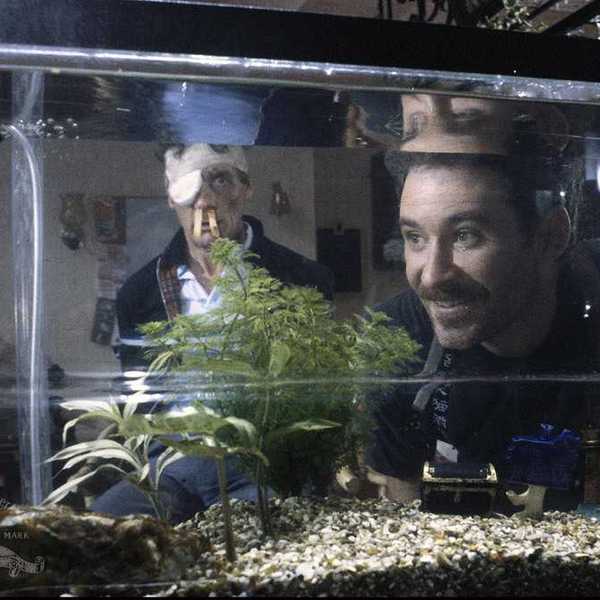
The World’s End begins as an evocative comedy about five friends trying to pull off a failed pub crawl from when they were young. The reluctant group is rallied by Gary King (Simon Pegg), and their inebriated arguments and personal baggage provide a lot of the humor.
Then strange things happen. The group learns that robot-like aliens have taken over their hometown. The comedy becomes a postapocalyptic sci-fi action film. Rapid editing, intricate fight choreography, and increasingly surreal revelations are some ways in which Wright masterfully coordinates the transition.
This is a lesson in tonal layering. Wright’s abrupt pivot to sci-fi is amusing and oddly moving because he grounds the comedy in real character conflict.
11. Bone Tomahawk (2015)
Written by: S. Craig Zahler | Directed by: S. Craig Zahler
The movie begins as a Western with slow pacing. Kurt Russell plays Sheriff Hunt, who leads a team to rescue some townsfolk who were abducted by enigmatic raiders. Zahler uses all the genre characteristics—Dusty landscapes, slow pacing, and subtle character tension.
However, as they come across a group of cannibalistic cave people, the Western abruptly turns into scary survival horror. In stark contrast to the film’s first half’s subdued patience, the violence is shocking, graphic, and purposefully unsettling.
This change emphasizes the value of patience. Zahler proves that payoffs can have a much greater impact if they hold back before releasing something extreme.
12. Sorry to Bother You (2018)
Written by: Boots Riley | Directed by: Boots Riley
The film opens as a workplace satire. Using a “white voice”, Cassius Green (LaKeith Stanfield) finds success in telemarketing and advances up the corporate ladder. Its critique of capitalism is incisive, witty, and direct.
It then makes a bizarre detour. A horrific corporate secret involving genetically modified horse-people is revealed by Cassius. By covering its criticism of labor exploitation with gory imagery, the satire suddenly transforms into absurdist sci-fi.
This movie is a testament to how genre-bending can be employed to make social commentary. Riley goes beyond the metaphor, substantiating that intentional exaggeration can enhance the narrative rather than belittling its message.
13. Parasite (2019)
Written by: Bong Joon-ho, Han Jin-won | Directed by: Bong Joon-ho
It’s a dark comedy in the first half. By using charm and deceit to get jobs, the impoverished Kim family tricks their way into working for the rich Park family. It’s cleverly plotted, humorous, and satirical.
However, the movie turns into a suspenseful thriller when a shocking secret in the basement is exposed. Class satire and violent suspense abruptly collide, resulting in chaos. By using tonal contrasts, Bong highlights the change—jovial banter gives way to eerie silences and violent eruptions.
Parasite shows that genre changes can have more profound significance. Bong conveys to the audience the brittleness of class divisions through form-shifting. It’s the most audacious form of thematic storytelling, not merely a plot twist.
Conclusion
Genre-bending movies serve as a reminder that narratives don’t have to fit neatly into predetermined categories. They take us by surprise, test us, and sometimes rock us to our very core. This shows that cinema’s actual power lies in its capacity to reinvent itself in front of our very eyes by daring to defy expectations.
Perhaps, the excitement of it all is in the fact that the best movies alter the stories we believe we are watching rather than merely telling them.