8 Movies That Prove Character is King
When the story takes a backseat to let the character take the wheel, it leads to some great cinema.
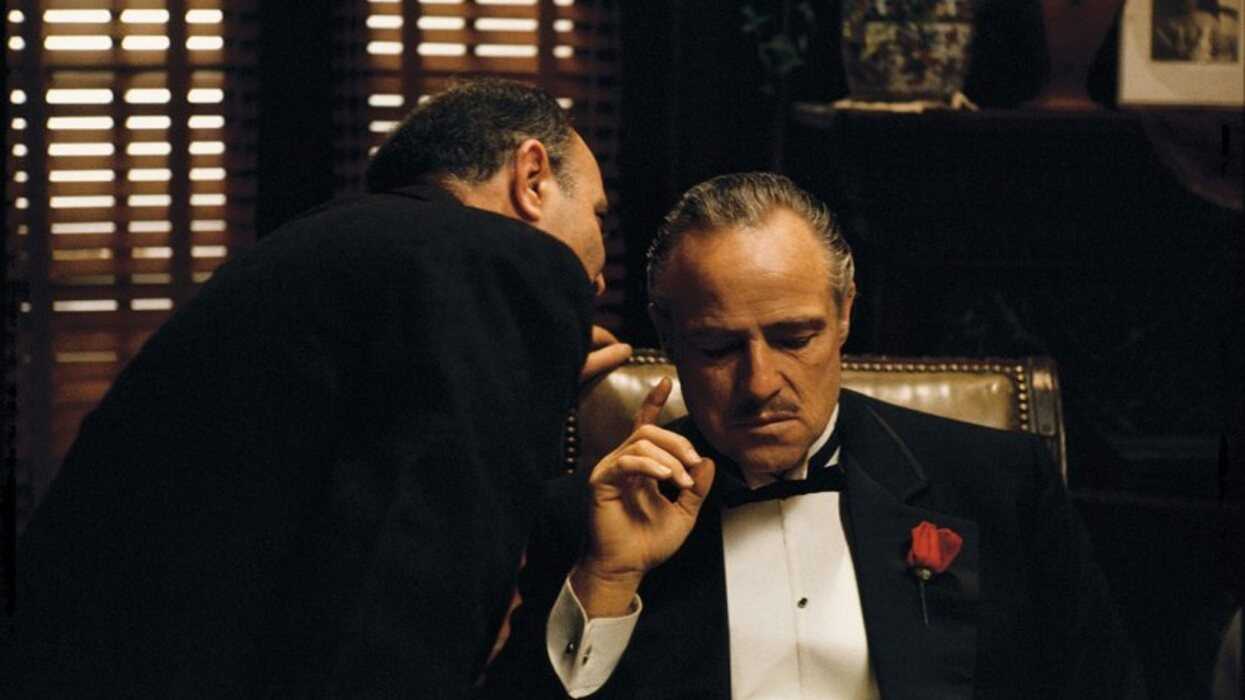
The Godfather (1972)
Some films go beyond just telling a story; they let a character consume it. These movies prove that when a protagonist is written, performed, and directed with unflinching depth, the result is more than drama. It’s art.
Character-driven films hold up a mirror—not just to the world, but to the characters inside the narrative. Unlike plot-heavy blockbusters, these movies unfold at a slower pace, lingering on quiet breakdowns, moral knots, and emotional truths.
They stick with you not because of twists or explosions, but because the actor on screen looked like they were falling apart the same way you once did.
So, let’s get to the countdown of 8 unforgettable films where the story flows from the people—not the other way around. But first…
What Makes a Film ‘Character-Driven’?
Character-driven films flip the usual equation. Instead of following events that push characters forward, these films let the characters cause the events—or sometimes, just absorb them. That shift changes everything.
In plot-driven stories, external forces dominate: heists go wrong, aliens invade, bombs tick. But in character studies, the action is internal. We watch people make choices, wrestle with their demons, collapse under pressure—or emerge from it. There's more silence, more stillness, and more time to sit with what a person is really going through.
What makes these films memorable is how well they dig. These characters aren't archetypes or tropes—they're messy, often contradictory, and fully alive. They shift moods mid-scene, hide things from the audience, and spiral in ways that feel uncomfortably familiar. The best ones don’t demand sympathy—they earn understanding. And long after you’ve forgotten the dialogue, you remember them.
Okay, onto our list of great character-driven films.
8. The Wrestler (2008)
Written by: Robert D. Siegel | Directed by: Darren Aronofsky
Randy “The Ram” Robinson (Mickey Rourke) is a washed-up pro wrestler scraping by with part-time gigs and painkillers, chasing past glory under cheap lights. Off the mat, his life is a patchwork of loneliness—he’s estranged from his daughter Stephanie (Evan Rachel Wood) and clinging to an uneasy connection with Cassidy (Marisa Tomei), a stripper who, like him, performs for strangers and hides behind stage names.
What lands The Wrestler on this list is its brutal honesty. Aronofsky strips the film down to its bones—no gimmicks, no filters. Rourke gives a performance that feels lived-in, not acted, letting Randy’s silence speak louder than any monologue. That supermarket deli counter scene? It's soul-crushing. He’s smiling, joking—and slowly falling apart.
It’s a reminder to filmmakers that restraint is a weapon. The film doesn’t shout its themes—it lets them bleed out quietly. Sometimes, showing a man slice meat for customers while hiding his heartbreak says more than any flashy climax ever could.
7. There Will Be Blood (2007)
Written and Directed by: Paul Thomas Anderson
Daniel Plainview (Daniel Day-Lewis) is a silver miner turned oil tycoon whose ambition eats everything in its path—land, people, and finally, his own soul. As he manipulates townsfolk and steamrolls competition, including the fiery preacher Eli Sunday (Paul Dano), the real conflict becomes internal: how far he’ll go to win, and what will be left of him when he does?
The power of There Will Be Blood lies in its restraint and menace. There’s barely any score in the first fifteen minutes, just Plainview grunting through darkness. Daniel Day-Lewis, as he always does with his characters, inhabits Plainview instead of just playing him. Every glare, every measured line delivery is fuelled by something ugly brewing underneath. When the infamous “I drink your milkshake!” line erupts, it feels less like a twist and more like a long-awaited confession.
One lesson here? Don’t rush the storm. Anderson lets tension build through looks, silences, and long takes. A great character study trusts the actor—and the audience—to fill in the blanks.
6. A Streetcar Named Desire (1951)
Written by: Tennessee Williams and Oscar Saul | Directed by: Elia Kazan | Based on the Play by: Tennessee Williams
Blanche DuBois (Vivien Leigh) arrives in New Orleans carrying fancy clothes, fading Southern manners, and secrets she can barely outrun. She moves in with her sister Stella (Kim Hunter), but clashes with Stella’s husband Stanley Kowalski (Marlon Brando), whose brute force and suspicion chip away at Blanche’s already-fragile grasp on reality.
Streetcar is a play turned cinema at its rawest. Brando's Stanley changed screen acting forever, but this is Blanche’s descent. Leigh captures every twitch, denial, and breakdown with surgical precision. Kazan keeps the camera close, uncomfortable even—letting us see every unraveling thread. “Stella!” might be the iconic shout, but it’s Blanche’s soft delusions that haunt the film.
For storytellers, this is a study in contrasts—finesse vs. force, fragility vs. dominance. It’s proof that even in an apartment with four walls and no car chases, you can stage a war that feels bigger than any battlefield.
5. Raging Bull (1980)
Written by: Paul Schrader and Mardik Martin | Directed by: Martin Scorsese
Jake LaMotta (Robert De Niro) is a middleweight boxer with fists like hammers and jealousy that burns hotter than his temper. In the ring, he dominates. Outside it, he sabotages every relationship—picking fights with his brother Joey (Joe Pesci), and pushing away his wife Vickie (Cathy Moriarty) with paranoia disguised as pride.
Shot in stark black-and-white, Raging Bull is less about boxing than it is about a character in free fall. Scorsese frames every fight like a ballet of brutality, but it’s the quiet scenes that land harder. The jail-cell meltdown—“I’m not an animal!”—feels like watching a man realize he broke something inside himself that can’t be fixed.
What’s worth noting here is how form follows function. The jagged editing, the slow-motion violence, the swelling score—they all mirror Jake’s inner chaos. It’s a brutal reminder: your film’s style should serve your character’s psychology, not just your aesthetics.
4. Taxi Driver (1976)
Written by: Paul Schrader | Directed by: Martin Scorsese
Travis Bickle (Robert De Niro) is a lonely Vietnam vet turned New York cabbie, drifting through sleepless nights and urban decay. With no real connection to anyone—not even Betsy (Cybill Shepherd), the campaign worker he obsesses over—Travis spirals into delusion and violence, convinced he has a mission to “clean up” the filth around him.
Taxi Driver could have easily strived to incite sympathy in you. Instead, it sits you in Travis’s cab and dares you to look away. Scorsese and Schrader don’t spoon-feed motivations or morality. They build a world that feels as fractured as the man in the driver’s seat. From Bernard Herrmann’s jazzy score to that slow, haunting camera work, everything is designed to trap you inside Travis’s warped headspace. And then there’s the mirror scene—“You talkin’ to me?”—which somehow became iconic and terrifying all at once.
This film is a lesson in subjectivity. When you anchor the lens to a character’s mental state, every frame becomes part of their psychology. It’s less about showing the world and more about showing how the world feels to one damaged man.
3. The Godfather Part II (1974)
Written by: Francis Ford Coppola and Mario Puzo | Directed by: Francis Ford Coppola | Based on the novel by: Mario Puzo
Michael Corleone (Al Pacino) has everything—power, wealth, a legacy—and yet somehow, he’s never been more alone. As he tightens his grip on the family business, paranoia takes root. He alienates allies, dismantles relationships, and crosses lines his father never would have touched. In parallel, the film shows young Vito Corleone (Robert De Niro) rising in a very different world, guided by necessity rather than pride.
It’s not only Michael’s decisions that make Part II a character study. It’s the absence of emotions as he makes them. Pacino plays him with a cold stillness that’s scarier than any outburst. Coppola, meanwhile, drenches the film in shadows—visually echoing Michael’s moral rot. That final flashback, with a younger Michael isolated at a family dinner, is more than a callback. It’s the emotional gut punch that makes sense of the monster he has become.
Here, the genius is in contrast. Juxtaposing Vito’s rise with Michael’s fall shows how different kinds of power shape different kinds of men. If you’re building a character arc, this is the gold standard in how to deepen a sequel, instead of just extending it.
2. Citizen Kane (1941)
Written by: Herman J. Mankiewicz and Orson Welles | Directed by: Orson Welles
Charles Foster Kane (Orson Welles) is a newspaper tycoon who seems to have everything—money, influence, even his own private Xanadu. But when he dies alone, whispering “Rosebud,” the mystery of that final word sends a reporter down a rabbit hole, piecing together a life that’s equal parts ambition, loneliness, and contradiction.
Citizen Kane is definitely groundbreaking in the technical aspect, but more importantly, it’s a study in identity fragmentation. Welles tells Kane’s story through the eyes of others, never letting us settle on a single version. One moment, he’s a romantic, the next he’s a tyrant. The structure mimics memory—unreliable, biased, and emotional. That’s what keeps it compelling even after all these years.
Citizen Kane should be studied for its narrative perspective. You don’t need to give viewers all the answers—you just need to give them enough to argue over. Kane is remembered not because he was explained, but because he remains a riddle wrapped in a very human mess.
1. The Godfather (1972)
Written by: Mario Puzo and Francis Ford Coppola | Directed by: Francis Ford Coppola | Based on the Novel by: Mario Puzo
Michael Corleone (Al Pacino) begins as the quiet son—the one who doesn’t want to be part of the family business. But when his father, Vito (Marlon Brando), is nearly assassinated, something cold and calculating starts to surface. By the end, Michael not only becomes the new Don but also a man who’s lost everything human in the name of power.
This is character transformation at its most chilling. Coppola avoids rushing the arc and builds it with quiet dinners, furtive glances, and scenes like the restaurant shooting—Michael’s face frozen in hesitation, then resolve, then horror. Brando gives the film weight, but it’s Pacino who gives it shape. His silence becomes the story.
Sometimes, what’s not said matters most. Michael rarely talks about what he’s becoming—but the direction, the lighting, the camera angles—they all do the talking. It’s a film that teaches restraint. Not every transformation needs a monologue. Sometimes, a stare across the table is enough.
Conclusion
These films dissect the human condition. Strip away the spectacle, and what you’re left with is the thing that matters most: people. Flawed, complicated, painfully relatable people. That’s why these movies last. They speak to something real and raw that explosions and plot twists can’t touch.