All 8 'Mission: Impossible' Movies, Ranked
A definitive, no-holds-barred ranking of all eight Mission: Impossible movies—style, stunts, and storytelling.
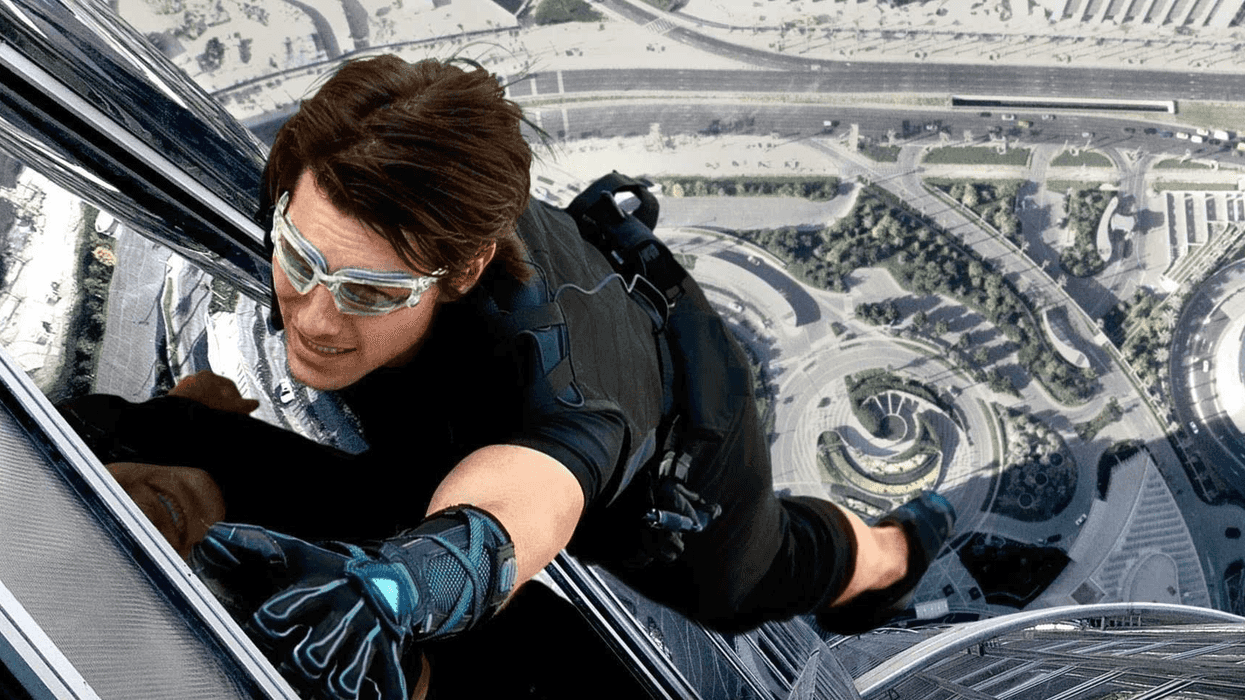
Mission: Impossible - Ghost Protocol (2011)
From masked heists to HALO jumps, the Mission: Impossible franchise has redefined action cinema—but which films soar, and which crash off the cliff of expectations?
When Mission: Impossible (1996) landed, it was different from other spy thrillers. In a way, it was a reintroduction—a TV reboot, a Brian De Palma mind game, and Tom Cruise launching himself headfirst into the producer’s chair.
Nearly three decades later, this franchise has morphed into a cinematic stress test where Cruise, as Ethan Hunt, risks life and limbs to outdo his last insane stunt. What started as quiet espionage turned into a global spectacle of practical effects, real locations, and Cruise doing things that most actors can’t even watch without sweating.
But spectacle alone doesn’t earn top marks. This ranking dives into what really matters: the craft behind the chaos.
We looked at each film’s action design, story structure, villains, direction, and the kind of cultural footprint it left behind. Because let’s face it—not all missions are equally impossible. Some just age like milk in the sun, while others push the entire action genre forward.
Ranking Methodology
To avoid just ranking by “which Tom Cruise stunt gave us the most anxiety,” we broke it down using four key criteria:
Action & Stunts: How original and jaw-dropping are the set pieces? Does the action feel visceral or stitched together with a green screen?
Story & Villains: A strong plot and a memorable antagonist matter. We are here for more than explosions. We want emotional stakes.
Direction & Style: Who brought the heat behind the camera? Vision, tone, pacing, and flair all count.
Legacy & Impact: Did the film leave a mark? Fans, critics, and box office returns help paint the full picture.
The Rankings
8. Mission: Impossible II (2000)
Written by: Robert Towne | Directed by: John Woo
Ethan Hunt (Tom Cruise) is back, this time chasing down a rogue IMF agent, Sean Ambrose (Dougray Scott), who plans to unleash a bio-weapon called Chimera. Along for the ride is Nyah (Thandiwe Newton), a skilled thief and Ambrose’s former lover—cue: melodrama.
This entry trades espionage for style-over-substance gun ballet. Woo's trademark slow motion, flying doves, and motorcycle duels make for flashy visuals but thin storytelling. The plot creaks under forced romance and bloated exposition, with Ethan spending more time smoldering than spying. It’s the most unrecognizable entry in the series—and not in a good way.
What filmmakers can study here is how tone management makes or breaks a franchise. Changing gears is fine—but too sharp a turn, and you risk driving off a cliff. Literally.
7. Mission: Impossible III (2006)
Written by: Alex Kurtzman, Roberto Orci, and J.J. Abrams | Directed by: J.J. Abrams
Ethan Hunt (Tom Cruise) tries to leave fieldwork behind and settle down with Julia (Michelle Monaghan), but he's dragged back into the chaos when arms dealer Owen Davian (Philip Seymour Hoffman) kidnaps her. The mission revolves around a mysterious device called the "Rabbit's Foot," with time ticking down and betrayals everywhere.
This is the most emotionally driven M:I film, and Philip Seymour Hoffman’s icy, underplayed performance gives the series a genuine threat. But while it dials up the stakes, the film often slips into TV-style editing and storytelling. Abrams, fresh off Alias, brings energy but not much cinematic innovation. The action is solid, but the "what" and "why" often feel vague, especially with the MacGuffin-heavy plot.
Here’s the lesson: emotional depth only works when it’s supported by clear narrative goals. Writers looking to humanize action heroes should pay close attention to how this film sets up character vulnerability but struggles to balance it with coherent plot mechanics.
6. Mission: Impossible (1996)
Written by: David Koepp and Robert Towne | Directed by: Brian De Palma
After a mission in Prague ends in betrayal, IMF agent Ethan Hunt (Tom Cruise) is framed for the deaths of his entire team. To clear his name, he goes rogue, uncovers a mole inside the agency, and pulls off the now-iconic Langley heist with zero support and maximum tension.
Brian De Palma takes the spy-thriller approach seriously. The first Mission: Impossible is drenched in paranoia, split diopter shots, and noir energy. But for modern audiences, the cerebral pace and tech-light setup can feel subdued. It’s more about surveillance and double-crosses than explosions—and while that makes it unique, it also makes it feel a bit distant from the rest of the series.
Filmmakers can take a lot from De Palma’s restraint. This movie proves that tension doesn’t always need a body count. Sometimes, a bead of sweat and dead silence do the job better than a thousand bullets.
5. Mission: Impossible – The Final Reckoning (2025)
Written by: Christopher McQuarrie & Erik Jendresen | Directed by: Christopher McQuarrie
In Ethan Hunt’s (Tom Cruise) final mission, he faces his deadliest enemy yet: The Entity, a sentient AI system threatening global control. As his IMF team faces impossible odds, buried secrets and past choices resurface, setting up an emotionally charged showdown across warships, cities, and collapsing alliances.
There’s weight to this one—but also a sense of closure. Final Reckoning leans more on emotional fallout than visual dazzle, with fewer jaw-dropping stunts than its predecessors (though it does have that insane airplane stunt). While the story delivers on payoff, it doesn’t quite hit the kinetic highs of the series’ best entries. Still, it succeeds in giving long-running character arcs the dignity they deserve.
Sometimes, it’s not about topping the last act—it’s about completing it. For storytellers, Final Reckoning offers a lesson in crafting satisfying conclusions without overshooting the runway.
4. Mission: Impossible – Rogue Nation (2015)
Written by: Christopher McQuarrie | Directed by: Christopher McQuarrie
The IMF is disbanded, and Ethan Hunt (Tom Cruise) is a fugitive, chasing a shadow organization known as the Syndicate. Alongside Benji (Simon Pegg), Luther (Ving Rhames), and newcomer Ilsa Faust (Rebecca Ferguson), he uncovers a conspiracy that challenges everything the IMF stands for.
This is where the McQuarrie era begins, and it’s a reset in the best way. The Vienna Opera set piece, the underwater heist, the motorcycle chase—every moment is deliberate and thrilling. Ferguson's Ilsa instantly elevates the ensemble, and the plot finally finds a sweet spot between pulpy spycraft and blockbuster action.
For filmmakers, this is a masterclass in tonal balance. It proves that you can ground a high-stakes world in character nuance while still going full throttle on action choreography.
3. Mission: Impossible – Ghost Protocol (2011)
Written by: Josh Appelbaum & André Nemec | Directed by: Brad Bird
After a bombing at the Kremlin, the IMF is disavowed, and Ethan Hunt (Tom Cruise) must prevent nuclear war with a skeleton crew and zero backup. Cue: Dubai’s Burj Khalifa, sandstorms, malfunctioning gloves, and a whole lot of running.
Brad Bird brings Pixar-tight storytelling to live-action, and the result is spectacular. This is where the series stops taking itself too seriously and starts embracing absurdity—with control. The team dynamic shines, Paula Patton brings weight, and the tech actually feels fun again. The villain's motives are still a bit fuzzy, but the execution rarely misses.
Ghost Protocol is a perfect case study on pacing. For writers and editors alike, it shows how to maintain momentum without overwhelming the audience.
2. Mission: Impossible – Dead Reckoning Part One (2023)
Written by: Christopher McQuarrie & Erik Jendresen | Directed by: Christopher McQuarrie
The Entity—a rogue AI with terrifying reach—is out of control, and Ethan Hunt (Tom Cruise) is caught between every global power scrambling to control it. New faces join the mission, including master thief Grace (Hayley Atwell), while long-time allies Benji, Luther, and Ilsa face personal and professional peril.
Part One fires on all cylinders. The Rome car chase is chaotic perfection, the airport sequence is pure tension, and the finale on the Orient Express is practically begging for a behind-the-scenes documentary. The story is timely, the villainous AI hits close to home, and Cruise remains unhinged in the best way.
This entry is proof that scale works best when matched by structure. Aspiring filmmakers can study how every moving part serves a larger vision—without losing clarity or heart.
1. Mission: Impossible – Fallout (2018)
Written by: Christopher McQuarrie | Directed by: Christopher McQuarrie
Ethan Hunt (Tom Cruise) must recover stolen plutonium before it detonates, but nothing goes according to plan. With Henry Cavill’s CIA assassin hot on his trail, Ethan battles betrayals, bombs, and baggage across Paris, London, and the Hindu Kush.
This is the high watermark—not just for the series, but for modern action filmmaking. Every set piece feels like it could end a lesser movie. The HALO jump, the helicopter duel, the bathroom brawl—Fallout is unrelenting, yet never messy. Cavill brings steel, Ferguson brings soul, and McQuarrie’s direction sharpens everything to a point.
If you ever need proof that sequels can improve on originals, this is your Exhibit A. For directors and screenwriters, Fallout shows what happens when your ambition is backed by craft—and you’re willing to take real risks to make it land.
Key Franchise Takeaways
Ethan Hunt started as a haunted spy and slowly transformed into the most self-sacrificing action hero in cinema. In the process, Tom Cruise turned himself into the franchise—both in front of and behind the camera. His evolution from pawn to powerhouse mirrors the series’ own tonal shift from noir-ish thriller to global action phenomenon.
One of the franchise's biggest contributions? The revolution of real stunts. No green screens for skydives. No doubles for motorcycle cliff jumps. Mission: Impossible became shorthand for practical insanity—and raised the bar for action films everywhere.
In terms of villains, it’s not even close: Philip Seymour Hoffman’s Owen Davian remains the scariest and most grounded. Meanwhile, Sean Ambrose from M:I-2 is… well, he’s got good hair.
Lastly, let’s talk team. Luther Stickell (Ving Rhames) is the franchise’s emotional anchor, Benji (Simon Pegg) adds soul and smarts, and Ilsa Faust (Rebecca Ferguson) might just be the most well-rounded female character in any modern action series.
Conclusion
The Mission: Impossible franchise did what few others have managed—it got better, weirder, and more confident with age. What began as a reboot of a '60s spy show evolved into a benchmark for practical action and long-form character storytelling. And unlike most franchises, it didn’t rely on nostalgia to carry it—it ran full speed into the future, Tom Cruise sprinting ahead of the genre that he helped reshape.
Whether you’re here for the hallway fights or the helicopter hangs, this ranking proves one thing: no mission is too impossible when it’s built on vision, sweat, and a whole lot of broken bones.
Rewatch the rankings and argue with us in the comments—but remember, this message will self-destruct in five seconds.
- 8 Great Filmmaking Lessons from 'Mission: Impossible' ›
- Go Behind The Scenes Of The 'Mission: Impossible - Final Reckoning' Airplane Stunt ›
- Watch: The Secret to the Success of 'Mission Impossible' is Not Just Tom Cruise's Stunts ›
- The Most Poetic Line of ‘Vanilla Sky’ Explained ›
- 10 Massive Box-Office Bombs of the 2000s: Iconic Flops Ranked ›