The 7 Best Mike Flanagan Movies and Series of All Time
Explore our ranked list of the best work by Mike Flanagan.
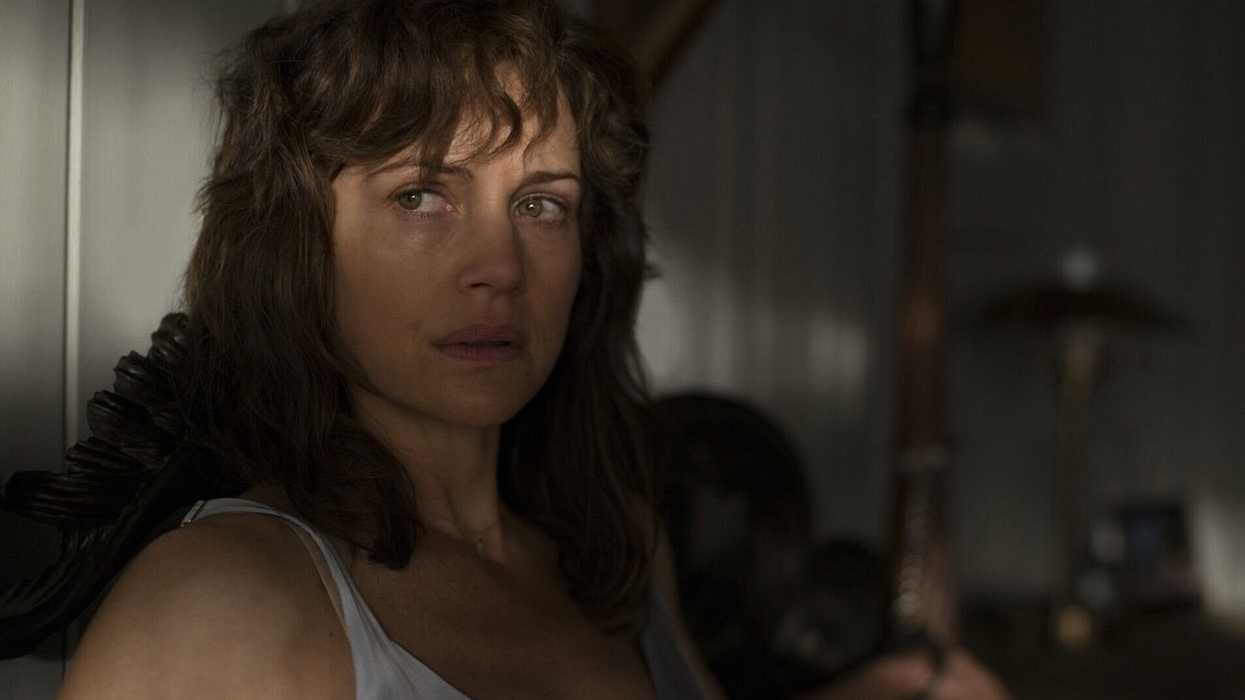
'Gerald's Game' (2017)
A huge name in the genre of horror, Mike Flanagan’s narratives rely on slow-burn suspense over visual scares or cliché horror tropes and are widely admired for their use of horror elements as visual metaphors for real-life struggles. By methodically building emotional and psychological tension, Mike Flanagan movies allow viewers to feel the dread in real time. At the same time, the filmmaker is celebrated for his complex yet deeply developed characters.
Flanagan is also renowned for his masterful use of negative space in both his compositions and narratives, such as building tension by lingering on empty, uneventful frames, to foster psychological discomfort within the viewers. At its core,
Flanagan’s filmography consists of haunting tales of grief and trauma, wrapped in both empathy and nerve-wrecking fear, presented through a string of memories and realities, on a broken timeline.
In this article, we’re listing the best films by Mike Flanagan. These are a must-watch if you’ve been craving nightmares!
Mike Flanagan's 7 Best Films and TV Series–Ranked
Here’s our pick of the best films and TV series by Mike Flanagan, ranked:
7. Hush (2016)
If you’re a sucker for single-location narratives, Hush is going to blow your mind. Centering a deaf and mute writer, Maddie (Kate Siegel), who’s recently moved to an isolated cabin in the woods, Hush is a thrilling cat-and-mouse chase between Maddie and a masked killer (John Gallagher Jr.), who is trying to hunt her down in her own house.
Every moment in the film is drenched in anticipation, as the killer, fascinated by Maddie’s disability, initiates a dreadful game of hide and seek, prolonging her torment before he kills her. Every action sequence is intelligently choreographed, leveraging Maddie’s disabilities to her advantage, sharpening the tension while shifting the ordinary home-invasion trope into something deeply personal. Flanagan strips the genre down to its essentials and builds the narrative on suspense and thrill, rather than gore or plot twists. The result is relentless, streamlined tension.
6. Gerald’s Game (2017)
Largely unfolding in a single location, the bedroom of a cabin stay, Gerald’s Game is adapted from Stephen King’s 1992 namesake novel and follows a couple, Jessie (Carla Gugino) and Gerald (Bruce Greenwood), who go on a trip to a remote area, in the hopes of rekindling their marriage. But, to the wife’s utter dismay, the husband dies of a heart attack, in the middle of lovemaking, leaving her handcuffed to bed, stuck all on her own in a desolate cabin. Soon, she begins to lose her sanity in the face of the desperate struggles of survival.
Flanagan employs close-ups and claustrophobic camera techniques, ditching cheap scares for sustained tension to amplify Jessie’s psychological distress. The film’s beating heart is Carla Gugino’s portrayal of Jessie, as she conveys an array of emotions while being physically restrained to the bed for most of the movie.
5. Doctor Sleep (2019)
Flanagan’s Doctor Sleep is a sequel to the iconic The Shining, adapted from Stephen King’s novel by the same name. The narrative focuses on Jack’s son, DanNY (Evan McGregor), since the horrific incident with his father at the Overlook Hotel, following him into adulthood, as he struggles to overcome his past trauma. But one day, when he finds a little girl (Kyleigh Curran), who shares his gift of the shine, he sets out to protect her from a cult called the True Knot, led by Rose the Hat (Rebecca Ferguson), which feeds on the life essence of gifted children to prolong their own lives. In the process, Danny must confront his past, as he is forced to go back to the haunted ruins of the Overlook Hotel.
Fundamentally, Doctor Sleep continues the thematic arc of The Shining, exploring complex themes such as redemption and unresolved trauma. What I love about Flanagan’s treatment in Doctor Sleep is that he doesn't overuse the nostalgia related to Hotel Overlook but uses it purposefully as an emotional anchor.
4. Midnight Mass (2021)
Another noteworthy drama series by Mike Flanagan, Midnight Mass, unfolds on an isolated island, where the close-knit community begins to experience unexplainable events, both miraculous and ominous, upon the arrival of a mysterious, young priest, Father Paul (Hamish Linklater), who begins to perform apparent miracles to save the locals.
The greatest highlight of the seven-episodic series is its powerful allegories that draw serious parallelism between substance addiction and spiritual intoxication—both equally perilous to mankind. At the same time, through the arcs of characters such as the Muslim Sheriff Hasan (Rahul Kohli) and his son, the narrative reflects on what it means to be an outsider in a tight-knit community.
Flanagan is patient with his treatment and crafts an immersive experience for the viewers through atmospheric build-up, ensuring that the setting becomes a character in itself, embodying both safety and suffocation.
3. The Life of Chuck (2025)
Moving away from his usual style and genre, The Life of Chuck follows an ordinary man, Charles “Chuck” Krantz (Tom Hiddleston), capturing the pivotal moments of his life, but in reverse chronological order. The central theme echoes the concept that every individual lives in their own cosmos, which comes to an end with death.
The beauty of The Life of Chuck (2025) lies in its poetic ambiguity. Flanagan’s trust in his audience is evident in his visual language as he heavily relies on unresolved transitions and cryptic symbolism, keeping the narrative both reflective and open-ended.
2. The Fall Of The House Of Usher (2023)
Adapted from Edgar Allan Poe’s The Fall of the House of Usher, this drama mini-series follows two siblings, Roderick (Bruce Greenwood) and Madeline Usher (Mary McDonnell), who’ve built an entire pharmaceutical empire through the sale of an addictive painkiller. But when each of the heirs to the Usher empire begins to die mysteriously, the two siblings are forced to face the consequences of their past sins.
Flanagan retains Poe’s gothic tone, turning the house into a metaphor for the lineage that's poisoned by past misdeeds. By drawing continuous parallels between the House and the fractured minds of the inhabitants and entwining reason with superstition, Flanagan uses horror to both scare the viewers and satirize moral bankruptcy caused by capitalism.
1. The Haunting of Hill House (2018)'
Adapted from Shirley Jackson's namesake novel, The Haunting of Hill House is hands down one of Flanagan’s best works—a damn good horror show!. This 10-episodic Netflix original mini-series centers on a group of siblings who return to their childhood home in the face of a tragedy and then are compelled to confront the demons of their pasts, both real and psychological—things that drove them away from the house in the first place.
Flanagan explores complex themes, including family trauma, grief, loneliness, and a sense of belonging, using the supernatural elements of the Hill house as metaphors. The characters are rich, representing distinctive ways of how trauma is processed, endured, and expressed. Every frame is full of visual cues and hidden symbolism, while creating a pervasive atmosphere of unease and suspense. So if you’re an attentive viewer, you’ll be rewarded in every sequence!
Let us know which one is your favorite in our list.