Eduardo Sanchez and Daniel Myrick’s The Blair Witch Project (1999) is widely acclaimed for pioneering the found footage filmmaking genre in Hollywood. At the same time, it is one of the most nuanced horror films that you can come across. The narrative explores the legend of the Blair Witch, but only through the recovered raw footage shot by three film students who never returned after they ventured into the Maryland backwoods to shoot their film.
Unlike its peers in the genre, The Blair Witch Project ditches all kinds of gore and jumpscares. The fear is slowly built through suspense and ambiguous exposition, while allowing Heather’s voice-overs or direct conversations with the audience through her camera to take the lead.
While death remains the highest stake, no deaths are shown on screen.
In this article, we’re unveiling how The Blair Witch Project amplified dread and suspense by intentionally skipping the explicit depiction of death.
Unseen Death: The Blair Witch Project’s Secret to Heightened Suspense and Fear
The Blair Witch Project is entirely presented by found footage, i.e., the visual language mimics that of documentary filmmaking, and every scene is presented as a candid moment (although everything is scripted).
The film has a very clear downward-sloping graph. The film begins on a note of thrill, joy, and enthusiasm, as three students, Heather Donahue, Michael C. Williams, and Joshua Leonard, partner up to shoot a documentary on the Blair Witch. The visuals are backed by Heather’s V.O. from time to time, which leads the narrative.
1. Inducing Fear Through Exposition
 Source: Summit Entertainment
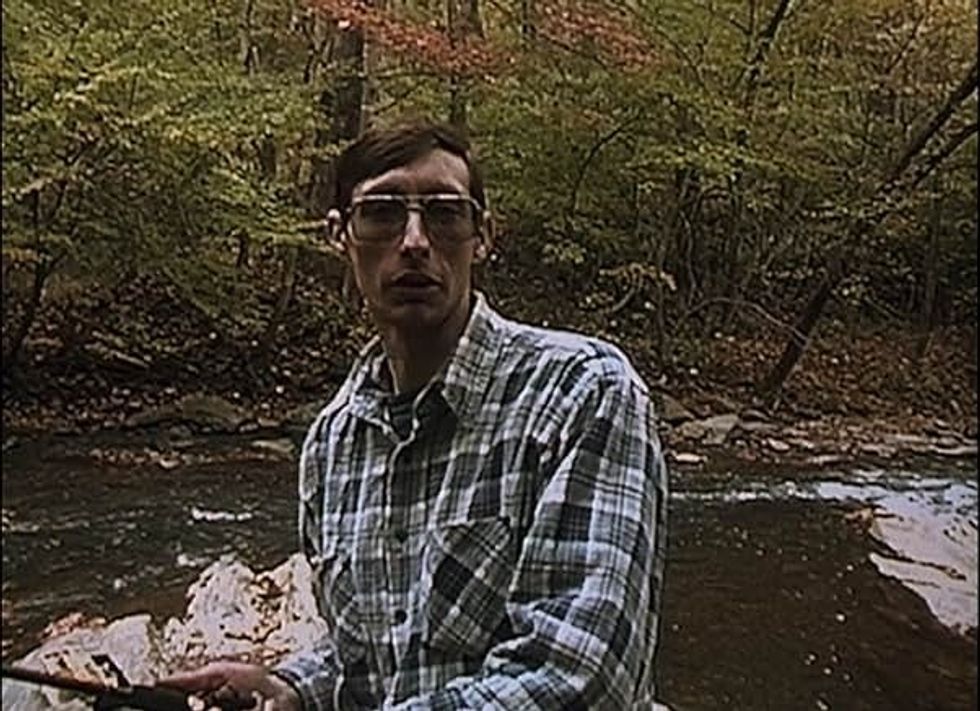
The early parts of the film are focused on exposition, answering questions such as, “Who’s the Blair Witch?”, “What happened in the Maryland backwoods years ago?”, “Who killed all those children in the 1940s, who now remain buried at the city’s cemetery?”, etc. The narrative also explores the community’s outlook towards the legend of the Blair Witch. By now, as a viewer, you’re sure to be intrigued by the folklore. The narrative focuses on using the intrigue as an element of fear. Considering that the story is centered on a paranormal entity, bits and pieces of information, exposed with restraint and hints of unreliability, create a mix of both belief and disbelief. At the same time, you can feel the situation warming up real fast.
2. Inducing Fear Through Curiosity
 Source: Summit Entertainment
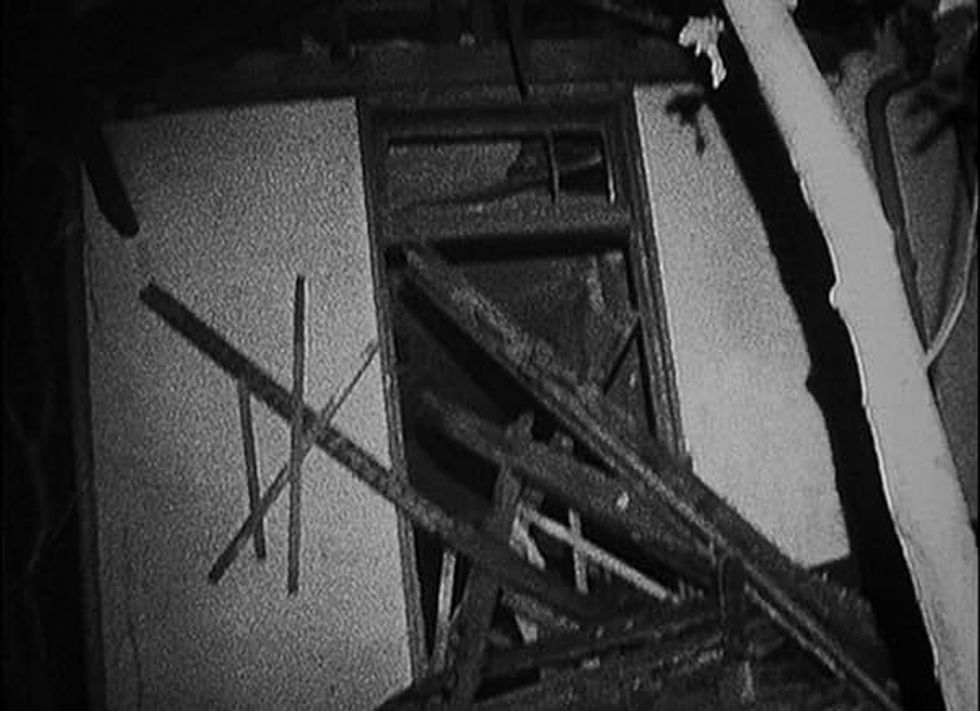
On day two, when Heather declares that they’re going on a hike into the woods to find out more about the Blair Witch, you cannot help but worry about them. Even at this point, you’re not sure whether the whole thing is just a myth, but you’re aware of the multiple mysterious deaths that remain associated with the Blair Witch.
The hike feels unsafe right from the start. As a viewer, you can literally hear your soul yelling at those young kids that they must cancel their hike. It’s just the three of them—not another soul for miles. Honestly, even without the risk of being hunted by some paranormal force, the three just don’t look like they’re capable of surviving in the wild without getting killed (okay, that’s my personal opinion!). But eventually, they are hunted by the Blair Witch, or at least that's what it seems like, at the end of the movie.
But, with no sign of gore or even a jumpscare yet, let alone death, neither you nor the characters know what to believe. Somehow, both thrill and fear are at their peak, now that they’re about to start their hike through the forest. Not just them, but even you’re dying for the fog to lift. It’s like watching a scary movie through the gaps of your fingers. You’re too curious not to watch, but you can feel the threat on your skin—as if your gut isn’t doing its work right anymore.
3. Inducing Fear Through Obstacles
 Source: Summit Entertainment
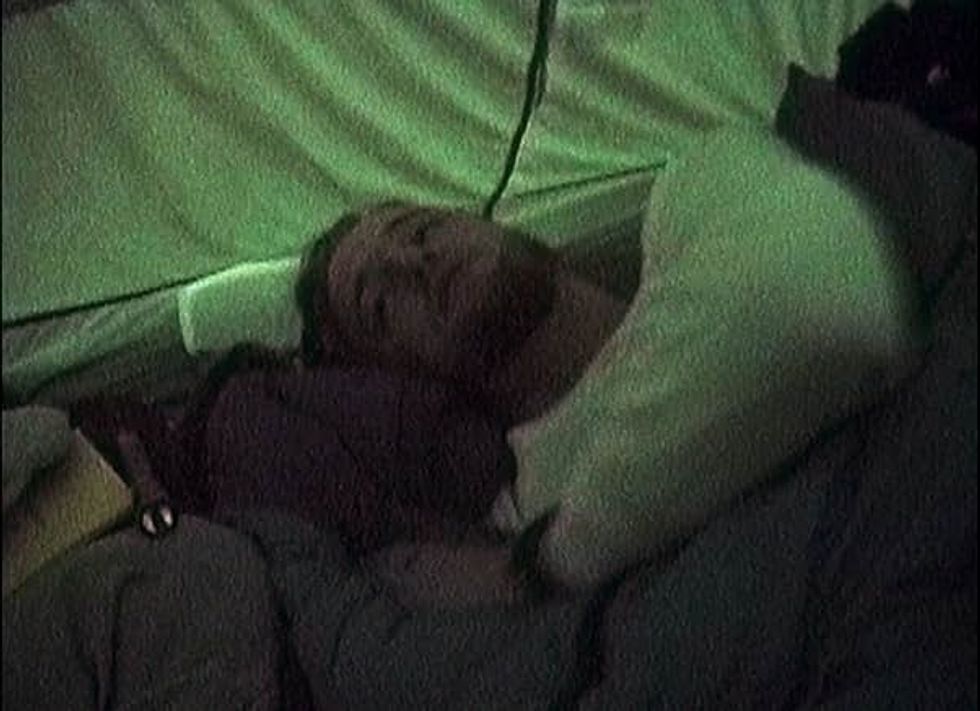
By the end of the first day, they lose their map and are stuck in the middle of the woods. As they begin to struggle for survival, we’re roped into anticipating their fate and safety in that wide jungle. Momentarily, the fear of the Blair Witch is taken over by the dangers of the wild. But soon, it is revealed that getting lost might be the least of their problems.
4. Inducing Fear Through Mystery
 Source: Summit Entertainment
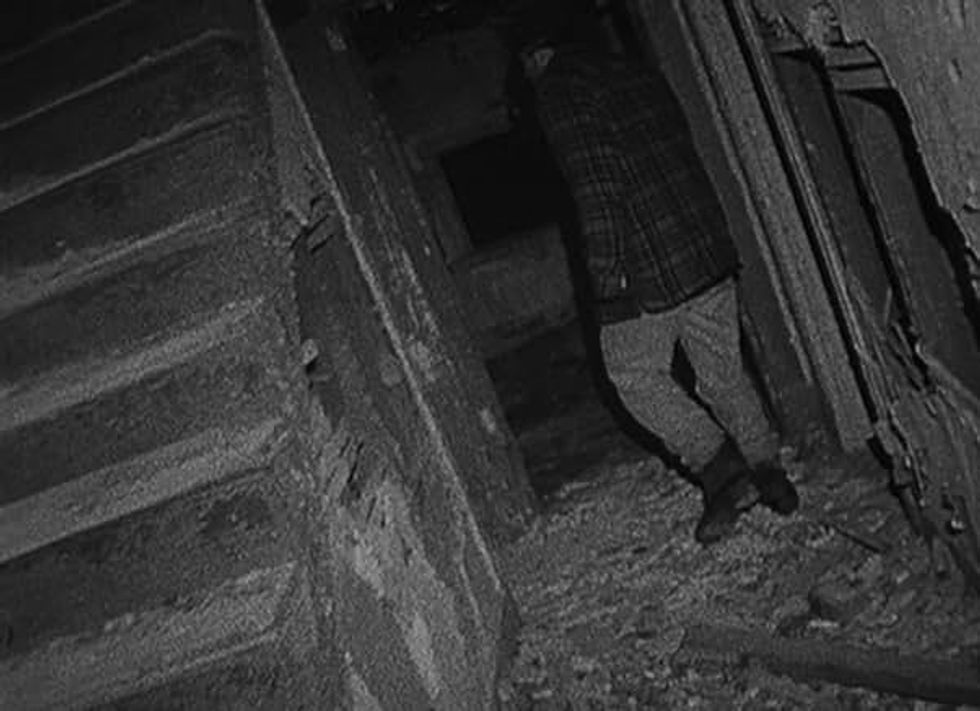
Mysterious things begin to happen that start matching the lore that they had heard from the locals, specifically, something that a woman had told them about the witch and piles of rock. As the night falls, they realize that they might not be alone in the forest, and the other entity in the forest is definitely not human. In the darkness, they can hear kids cackling, deep in the middle of the forest at the witching hour, and in the morning, they wake up to rocks, neatly arranged in piles around their tent—three to be precise.
Fear and fatigue catch up soon, and the three steadily descend into absolute madness as they try to find a way out of their forest, escaping the evil spirit that’s after them. Then on their third night in the woods, one of them goes missing–Josh, the cameraman. The other two wait for him for the whole day in vain.
At this point in the narrative, we’re a few script pages away from the climax–still no sign of death. But the fear of the unknown, both the Blair Witch and death, has gripped us well by now.
5. Inducing Fear Through Visual Motifs
 Source: Summit Entertainment
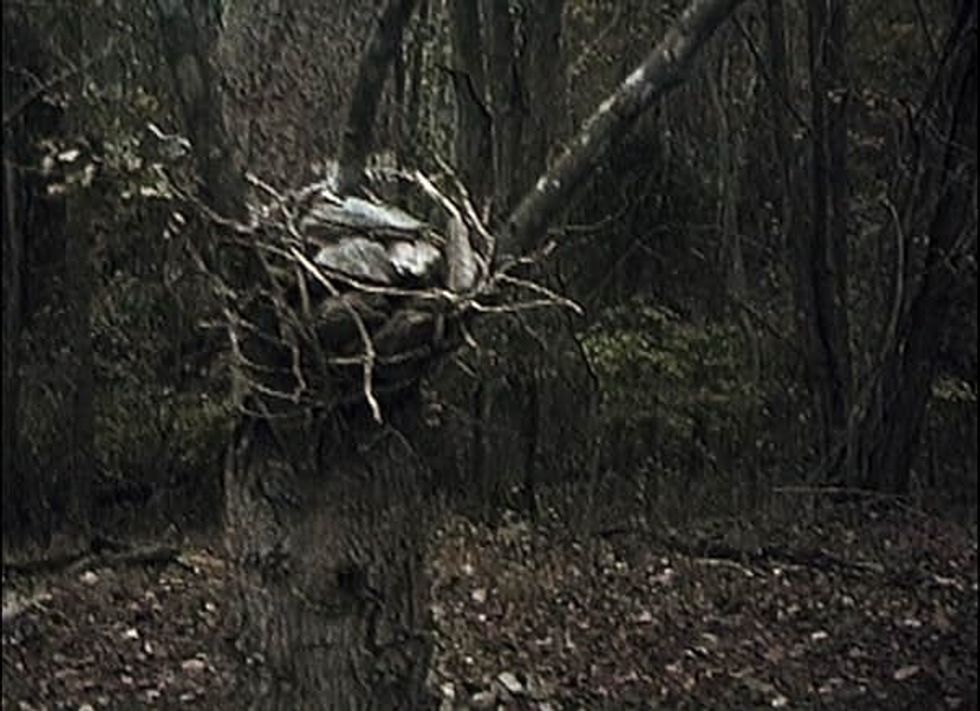
Then Heather discovers a bloodied piece of the shirt he was wearing, tucked neatly in a pile of sticks that was mysteriously left outside their tent–two freshly plucked teeth wrapped inside the bloodied piece of cloth.
Heather’s reaction to discovering teeth wrapped in Josh’s torn piece of cloth precisely mirrors our reaction. She is scared, as are we, and heavily driven by guilt. That night, she and Mike, the sound recordist, camp together, but aren’t able to sleep. The cackles and paranormal activities are seemingly reaching their peak. The two sit huddled together, inside the tent; Mike desperately assures Heather that whatever is happening isn’t her fault, but Josh’s disappearance has evidently traumatized her to her core.
6. Inducing Fear Through the Feeling of Helplessness
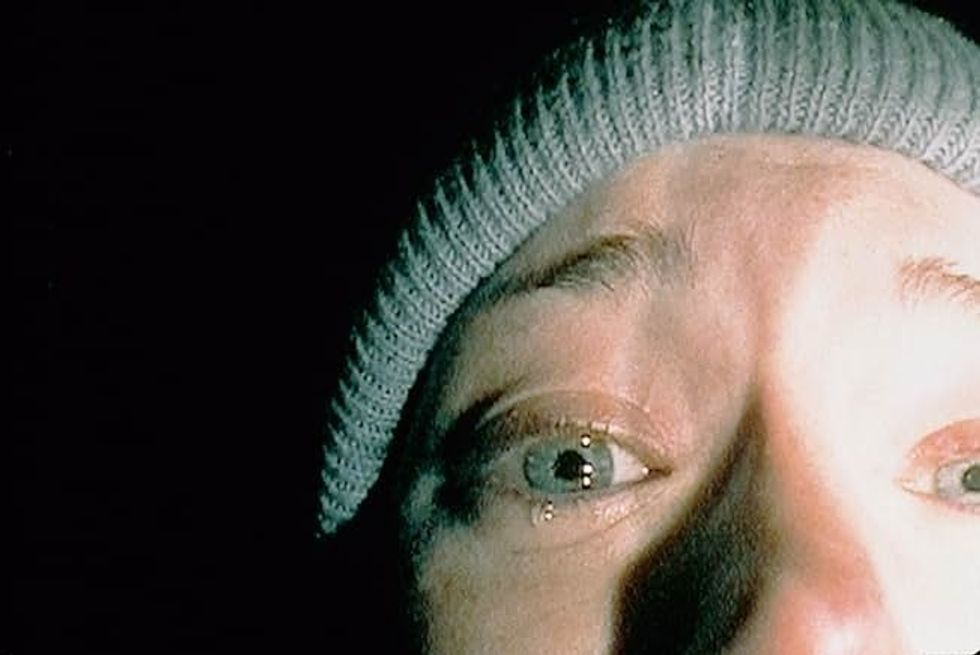 Source: Summit Entertainment
Heather, recording a last message, addressing her loved ones and profusely apologizing for her naivety that led the group straight into the arms of death, strikes the nail with force. Heather’s overwhelming emotions and outright regret become the strongest emotional anchor, which not only breaks our hearts but also gets us worried about her safety.
7. Inducing Fear Through Sound
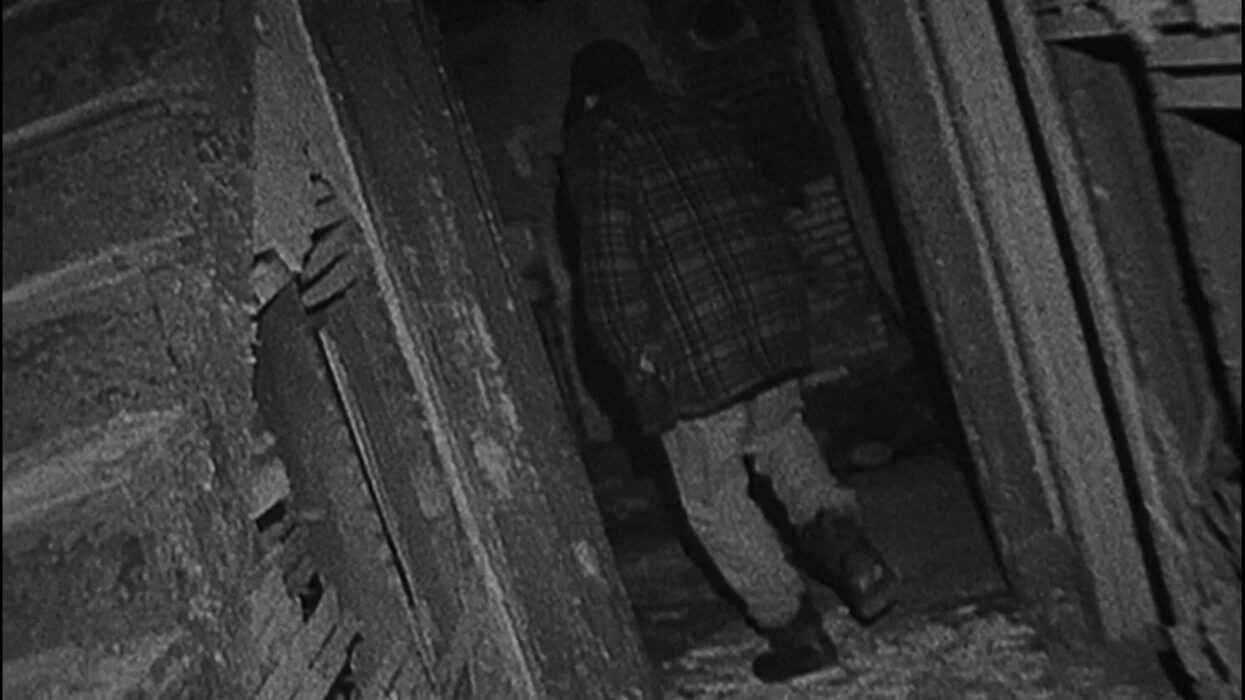
The next morning, they go out to look for Josh. They come across an abandoned house when they hear Josh’s cry. Mike rushes in, following the sound, to help Josh. Heather is extremely skeptical and begs Mike not to go inside, but he ignores her and rushes to Josh’s aid. The inside of the house is even creepier. The two make their way through the dilapidated house to reach a dark area, which seems to be a basement or attic. They walk into the dark looking for Josh, when suddenly Mike’s presence can’t be felt anymore. Scared to death, Heather calls out for Mike repeatedly, but no reply. Suddenly, it’s pitch dark, and we can hear Heather's desperate cries.
I think not showing deaths not only kept the suspense at its peak throughout the narrative but also maximized ambiguity in the story, leaving enough room for pragmatic arguments about whether ghosts and witches are real or myths.
Despite being presented as a documentary, The Blair Witch Project leverages ambiguity throughout, showcasing an inventive style of storytelling that lets ambiguity, anticipation, and the fear of the unknown and unseen run the story.
What do you think about this treatment? Would you use it in your narrative?