Tim Burton’s Most Underrated Spooky Characters You’ll Obsess Over
10 underrated roles show how Burton reinvents tired tropes into something worth studying.

Glenn Shadix as Otho in 'Beetlejuice'
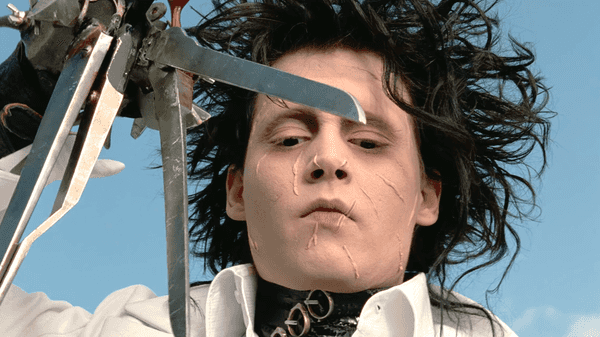
Everyone studies Jack Skellington and Edward Scissorhands. Today, as we dive deeper into the Halloween season, we want to turn the lens on some of Tim Burton's underrated characters, where he explores and subverts character tropes, and find out what we can learn from them.
For screenwriters and directors, these characters might look like stock types at first, but Burton twists them into something memorable.
Here's how Burton reinvents 10 common tropes through underrated supporting players.
Otho (Beetlejuice)
- YouTube www.youtube.com
The Know-Nothing Know-It-All
Glenn Shadix's Otho casually mentions being schooled in chemistry, working as a hair analyst, and claiming to be one of New York's leading paranormal researchers "until the bottom dropped out in '72."
Otho genuinely believes his own expertise. When he conducts the séance that nearly destroys the Maitlands, he's shocked it goes wrong.
Supporting characters don't need arcs. Otho's unchanging delusion drives the climax, proving that a character with one clear, consistent flaw can be useful.
Simone (Pee-wee's Big Adventure)
- YouTube www.youtube.com
The Caged Bird Metaphor
Diane Salinger plays a truck stop employee who dreams of visiting France. She appears in one sequence, speaks beautiful French in her tacky uniform, and avoids her brutish boyfriend. We know her immediately and root for her.
Burton gives her a payoff most filmmakers would skip. When Pee-wee encounters Simone at the film's end, she's finally Paris-bound.
A character defined by a single, specific desire becomes instantly understandable. Clarity of motivation matters more than complexity of backstory. You can create a satisfying character arc in under 10 minutes of screen time by keeping the want simple and the obstacles clear.
Bob the Goon (Batman)
- YouTube www.youtube.com
Undying Loyalty
Tracey Walter plays the Joker's most devoted henchman. While everyone else in Gotham's underworld scrambles for advantage, Bob remains steadfast. He's competent and loyal, but is later casually murdered by the Joker. It's a shocking moment.
Plus, we get this line in the video above, which has stood the test of decades (at least for my husband).
Burton inverts the trope by punishing the virtue. Bob's loyalty isn't rewarded with survival. The Joker shoots him almost absent-mindedly, and the film moves on.
Supporting characters can carry thematic weight like this even if they aren't doing that much, story-wise, in the plot.
The Inventor (Edward Scissorhands)
- YouTube www.youtube.com
The Mad Scientist
Vincent Price's final live-action performance delivers a nuanced portrayal of a lonely, brilliant man. The Inventor appears only in flashbacks, but his presence shapes Edward's whole story.
Burton subverts the mad scientist trope by making the character kind. He's just lonely and wants connection. And he dies before finishing Edward because mortality is random and cruel.
Here we can see that casting created instant subtext. Price made a career playing villains in horror films, so his presence as the story's gentlest character is a commentary on how society views "monsters."
Amos Calloway (Big Fish)
- YouTube www.youtube.com
Our Werewolves Are Different
The circus ringmaster in Big Fish reveals one detail about Edward's love interest at the end of every month. When Edward discovers Amos is secretly a werewolf, he avoids getting him shot by playing fetch until Amos transforms back to human.
Amos is honorable but cursed. His transformation becomes a clever plot device—one detail per month means years of patient service. The fetch scene is simultaneously absurd and touching, a hallmark of Burton's style.
Subverting monster tropes creates memorable characters while serving story economy. A fantastical element (such as lycanthropy) can function as both a character trait and a plot mechanism. It's the kind of narrative efficiency that screenwriting should emphasize. Every element should serve multiple purposes.
Bunny Breckinridge (Ed Wood)
- YouTube www.youtube.com
The Tragic Dream
Bill Murray plays Ed's friend, who helps him with Plan 9 from Outer Space. Bunny talks constantly about gender affirming surgery, but never follows through.
Burton doesn't treat this as a failure. Bunny doesn't need to achieve their stated goal to have value in the story. The character is part of Ed's found family of misfits who accept each other completely. That belonging is its own form of success.
Supporting characters don't need to complete their arcs. Burton's Ed Wood argues that community matters more than achievement. It's a sophisticated understanding of character purpose beyond standard screenplay beats.
Grandma Norris (Mars Attacks!)
- YouTube www.youtube.com
The Unlikely Hero
Burton waited for Sylvia Sidney to recover from being hit by a car rather than recast the role. (She was a ghostly social worker in Beetlejuice, and it's fun to see her pop up here.) At the end of the film, her character discovers that Slim Whitman's yodeling kills the Martians, making her Earth's savior.
Subverting expectations about heroism creates thematic resonance. Mars Attacks! satirizes disaster movie tropes, Grandma Norris represents something sincere. She embodies Burton's belief that mainstream culture overlooks value in what it considers lowbrow or outdated.
Lady Van Tassel (Sleepy Hollow)
- YouTube www.youtube.com
Tragic Villain
Miranda Richardson plays a woman whose family was evicted because her mother was suspected of witchcraft, forcing them to take refuge in the Western Woods, where they eventually died.
Her elaborate revenge scheme stems from genuine injustice. Burton doesn't ask us to excuse her murders, but he helps us understand them. The film's late revelation of her backstory recontextualizes everything we've seen.
The great villains believe their actions are justified. Sympathetic motivations make antagonists more compelling. Burton withheld the lady's perspective until the moment it would have maximum impact.
The Mayor (The Nightmare Before Christmas)
- YouTube www.youtube.com
The Puppet King
The Mayor of Halloween Town has two faces that spin between emotions. Despite his office, the Mayor has very little actual authority and quickly gets hysterical, whining at one point, "Jack, please, I'm only an elected official here! I can't make decisions by myself!"
Two-faced, sweet on the outside, disappointing in reality. It's pretty literal political commentary from Burton.
In animation, especially, character design does narrative work. The Mayor's appearance tells us something about who he is instantly. For live-action filmmakers, the lesson translates to using costume, blocking, and framing to communicate character without dialogue.
As animation principles teach, "show, don't tell" becomes especially critical when you're building characters from scratch.
Mr. Rzykruski (Frankenweenie)
- YouTube www.youtube.com
Stern Teacher
Martin Landau plays the eccentric science teacher at Victor's school. His passionate teachings about science with heart are what inspire Victor's effort to resurrect Sparky.
When the town turns on Mr. Rzykruski, he delivers a scathing speech calling them stupid and ignorant. He refuses to dumb down science for fearful parents.
Burton creates a character who speaks to his own artistic philosophy. Don't compromise your vision for an audience that doesn't understand it.
The character's firing has actual consequences, and his final conversation with Victor about love being the variable in scientific success gives the film its emotional and thematic center. Even archetypal characters gain depth when they want something beyond helping the hero succeed.