Scene Stealers: 13 Supporting Characters Who Became Stars of the Film
Meet the cinematic underdogs who proved you don’t need top billing to be the most memorable part of a film.
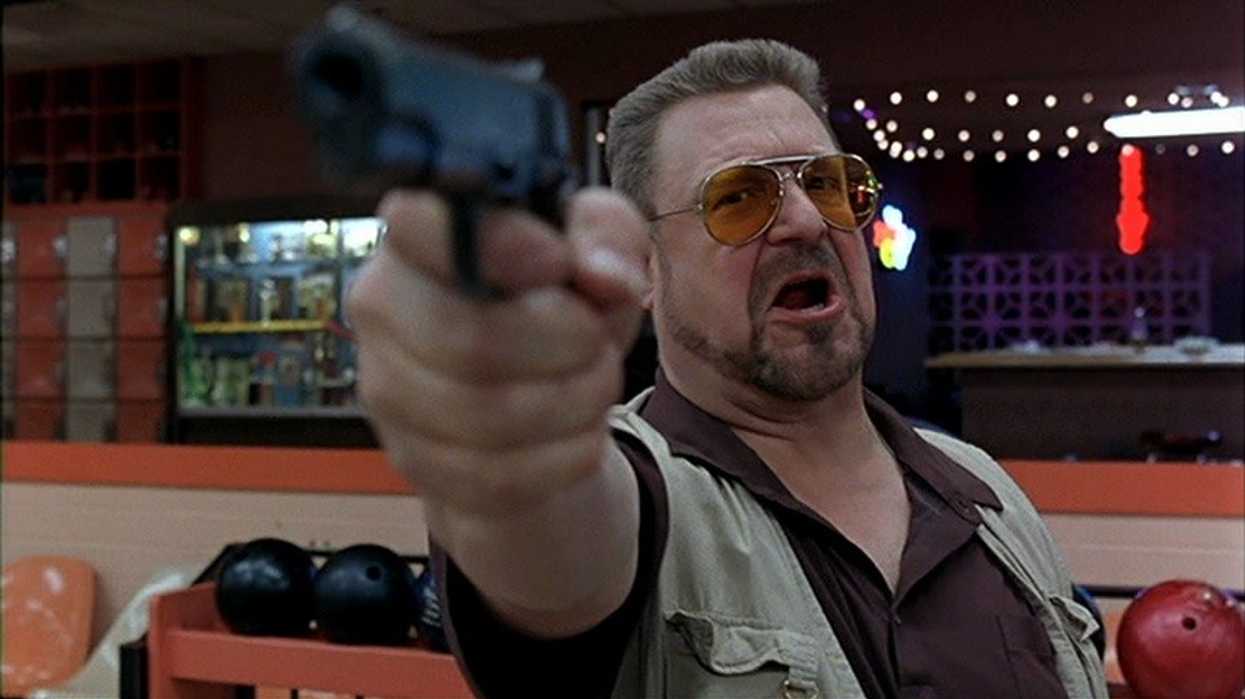
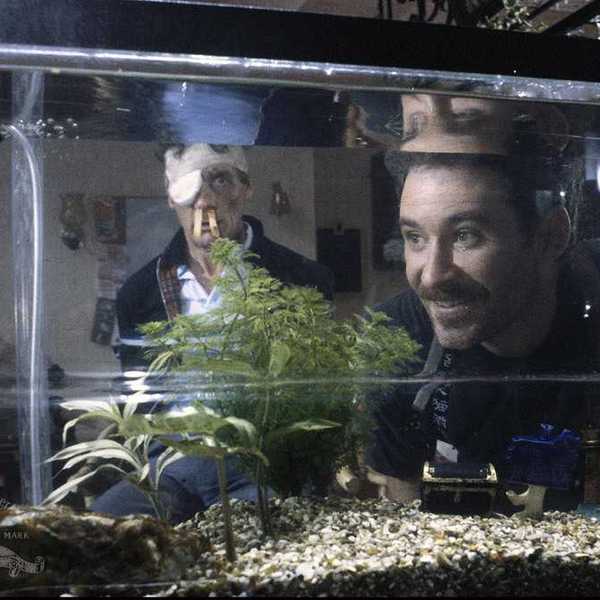
John Goodman in The Big Lebowski (1998)
Leads may carry the story, but sometimes it's the supporting characters who own it. They swoop into the frame, drop a line or a look that clings to your brain, and suddenly, the film doesn't feel like it never belonged to the leads—it belonged to the supportive ones.
They're not built to carry the emotional weight of the entire plot. And yet, somehow, they leave with the audience's full attention—sometimes even the Oscars.
Why does this happen?
Sometimes it’s a matter of sheer charisma—a magnetic screen presence that overshadows everyone else, even if they only appear in a handful of scenes. Sometimes it’s the writing, giving them sharper lines, higher stakes, or darker contradictions. Other times, it’s the actor going nuclear and turning a side role into a cultural landmark.
These are the characters people quote, meme, impersonate, and obsess over, long after they’ve forgotten what the leads even did.
This article breaks down 13 such legendary scene-stealers—breakthrough supporting characters who hijacked the spotlight and never gave it back. You’ll find villains, comic reliefs, chaotic allies, and fashion tyrants.
But more importantly, you’ll find storytelling lessons in how a small role, in the right hands, can shift the balance of an entire film.
What Makes a Supporting Character Unforgettable?
Before we roll out the list, let’s break down why some supporting characters end up hijacking the narrative entirely.
Charisma & Presence: You can’t teach screen presence. Some actors walk into a frame and instantly raise the voltage. Heath Ledger’s Joker is on screen for just over half an hour in The Dark Knight (2008), yet you feel like he’s everywhere. Same with Javier Bardem’s Anton Chigurh. Their energy shifts the air around them.
Memorable Dialogue/Writing: Side characters often get the best lines—partly because they don’t have to carry exposition or play it safe. Jules Winnfield’s Ezekiel 25:17 monologue in Pulp Fiction (1994) is one of the most quoted moments in film history. Why? It’s sharp, it’s rhythmically brilliant, and it feels like it matters, even when it doesn’t.
Contrast with the Protagonist: A great foil can make the lead look dull. Think Clarice Starling vs. Hannibal Lecter. The latter is more fascinating precisely because he’s unpredictable and dangerous, while Clarice is methodical and controlled. That contrast is what makes their scenes electric.
Cultural Impact: Some characters transcend the film itself. Darth Vader became a pop culture monolith. Edna Mode became a meme before memes were a thing. This happens not only because of what they do in the film but because of how they seep into the collective consciousness.
So now that we’ve got the blueprint, let’s look at 13 characters who stole scenes in broad daylight and walked away with the whole damn movie.
The 13 Side Characters Who Stole the Show
1. The Joker – The Dark Knight (2008)
Portrayed by: Heath Ledger | Written by: Jonathan Nolan & Christopher Nolan | Directed by: Christopher Nolan
There are villains, and then there’s the Joker. Played with unhinged brilliance by Heath Ledger, this version of the Clown Prince of Crime isn’t a comic relief or a cartoon menace. He’s chaos in a tailored suit. With just around 33 minutes of screen time, Ledger’s Joker redefined what it means to be terrifying, magnetic, and unforgettable.
While Christian Bale’s Batman anchors the plot, it’s Joker who injects life—and dread—into every scene. His motives are murky, his morals non-existent, and his actions wildly unpredictable. He isn’t a man with a plan; he’s an agent of entropy, which makes him far more compelling than Bruce Wayne’s brooding billionaire routine. From the pencil trick to the hospital explosion, every scene is a high-wire act. Ledger's performance was so immersive, it posthumously won him an Oscar and left the industry scrambling to raise the bar for comic-book villains.
What filmmakers can learn here is that unpredictability can be more powerful than backstory. Joker isn’t given a tragic origin. Instead, he is the threat. That’s the power of presence, bold writing, and a performance that doesn’t flinch.
2. Anton Chigurh – No Country for Old Men (2007)
Written by: Joel & Ethan Coen | Portrayed by: Javier Bardem | Directed by: Joel & Ethan Coen
Javier Bardem’s Anton Chigurh is death with a bowl cut. Cold, methodical, and weirdly polite, this hitman is a philosophical nightmare—less a person than a force of nature with a silenced shotgun and a coin toss. Bardem has about 15 minutes of actual screen time, but every second is ice-cold dread.
While Josh Brolin’s Llewelyn Moss is technically the protagonist, and Tommy Lee Jones’s Sheriff Bell provides moral gravity, it's Chigurh who dominates the narrative’s emotional weight. He turns routine interactions into existential horror shows. His calm, detached violence leaves a deeper impression than any chase scene. And the terrifying part? He genuinely believes he's fair.
Writers and directors should take note: power doesn’t always come from volume. Chigurh’s stillness is more terrifying than chaos. Restraint, when handled correctly, can be the sharpest tool in a filmmaker’s kit.
3. Col. Hans Landa – Inglourious Basterds (2009)
Written & Directed by: Quentin Tarantino | Portrayed by: Christoph Waltz
Colonel Hans Landa, as portrayed by Christoph Waltz, is one of Tarantino’s most terrifying inventions. Dubbed the “Jew Hunter,” Landa isn’t scary because he’s loud or violent—he’s terrifying because he’s calm, calculated, and speaks five languages like a theater director auditioning for God.
Brad Pitt may lead the narrative as Lt. Aldo Raine, but Landa owns the film’s tension. His opening scene alone, a slow-burn interrogation disguised as politeness, is a masterclass in psychological warfare. Waltz brings an unhinged menace to the role that chills you without raising his voice. That Oscar win? More than deserved.
The takeaway: dialogue is a weapon. Give your characters time to talk, but make every word land like a threat. Supporting roles with smart, layered writing can define the entire tone of a film.
4. Darth Vader – Star Wars film series (1977–2016)
Created by: George Lucas | Portrayed by: James Earl Jones/David Prowse | Directed by: Various
When Darth Vader first stepped through that smoky corridor in A New Hope (1977), he wasn't even the main villain—Tarkin was. Yet one breath from Vader, and the hierarchy crumbled. With limited screen time and fewer lines than you'd expect, Vader became the face of the entire franchise.
There’s something about the mechanical breathing, the slow walk, and James Earl Jones’ thunderous voice that made Vader instantly iconic. Luke Skywalker may have been the hero, but Vader had the arc, the mystery, and the mythos. Over the decades, he became the emotional spine of the saga.
Here’s the lesson: a character’s design, sound, and mystique can carry more narrative weight than constant exposition. Sometimes, less is Vader.
5. Donkey – Shrek film series (2001–2010)
Written by: Ted Elliott, Terry Rossio, Joe Stillman | Portrayed by: Eddie Murphy | Directed by: Vicky Jenson & Andrew Adamson
Let’s be real: Shrek is great, but Donkey is the reason you rewatch it. Eddie Murphy turned what could’ve been an annoying sidekick into a comedic force of nature. He’s the heart, the humor, and often the plot driver, delivering a performance so energetic, it makes the animation itself feel alive.
Shrek’s grumpiness is only funny because Donkey never stops talking. He offsets the protagonist’s emotional flatline with manic optimism. His voice work adds emotional range and comic timing in ways most live-action actors struggle to match. And let’s not forget—he is the one who falls in love with a dragon.
If you’re writing a sidekick, take notes: energy and sincerity go a long way. Donkey is absurd, but never fake. He believes everything he says—and that’s why you believe in him too.
6. Nurse Ratched – One Flew Over the Cuckoo’s Nest (1975)
Written by: Lawrence Hauben & Bo Goldman | Portrayed by: Louise Fletcher | Directed by: Miloš Forman
Louise Fletcher’s Nurse Ratched isn’t a monster in the traditional sense. She doesn’t scream, she doesn’t strike. Instead, she embodies institutional evil—calm, bureaucratic, and terrifyingly composed. And she does it all with a cool stare and a neatly pinned hairstyle.
While Jack Nicholson’s R.P. McMurphy rages, rebels, and demands attention, Ratched holds power through quiet manipulation. Her cold logic and unwavering control turn her into a symbol of oppressive systems everywhere. Fletcher's restrained performance makes you hate her without ever fully understanding her, which is what makes her so powerful.
Not all villains have to be loud. For actors and writers, remember: control can be far more unnerving than chaos. Silence can cut deeper than screams.
7. Tommy DeVito – Goodfellas (1990)
Written by: Nicholas Pileggi & Martin Scorsese | Portrayed by: Joe Pesci | Directed by: Martin Scorsese
Tommy DeVito is five-foot-five and a nuclear bomb in a suit. Joe Pesci’s Oscar-winning role in Goodfellas (1990) is loud, violent, funny, and completely unhinged. Henry Hill may be the narrator, but Tommy is the guy you remember—and fear.
He brings volatility to every scene, flipping from charming to homicidal in seconds. The "Funny how?" scene is permanently etched into pop culture. Pesci’s performance feels completely unpredictable, which is perfect for a character who represents the instability of the mob world.
The lesson here: let your side characters be wild cards. When they’re unpredictable, they keep the audience leaning in. Not knowing what a character will do next? That’s narrative gold.
8. Jules Winnfield – Pulp Fiction (1994)
Written & Directed by: Quentin Tarantino | Portrayed by: Samuel L. Jackson
Jules isn’t the lead. He’s not even the moral center. But Samuel L. Jackson turns a hitman into a philosopher and a cold-blooded killer into an oddly spiritual guide. His Ezekiel 25:17 speech? Cinematic legend.
John Travolta’s Vincent Vega may share screen time, but Jules owns the gravity. He transforms mid-film, shifting from wrath to reflection. He more than perseveres—he evolves. Jackson delivers every line with surgical rhythm and electric tension. His performance changed how hitmen were written in pop culture for years.
Here's what creatives should note: monologues matter. When you give a character room to speak, not just serve the plot, you can etch them into the audience’s memory.
9. Miranda Priestley – The Devil Wears Prada (2006)
Created by: Lauren Weisberger (novel), Aline Brosh McKenna (screenplay) | Portrayed by: Meryl Streep | Directed by: David Frankel
Miranda Priestley's method of establishing dominance is—no, not by raising voice—just by looking down at you and lowering your worth. With a single arched eyebrow and a chilly whisper, she makes the entire fashion industry quake. The film might center on Anne Hathaway’s Andy Sachs, but it’s Miranda—gliding through the office like a couture-coated shark—who owns every scene. Streep turns what could’ve been a cartoon villain into a fully realized titan: subtle, terrifying, and oddly captivating.
What makes Miranda truly dangerous is more than her power—it's her ability to stay calm. Every move she makes is calculated, every word weighted. She isn’t loud or showy, which is exactly why she dominates. In a world of screaming egos, she whispers. The result? You lean in. Her final scene, where she subtly shifts from mentor to ghost, is a masterclass in ambiguity.
There’s a reason audiences walked away quoting her instead of the protagonist. Miranda is a boss from hell—the embodiment of ambition, complexity, and consequence. She steals the movie and redesigns it in her image.
10. Hannibal Lecter – The Silence of the Lambs (1991)
Created by: Thomas Harris (novel), Ted Tally (screenplay) | Portrayed by: Anthony Hopkins | Directed by: Jonathan Demme
Hannibal Lecter had less than 20 minutes of screen time, yet he left teeth marks on the entire film. Hopkins’ portrayal is all icy precision—charming, intellectual, and blood-chillingly calm. He doesn’t need to chase you down with a chainsaw. He’ll talk to you about Chianti and eat your liver with a side of smirk.
The wildest part? He isn’t even the main antagonist. He’s a prisoner. A consultant. A secondary character with more presence than the actual serial killer Clarice is hunting. It’s all in the contradictions: his politeness wrapped around brutality, his intellect laced with sadism. His conversations with Clarice are more thrilling than most action climaxes.
Hopkins made Lecter so compelling that he earned an Oscar for a role that barely qualifies as supporting by screen time. It’s a haunting reminder that the scariest people don’t always scream. Sometimes they smile and ask you about your childhood trauma.
11. Agent Smith – The Matrix film series (1999–2021)
Created by: The Wachowskis | Portrayed by: Hugo Weaving | Directed by: The Wachowskis
Agent Smith was meant to be just another program, a system enforcer. Instead, Hugo Weaving turned him into a sentient virus with a superiority complex and the sharpest deadpan in sci-fi history. His monotonous “Mr. Anderson…” is more iconic than most protagonists’ catchphrases.
While Neo stumbles through the hero’s journey, Smith evolves with unsettling speed—from suit-and-tie drone to full-blown existential threat. His rejection of humanity is what ironically makes him feel so human. He wants to destroy Neo, but more than that—he wants to be Neo. That creepy mirror obsession? Yeah, that’s not in the manual.
Across the sequels, his arc gets weirder, deeper, and more personal. By the time we reach “Resurrections,” Smith has outlasted agents, systems, and even logic. And somehow, we’re still rooting for him to glitch his way back into control.
12. Edna Mode – The Incredibles film series (2004–2018)
Created by: Brad Bird | Portrayed by: Brad Bird | Directed by: Brad Bird
Two scenes. That’s all Edna Mode needs to completely hijack The Incredibles. She’s a fashion designer for superheroes, a nuclear-powered mix of Anna Wintour and Q from Bond. And the second she struts into frame, the film stops being about family dynamics and starts being about capes. Or rather—no capes!
Brad Bird voices her with such spiky confidence and speed that it’s almost dizzying. Edna is all bite-sized genius and ruthless efficiency. She doesn’t ask for respect. She demands it by bulldozing every conversation with design theory and tactical sass. Bonus points: her backstory is a mystery, which only adds to the myth.
Edna Mode is proof that with the right lines and timing, a character may do away with an arc—they just need presence. And maybe a dramatic entrance through automated doors.
13. Walter Sobchak – The Big Lebowski (1998)
Created by: Joel & Ethan Coen | Portrayed by: John Goodman | Directed by: Joel & Ethan Coen
The Dude abides, but Walter rages. In a film full of weirdos, Goodman’s Vietnam-obsessed bowling maniac is the loudest, angriest, and most quotable. He’s a walking contradiction: fiercely loyal, deeply unstable, and somehow always dragging the movie into chaos. You don't remember the plot—you remember Walter screaming, “Am I the only one around here who gives a s**t about the rules?!”
Goodman delivers punchlines with fire loaded in them. With every explosion of unnecessary aggression, Walter injects the movie with unpredictable energy. His PTSD-laced ramblings and complete disregard for social norms make him the perfect foil to The Dude’s apathy.
What makes him unforgettable is that underneath the bluster is a guy who, in his own twisted way, really cares. And that makes his chaos not just funny—but weirdly touching. Walter Sobchak is a cinematic Molotov cocktail… with a heart buried somewhere under the ammo vest.
Conclusion
There’s a special kind of magic in watching someone walk into a film with ten lines and walk out with the audience in their pocket. These performances are equivalent to cinematic heists. Supporting characters who outshine the leads remind us that good writing, smart direction, and sharp instincts can make even the smallest roles feel seismic.
The truth is, not every role needs a three-act arc or a melodramatic breakdown to leave a mark. Sometimes, all it takes is one perfectly timed smirk, a monologue that cuts like glass, or a vibe so distinct it hijacks the film’s energy. These characters prove that presence can be louder than screen time, and that when the stars align just right, the so-called "support" becomes the main event.
So next time you're watching a movie and find yourself rewinding a scene that technically “wasn’t that important,” take note. You’re probably witnessing a supporting character pull off the ultimate movie flex—stealing the show, one scene at a time.
- Tarantino's Best Supporting Characters (And What Makes Them Great) ›
- 14 Iconic Characters Who Deserve Their Own Spin-Off ›
- The 21 Most Unforgettable Sidekicks in Film | No Film School ›
- These 11 Characters Stole the Entire Movie With Just One Scene ›
- 9 Most Misunderstood Movie Characters: Heroes or Villains? ›
- 5 Iconic Tommy Lee Jones Roles | No Film School ›