Charlie Kaufman's Super Relatable Struggle to Get Original Films Made
The auteur's difficult career is really inspiring.
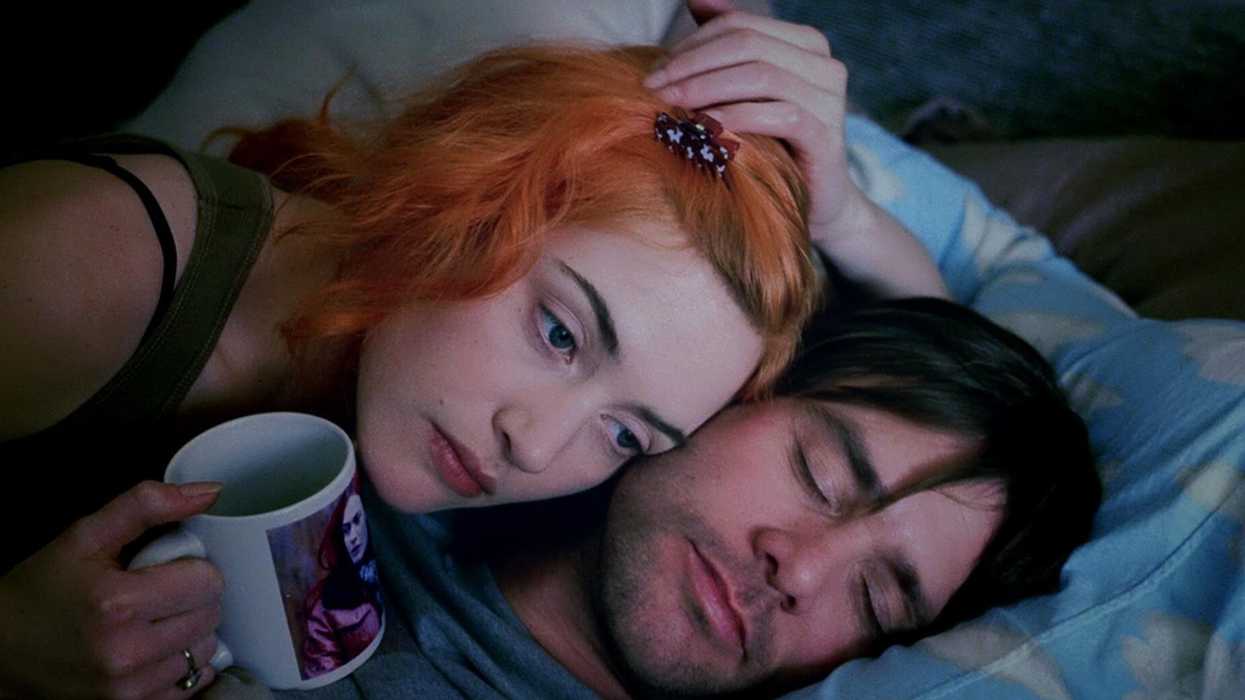
Eternal Sunshine of the Spotless Mind
I remember being in my local bookstore in 2020 and coming across a signed copy of Charlie Kaufman's recently published book, Antkind. And I bought it, because duh, what an awesome find.
At the time, we were a few months away from his next feature, I'm Thinking of Ending Things, and I remember wondering what he'd been up to as a writer, since his projects are so few and far between.
I wondered why we didn't get more from him more often. Even though his movies are not necessarily accessible works—usually dense and high-concept and even dreary—I always enjoy the experience of watching them, and they generate a lot of chatter in film circles. Or in the case of Antkind, the opportunity to explore his brain a little.
Turns out that Kaufman struggles to get projects off the ground, despite four Academy Award nominations and one win. He returned recently in a different format with the short film How to Shoot a Ghost, which premiered at Venice.
During a recent interview with The Guardian, the acclaimed screenwriter behind Being John Malkovich, Eternal Sunshine of the Spotless Mind, and Synecdoche, New York shared more about that struggle. His position and artistic integrity should inspire you, too.
- YouTube www.youtube.com
On the Reality of Pitching
In 1998, Kaufman and Michel Gondry spent several days driving around Hollywood, pitching the idea for Eternal Sunshine to studio executives.
"I had an infected tooth," Kaufman told The Guardian. "I'd never been in such pain. But I didn't have time to go to the dentist because we were doing this."
But the feedback was positive, he said.
"They knew how to sell it, and that was exciting to them."
Notice what got executives excited. They could see how to market the concept.
Understanding the sellable hook of your story is important, even for the most high-concept artistic projects. Can you visualize the poster or the trailer for your film? What about a TikTok edit or potential virality? I still see Eternal Sunshine edits in my FYP regularly.
On Industry Realities
Even acclaimed writers experience relatively short windows of industry heat. Kaufman's honesty about his career arc (mostly struggle punctuated by brief success) offers a perspective on creative careers that's often missing from industry narratives.
"Well, I'd spent much of my adult life not being successful," he said. "But, yes, there was this brief moment—beginning when Malkovich opened and ending with Synecdoche—where I was, you know … In demand. Or something."
Sometimes this stagnancy comes by choice. For instance, when The Hollywood Reporter asked Gondry in 2023 why he hadn't made more films in Hollywood, he said, "It's very hard to work after having worked with Charlie Kaufman. The scripts all seem very dull, so you really have to make an effort."
Chasing that heat is really hard work. You can do it, but you won't rest much and potentially won't have as much say in the passion projects you take on. If you're a writer, you would need to be writing constantly, which isn't always feasible.
- YouTube www.youtube.com
On Artistic Responsibility
The fact of the matter is that Kaufman probably could get something off the ground through the power of his name alone. But he's picky about his projects.
"I think the world is in a terrible, terrible situation right now," he told The Guardian.
He added, "I have a responsibility, as I see it, not to put garbage in the world. I'm not going to do that. If you start trying to figure out what it is that people want, you are doing what AI does. The idea of AI precedes AI itself because that's the Hollywood machine. It's why they remake the same five movies every 10 years. It's why they have a formula for what a movie is."
Kaufman is articulating that filmmaking is both entertainment and a cultural influence. For him, it's not about "content." It's about art. It's about producing something original, even if that's not what the industry wants.
On Self-Awareness and Authenticity
For Kaufman, connection to genuine human experience is the source of artistic value. Those that don't value this trait are the problem, he said.
"That's where the greed and acquisitiveness and all of this garbage comes from. It's people who are really lost and don't have anything, so they're desperately trying to make themselves feel better by acquiring, by lording it over people, by being powerful and wealthy. They're damaged people doing so much damage."
Kaufman acknowledged his own flaws.
"I'm a damaged person too!" he said. "But I'm trying, you know? I'm trying to be truthful about it."
Self-awareness and truth are what matter in creating authentic work, Kaufman believes. Meaningful filmmaking is all about maintaining humanity and truth in an industry that often rewards neither.
- Why Are Original Movies Struggling At the 2025 Box Office? ›
- Why Ryan Coogler Wants to Focus on Original Ideas Right Now ›
- 'I'm Thinking of Ending Things' is a Weird Flick, but Here's Charlie ... ›
- Charlie Kaufman Rallies the WGA With a Scorching Awards Speech ... ›
- What Are Charlie Kaufman's 10 Screenwriting Tips? | No Film School ›
- Escape Your Brain With This Writing Advice From Charlie Kaufman ... ›
- The Hard Truth About Hollywood and Originality From Gore Verbinski | No Film School ›
- Charlie Kaufman Breaks All the Rules in His Poetic New Short 'How to Shoot a Ghost' | No Film School ›
- Why Everything in ‘Eternal Sunshine of the Spotless Mind’ Is So Blue — And What It Really Means ›
- Netflix Is Betting Big on Original Stories. Will It Pay Off? ›