Every filmmaker knows the edit is where the magic happens. But in a horror film, it's also where the terror is born. In the new folk-horror standout Bone Lake, the bone-chilling pace and gut-punch scares are a testament to the power of a great editor.
That editor is Anjoum Agrama, and we’re thrilled to have her here today to discuss her craft.
Get ready to dive into the art of the jump scare, the secrets of suspenseful pacing, and how she helped shape the haunting final story of Bone Lake frame by frame.
Let's dive in.
- YouTubewww.youtube.com
NFS: Hey Anjoum! Can you tell us more about your background in cutting music videos for artists such as The Marias and Marshmello? How has that work prepared you for narrative projects such as Bone Lake?
Anjoum Agrama: I actually started my professional editing career with music videos. Director Mercedes Bryce Morgan, who I met at film school, brought me onto the “Happier” video for Marshmello. This was the most popular song we’d created a video for at the time, and since we were just a couple of years out from college, it was all very thrilling. The video is narrative-driven; it tells the story of a young girl and her bond with her dog, so even though it’s in music video format, it plays like a short film set to the track.
In contrast, the videos for The Marías are more experiential and looser in narrative. There’s a progression of visuals, but not a complete story, so the editing becomes about musicality and emotion. I’m looking for special moments of performance and movement, while cutting to the track. Both styles – and really my whole background in the music video space – continue to inform the way I approach narrative editing.
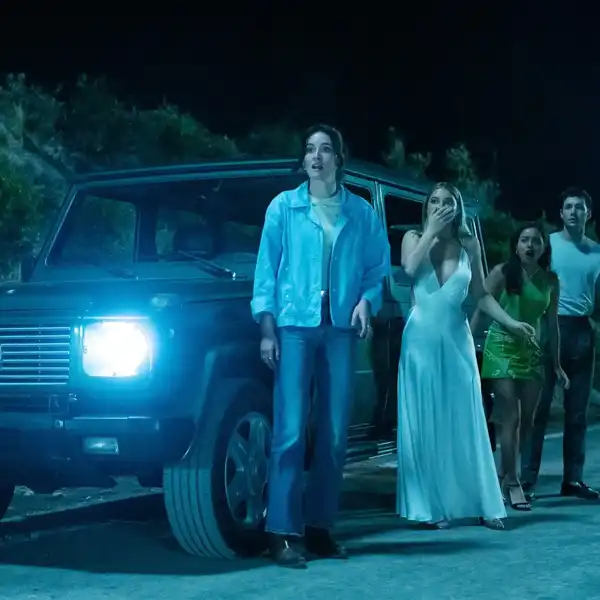
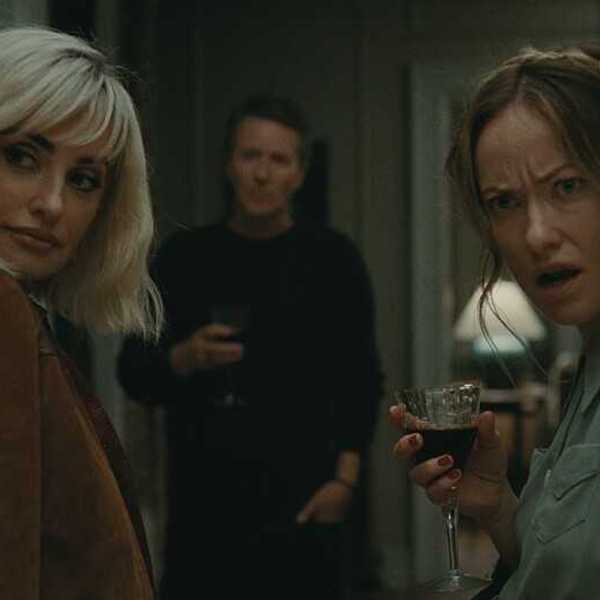
Even in my work on features, I really value the moments where I can edit against expectation. My background with music videos has pushed me to think beyond traditional narrative cutting, especially when it comes to montage sequences and using music as a storytelling tool. My latest feature, Bone Lake, which comes out October 3rd, is a good example of that. It’s a psycho sexual thriller that begins with two couples arriving at a seemingly double-booked house rental, which over the course of a weekend spirals into a nightmare of sex, lies, and manipulation. In the edit, we took a lot of opportunities to lean into a stylized, surreal approach – and I felt very prepared for that because of my music video background.
NFS: What was it like to see those videos receive nominations at the VMAs? What does that kind of recognition mean to you as a creative?
AA: Getting a nomination is always such an honor and a boost of confidence. I remember the first time, it was back in 2019 for the Marshmello video, and everyone on the team was beyond excited. The video had been streaming at number one on YouTube for weeks, and the song itself was top of the charts, but getting that nomination felt even more validating. Rarely in indie film do you have a project that gets seen by so many people, so the exposure as a creative was truly rewarding. To date, it has over 1.3 billion views on YouTube, and I still get really nice comments from new contacts when they realize I worked on that video. Then, just this summer, to have “Back to Me” nominated felt like a homecoming in a way. I had taken quite a bit of time away from music videos in the last five years, editing just a couple while devoting most of my time to narrative films. The Marías are good friends of mine, so it was nice to get back into music videos with them, and I’m really proud of what we made together.
- YouTube www.youtube.com
NFS: Bone Lake marks the latest collaboration between you and director Mercedes Bryce Morgan. How did you and Mercedes begin working together, and how has your creative partnership evolved over time?
AA: Mercedes and I met back in 2011 at a summer film course, and then the following year we were freshmen together at USC’s School of Cinematic Arts. We might have collaborated on one class project, I think it was to make a PSA, which she directed and I edited. Otherwise, our work was almost entirely outside of class and continued past graduation. At this point, over countless music videos, short films, two digital series, and three features, we have a seasoned shorthand with one another. She’s a great communicator and collaborator, so it’s always a really enjoyable and rewarding process to work with her. I now instinctively can tell based on the footage what she’s going for with the edit, but I also feel challenged constantly, which is what you want from a creative partnership. And ultimately, we go way back to when we were teens, so it’s really special to share a long history with someone in this industry.
NFS: Does music remain a significant part of your editing process? Are there any notable needle drops or music cues in Bone Lake?
AA: Music is essential early on in the editing process, especially when cutting genre films. In order to be confident in the visuals and timing, you have to play with score even if it’s a placeholder. In the case of Bone Lake, music plays a pivotal role, with some “temp” needle drops we used in the edit even becoming final tracks. As I was working on the editor’s cut, Mercedes sent me a Spotify playlist, which included some score as well as tracks like “Sex and Violence” by The Exploited. I placed that track in a particular action scene and, almost telepathically, it was right where Mercedes had envisioned it. It’s been there since my first pass. Rarely does that happen, and I’m so happy the team was able to secure it early on. Another song on the playlist was “Red Sex” by Vessel. We didn’t have the rights to that at first, but we were able to secure it, and it plays in the originally slotted sequence, too. For the rest of the film’s music, our composers Roque Baños and Ben Cherney put together an exceptional score that has taken the film to a whole new level.
NFS: Bone Lake offers an intriguing blend of genres, incorporating elements of horror comedies and erotic thrillers. How did you achieve this tonal balance in the edit?
AA: It definitely is a balancing act. Throughout the piece, elements of horror, suspense, comedy, and seduction are at play, and luckily, all our actors gave such grounded performances rooted in their interpersonal dynamics. That made my job managing the different tones a lot easier. When there is humor, it’s organic, and it might come right before or after a horror beat, but timing and strong performances make it work. And speaking of that first needle drop track, it is also used to emphasize a comedic moment during that action sequence. Music, across the film, was a key tool in balancing the comedy and horror.
 Editor Anjoum AgramaCredit: Sofia Zimman
NFS: Were there any films that you felt particularly inspired by while crafting Bone Lake?
AA: We looked at films with similar setups or relationships. The Danish film, Speak No Evil, was one we discussed as it explores the same theme of what can happen when you spend time under a shared roof with people you meet on vacation. I also saw a lot of similarities between our two couples and the two married couples in White Lotus season two. The lies, mystery, betrayal, and sexual tension are present in both dynamics and were something I kept in mind during the edit. This film wasn’t out yet, but Weapons does such a great job of fusing horror and comedy. Timing is so important for both, so it makes for a great pairing. I watched it in theaters recently and was terrified but also laughing way more than I anticipated. It’s nice to see genre films moving in that direction.
NFS: Are there any sequences in Bone Lake that presented a challenge in the edit?
AA: I would say the finale, because it was planned for the last day of principal photography, and the production got stormed out halfway through. This was a sequence that involved open water, a boat, rain, and multiple stunts. Because of the storm, there was a plan for pickups, but even so, some reshoots were also done. Crafting a sequence with footage from months apart and making it all feel cohesive was a challenge, but I don’t think you would know from the edit. Much thanks to Director of Photography Nick Matthews and Production Designer Kendra Bradanini, as well as the rest of the team, for making the reshoot footage fit seamlessly into the edit. Ironically, since we didn’t have the last scene of the film fully shot during the first half of post, it actually gave us time to rewrite some aspects of it before they did the pickups. The film is so much stronger in this final iteration, so I guess it was a blessing in disguise.
NFS: Are there any other genres in which you would like to work?
AA: I’ve been lucky to work in the thriller space so consistently, but I am always eager to try new things and challenge myself. My short film experience has brought me on to straight dramas, comedies, and musicals, so I have dabbled. I grew up on a mix of character-driven foreign cinema – Almodóvar, Hansen-Løve, Cuarón, to name a few, while simultaneously being heavily obsessed with films like The Bourne Identity and Ocean’s Eleven, so I think an arthouse crime drama would be a dream. Maybe that’s too niche…but really it’s about the script and whether it resonates with me. I think I have the experience to adapt to any genre, and I’m up for the challenge.
- Explore the Horrors of Food Delivery With Indie Filmmaker Julian Terry ›
- This Legendary "Monster Man" Wants You to Keep Using Practical Effects ›
- Channeling Wildfires Into a Eco-Terror Horror Feature With ‘COYOTES’ Director Colin Minihan ›
- Inside the Mind of Fear: How 'Dual' Tricks Your Brain and Pulls You Into Its Thriller ›