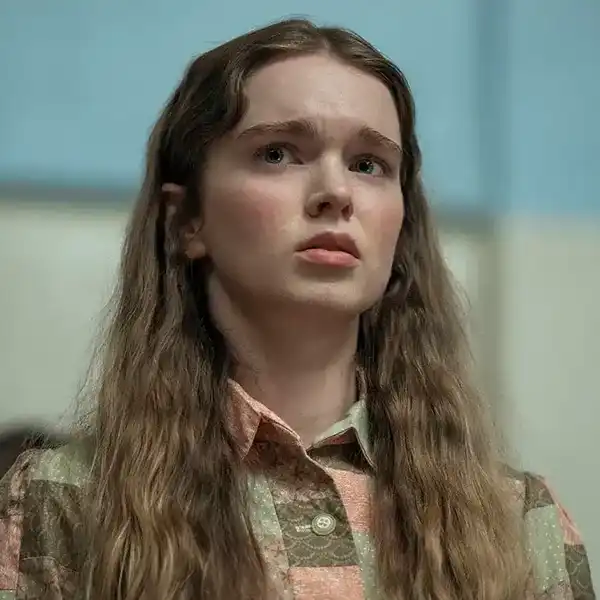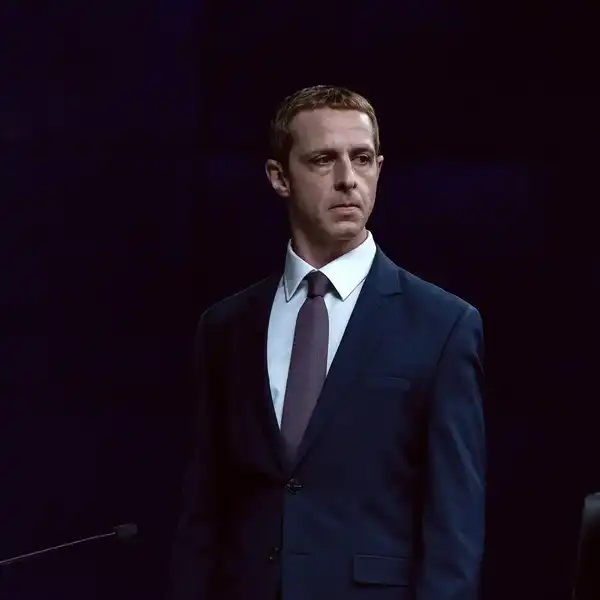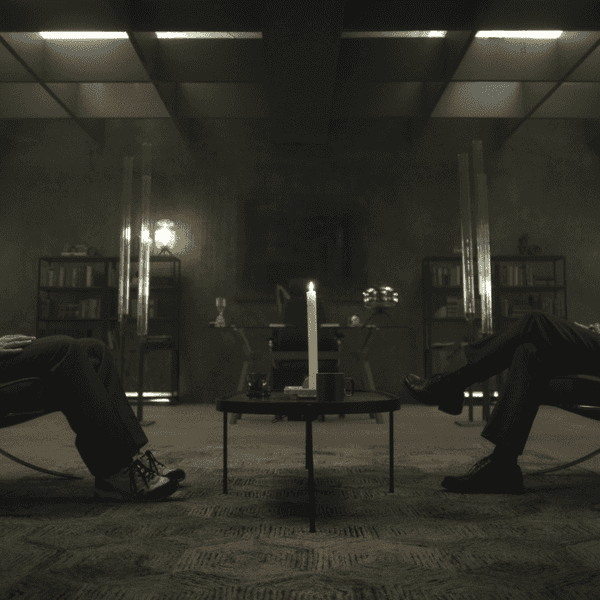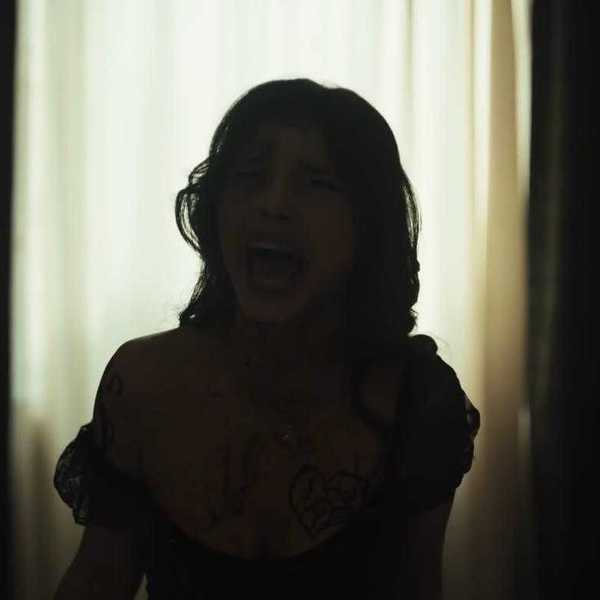
We're diving deep into the psychology of fear and filmmaking with Nitasha Bhambree and Declan Mulvey, the talented directors behind the compelling thriller short film, Dual.
This project has not only been selected to screen at the prestigious FilmQuest this year but has also earned nominations for Best Sci-Fi and Best VFX—a testament to its complex narrative and impressive technical execution.
Today, Nitasha and Declan pull back the curtain on their creative process, discussing everything from the script's pragmatic origins to the challenging visual effects that helped amplify their characters’ crisis.
Let's dive in.
 'Dual' Credit: Nitasha Bhambree and Declan Mulvey
No Film School: What sparked the idea for a thriller such as Dual? Was there a specific story, myth, or psychological concept that inspired Dual?
Nitasha Bhambree and Declan Mulvey: We began writing Dual from a pragmatic place. We knew we wanted to shoot in one location with a minimal cast. We decided on a remote home with two cast members -- a husband and wife. The wife would be faced with the dilemma of an impostor husband coming home to her one day. It’s an uncanny situation that points to an inevitable physical conflict, which, coming from an action background as stunt coordinators and 2nd unit directors, we also knew we wanted in the film. We kept elaborating on this central idea with “what-if” scenarios until a greater plot began to reveal itself. What’s funny is that it wasn’t until we were in post that we realized just how much of our own personal anxieties about starting a family and establishing a home we had baked into this script.
NFS: What does the "familiar threat" represent in the context of identity, relationships, or survival?
NB/DM: Our identity, relationships, and survival are all going to be determined in one way or another by what we as individuals cling to. And the beauty of Aristotelian stories that share a singular action, time, and place like Dual, is that ultimately the characters are going to be led on an inward journey. They will run out of new places and plot points, and eventually they will have to confront what is within themselves -- the “familiar threat.”
NFS: Thrillers often rely on building suspense through atmosphere. How did you use setting, sound, and cinematography to create a sense of unease?
NB/DM: We shot at an idyllic cabin in the woods in upstate New York. It’s a beautiful, picturesque landscape. So we had to recontextualize it by looking at it through the eyes of our characters, Keira (played by Kiera O’Connor) and Sam (played by Robbie Dema). As our film begins, they are uneasy. All is not right with the world. So even though this is their weekend sanctuary and is normally a peaceful retreat, due to the circumstances, they approach with caution. We created a rich soundscape in the woods with chirping birds and rustling trees so that it could be punctuated with gunshots and screams. We worked with our cinematographer, John Fitzpatrick, and camera operator John Conquy to create long, uninterrupted Steadicam shots that put the viewer right alongside the characters as they move cautiously through the woods. We used these traditional filmmaking tools to heighten the natural beauty of the setting but also upend it as the uncanny events of the film take hold.
NFS: How did you approach pacing in Dual, especially given the psychological complexity of the film?
NB/DM: Throughout the film, the pacing matches the characters’ continued experience of being nearly exhausted by monotony, then immediately thrust into jarring violence. We establish one pace with the aforementioned long shots on Steadicam as our characters walk through the woods. Then, when they arrive at their cabin, we have a more pressing montage of the characters: locking their doors, drawing the shades, and stocking ammunition. We return to another long shot of them quietly eating dinner while listening to news reports of chaos in the city that they retreated from. Moments later, they are in a life and death fight that is cut fast and hard to accentuate the characters’ experience of the action. From scene to scene, we were very deliberate with our editing, only cutting when it served the pacing and staying true to the characters’ sense of time.
 'Dual' Credit: Nitasha Bhambree and Declan Mulvey
NFS: What were some of the visual or narrative cues you used to subtly signal duality or disorientation to the viewer?
NB/DM: There is an obstacle in the characters’ path early in the film that diverts their course. Upon a second viewing, the viewer might recognize this obstacle as something we have already seen in the film.
When our protagonist, Keira, is trying to determine who her real husband is, she is in the throes of a dilemma throughout the scene. The handheld camera work features her at the center with dirty pieces of either Sam in the foreground and background, placing the audience in her overwhelmed and disoriented point of view. It’s very subtle but intentionally drives the audience to have the realization of who the real Sam is at the same time as Keira, as we rack focus to him and bring them together in a two-shot.
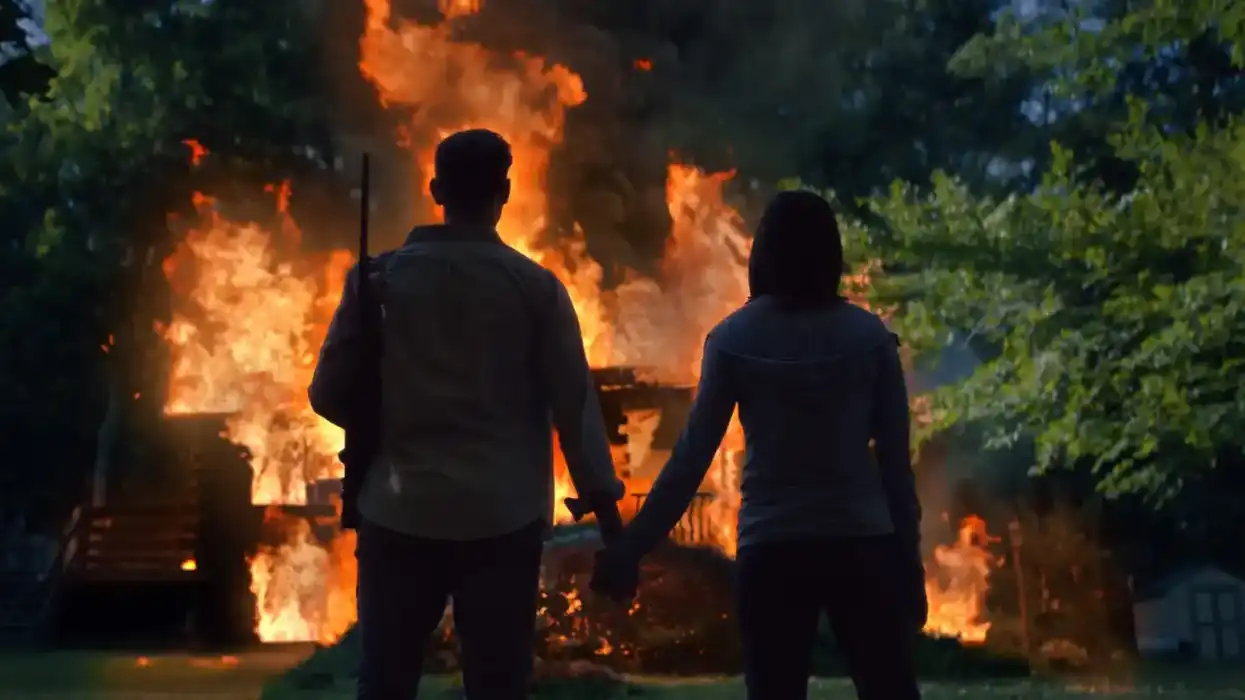
There is a golden oldies love song by Tristan Watering of Almost Vinyl that plays on an old radio in a dream sequence, then later at the darkest point of the film, another golden oldies love song plays as Keira and Sam see their whole world burn to the ground before them. We liked the idea of these love songs underscoring two tonally opposing scenes.
The list goes on, but if we say any more, we’ll give too much away! But we will add that we used visual effects to help amplify their crisis, and there are some fun gags we think the audience will enjoy.
NFS: Was there a particular scene or sequence that was especially challenging, or rewarding, to bring to life?
NB/DM: Most of the visual effects shots were challenging. Anyone who has done this type of work knows it multiplies your shot list by about 4x. You need to shoot each character or element separately, as well as a plate. And each of these shots might have its own lighting and green screen requirements. We didn’t have a motion control camera either, which is how a fully funded film would approach these sequences. We did it raw. It took a lot of effort on the part of our camera and G&E team, as well as our cast, stunt doubles, and, of course, our outstanding VFX artists led by Anika Morris, Stephen Izzi, and Aaron Joshua. We are incredibly happy with how it all turned out. And now we have a much better understanding of what can be accomplished with VFX and how best to approach it, which will be very useful for our upcoming feature.
NFS: Can you tease any hidden layers, visual motifs, or clues that viewers might miss on a first watch?
NB/DM: Dual is loaded with clues and call-backs, but aside from the ones we already mentioned, we don’t want to give away any more spoilers. One of the things we are most proud of is that it is very rewatchable. It’s 21 minutes but moves quickly and packs a punch in terms of stunts and visual effects. Each new reveal during your first viewing may prompt you to watch it again just to see how everything ties together.