Film Quote of the Day: The Kevin Costner Line That Reveals the Heart of ‘Dances with Wolves’
“I had never known a people so eager to laugh, so devoted to family, so dedicated to each other.”
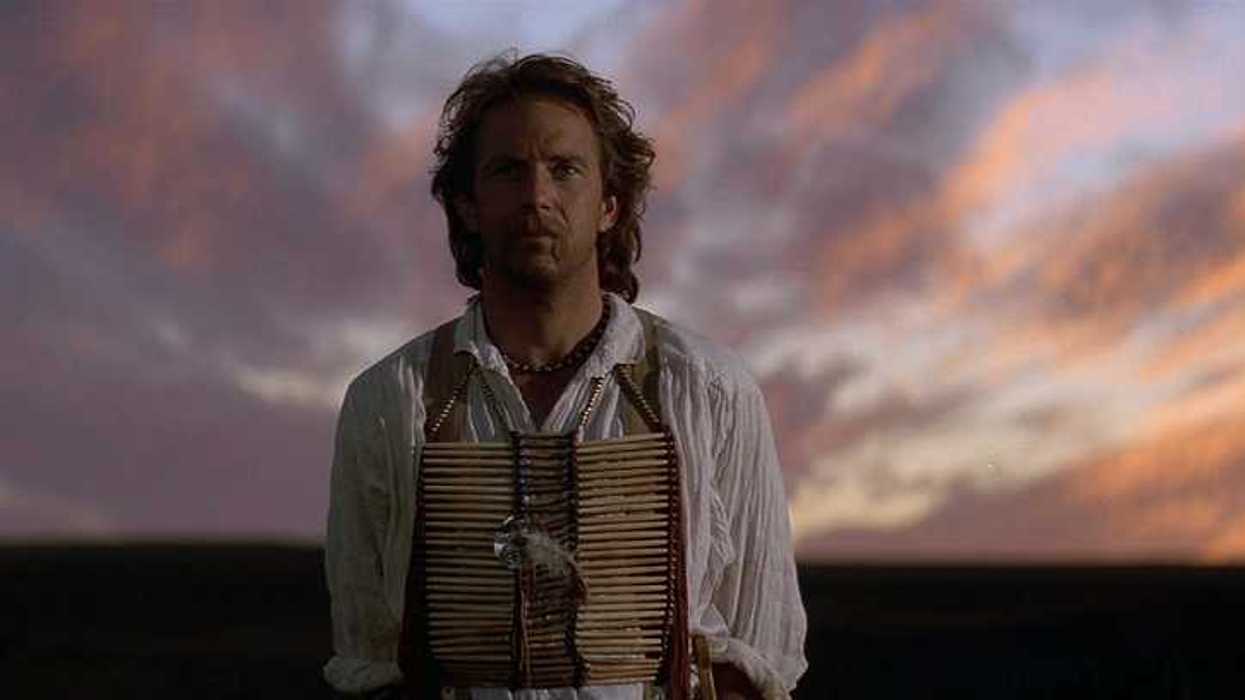
'Dances With Wolves'
I can't imagine the pressure Kevin Costner was under in 1990. He was at the height of his acting career, a certified star who could greenlight anything. And for all his power, he chose a western about going native that would run over three hours and be a brutal, and somehow meditative, look at life on the prairie during expansion in the post-Civil War America.
Yes, we're talking about Dances with Wolves.
Before it even came out, critics were calling it "Kevin's Gate," a play on the notorious Heaven's Gate, which robbed us of more Michael Cimino films.
But Costner would not suffer the same fate.
The film went on to capture seven Academy Awards, including Best Picture and Best Director, and it also redefined how Hollywood portrayed the American frontier.
At its core, Dances with Wolves is an intimate study of human connection and the idea of finding peace, even in a time of immense violence and bigotry.
Let's dive into the quote that pulls this out.
- YouTubewww.youtube.com
The Scene in Question
This movie is so sprawling it's hard to focus on just one scene. But let me get you up to speed. John Dunbar is a Civil War soldier who gets assigned to an isolated post at Fort Sedgewick.
The place is empty; all of the other soldiers have abandoned it after losing their horses to Indians and failing to thrive out there.
But John Dunbar is different; he wants to be as far away from the war and civilization as possible, so he stays, out of what he calls a sense of duty.
It's a lonely endeavor, but the longer he stays out there, the more he comes to understand the wilderness, thanks to an unlikely friendship with the Lakota people.
Dunbar spends time observing their daily routines, learning their customs, sharing food, and attempting to breach the language barrier with the help of Stands With A Fist (Mary McDonnell), a white woman whom he rescued as a child.
Now, Dunbar has to undo many of his own preconceived notions about these people, and as he does, he reads her journals.
As he comes to understand the Lakota, he writes all this down in his journal, including one passionate entry about how much he respects them.
He says:
"I had never known a people so eager to laugh, so devoted to family, so dedicated to each other."
What The Quote Means
Again, we're not digging for meaning here. This is Dunbar, who came from what he would call "civilized society," fully getting that there's not much of a difference between him and the Lakota, except that they seem much more peaceful and happy.
That's really the point of the narrative arc.
Dunbar is beginning to learn that choosing peace and love, andn ot violence and war, will lead to a better, more fulfilling society. He came to this area as a soldier who wanted to defend, but now, after observing a foreign environment, he begins his transformation into a man who recognizes a profound sense of home on the prairie.
This movie is a real study in how to use voiceover. It's never on the nose; it's more insightful, and it crafts the journey and change from who we meet at the start.
Also, with so many values Dunbar could lean into, we see him desperate for peace and family. He came out here preferring isolation, but now we see he needs others not only to survive, but to have a happy life.
There's something deeply moving about that.
Summing It All Up
Great films anchor the story's underlying message, and what I love about this movie is that its message sort of changes the deeper you go. You think it's about isolation and peace, but really it winds up being about finding your people and being accepted by them.
Costner’s journal entry in Dances with Wolves bridges two worlds and brings us closer to accepting that when all mankind can set aside war and lean into peace, they'll be able to prioritize what really matters.