‘Dances with Wolves’: The Bet Nobody Thought Would Pay Off
When Kevin Costner bet his career on a 3-hour epic, Hollywood called it career suicide—until the whole world proved them wrong.
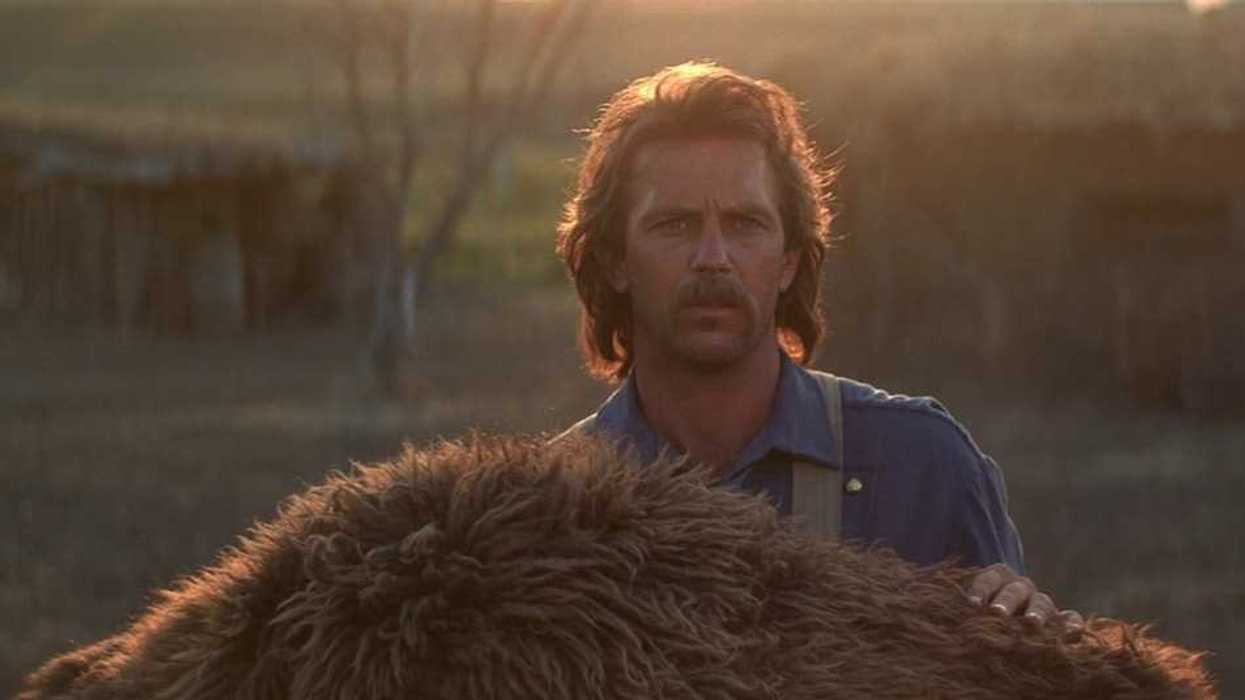
‘Dances with Wolves’ (1990)
We may say that Hollywood “creates spectacles” and “sells dreams,” but at the end of the day, it’s still a business. It involves (not-so-dreamy) tasks such as extensive pre-production planning, market research, risk assessment, security and reputation management, and so on. Projects are usually undertaken when the risk factor is minimized as much as possible.
So, when someone seems to step out of this demarcated safety bubble of risks, security, and losses, people talk. They raise eyebrows and point fingers. In business language, this recklessness translates as insanity.
In 1989, everyone thought Kevin Costner had gone insane when he decided to make a certain movie. The reason is he picked a genre that studios had already declared dead, he chose a story that moved at its own pace, he made it longer than any filmmaker would dare at that time (3 hours), and the director wasn’t a well-known name like Sergio Corbucci, Sergio Leone, or Clint Eastwood; it was Costner himself, an overconfident and possibly delusional film star with not a single directorial credit.
When the project started, Dances with Wolves (1990) didn’t look like it had any bright prospects. It looked like a film that was doomed to go downhill. A film that everyone would quote as a warning sign. They termed it a “vanity project” and “career gamble” dressed as ambition. Kevin Costner might as well be writing his own professional eulogy.
And then came the big judgment day, November 9, 1990. Everyone held their breath to hear a loud crash followed by resounding silence.
But surprise, surprise!
The crash never came. What came was a deafening cheer from both critics and the masses. What came was a large influx of green at the box office. What came was a big Oscar triumph. Confounded skeptics went silent, and record books were rewritten. Costner hadn’t just made a hit film; he had resurrected a whole genre from its grave.
Why the Industry Thought Costner Had Lost It
Westerns: The Box Office Poison of the Era
Once the fan favorite, Westerns had lost their allure by the ‘80s. The decade saw several Westerns bombing, or at least greatly underperforming, at the box office. The ‘80s decade saw a surge of high-concept spectacles, such as E.T. the Extra Terrestrial (1982), sci-fi films like The Terminator (1984), and urban action flicks, like Die Hard (1988), which made survival for the Westerns even more difficult. Expecting the audience would still buy into its outdated genre clichés was hopeless. What’s more, Costner was trying to sell a slow-burning frontier story to the generation that had developed a taste for fast-paced narratives. It’s no wonder everyone thought that Dances with Wolves was a massive disaster waiting to happen.
Risky Blueprint from Page One
Aside from the fact that Westerns had no viable audience, Costner’s screenplay stretched to three hours of runtime, was slow-paced, and leaned into quiet storytelling. As if that wasn’t hard enough to sell, the majority of the film included large portions of Lakota dialogue with subtitles. And yes, Costner, who had zero directorial experience, was taking the reins of the movie. That only added to the skepticism and ridicule. “Costner’s Last Stand,” the industry voices labeled it. The pundits even predicted that Costner would derail his hot streak as an actor in a misguided attempt to launch himself as a director, that too, with a disaster-prone project such as this.
Chaos behind the Camera
The risks that usually accompany filming on location are unpredictable weather, remote setups, and massive coordination challenges; everything that was a part of this project. The buffalo-hunt sequence alone was a logistical headache and required rigorous planning and high costs. Working with animals, especially wolves, such as Two Socks, was a lesson in unpredictability and expense. Training such a wild animal “act” stretched the schedule in terms of training, timing, and safety. Delays happened, and every delay added pressure. The budget kept ballooning. Every complication only bolstered the ominous prediction that everyone was making about the movie’s looming fate.
The Payoff That Changed the Narrative
Box Office Shock and the Audience Shift
What was needed to silence the loud, critical noise was a loud, critical success. The movie delivered it. It grossed over $424 million worldwide. The skeptics went into shocked silence but were also forced to reevaluate their assumptions about audience taste. They had underestimated viewers’ ability and willingness to appreciate sincerity, scale, and emotional depth. Not everything had to be constrained inside the mold of “market trend"; sometimes trends could be created or, like in this case, resurrected.
Saving the Westerns and Influencing the ‘90s
The global haul of $424 million wasn’t the only success story for the film. At the 1991 Academy Awards, the film swept with seven Oscars, including Best Picture, Best Director, and Best Adapted Screenplay. This was a huge boost to filmmakers who had bold visions and were willing to take risks. The film was a strong argument on their behalf. And it paid off. Filmmakers took inspiration, and the genre saw an impressive resurgence in the ‘90s. Had Dances with Wolves not paved the way, we wouldn’t have seen classics such as Tombstone (1993), The Last of the Mohicans (1992), and, of course, Unforgiven (1992).
Conclusion
With Dances with Wolves, Costner gave filmmakers an important lesson: Industry consensus is nothing but a lack of imagination. A genre can decline, but all you need is a definitive vision and earnest belief in yourself. Coupled with the courage to bet on yourself, you can prove that authenticity and a unique perspective can battle and topple market trends.
Another thing that we must take out of this is a filmmaker’s willingness to put faith in the audience’s intelligence. That often plays a crucial part in changing established and dogged Hollywood views around creative risk.
After all, where can you find more drama than in swimming against the current?
- Story of the Rise, Fall & Wild Comeback of the Western Genre ›
- 12 Deadliest Gunslingers in Western Cinema ›
- 10 Best Westerns of the 1970s: Ranked ›
- The 8 Best Westerns of the ‘80s: Ranked ›
- The 13 Best Westerns of the ‘90s: Ranked ›
- Kevin Costner Wants More Women in Western Movies | No Film School ›
- How to Avoid the 'White Savior Trope' | No Film School ›
- The Kevin Costner Dialogue From a 1990 Western Epic That Perfectly Captured Freedom ›
- Breaking Down the Opening Scene of 'Dances With Wolves' ›