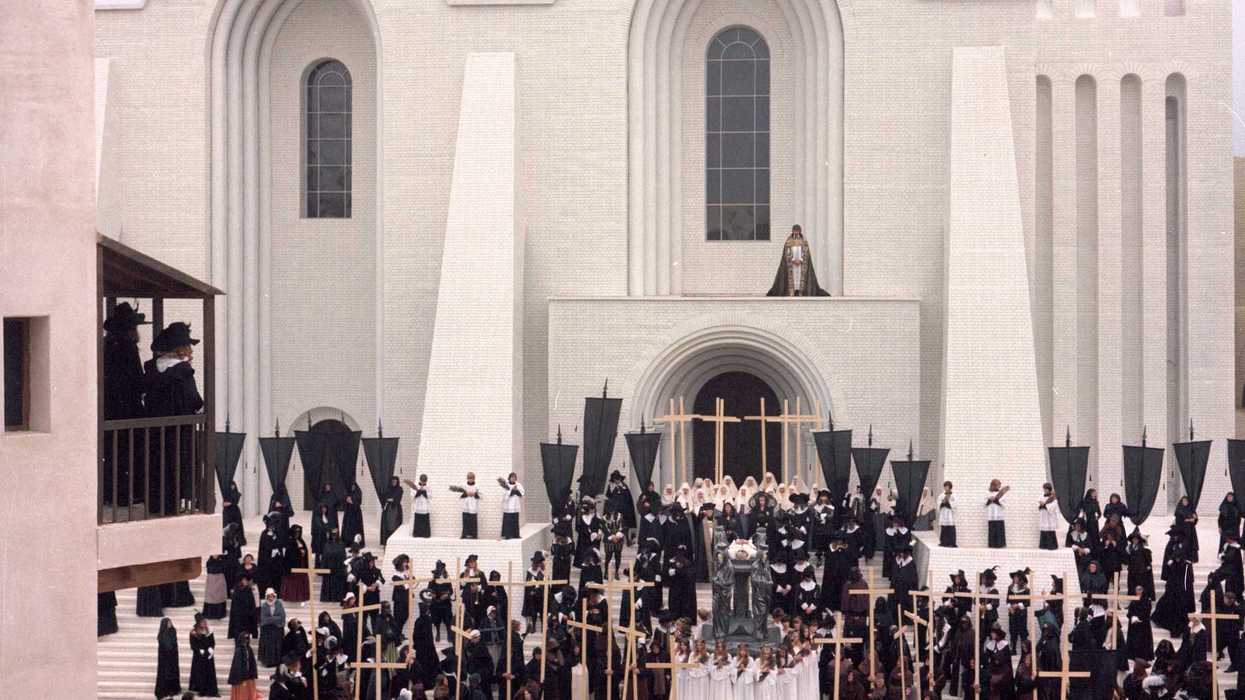
Hardcore cinephiles are in the middle of one of the most important weeks of film ever right now, with the 4K theatrical re-release of Ken Russell's highly controversial historical drama, The Devils.
It looks like a horror film and certainly could be classified as such, but it's based on a real period of religious hysteria that took place in 1632-1634 in Loudun, France, during a famous case of mass sociogenic illness resulting in political execution.
The uncut film currently in theaters is rated NC-17 for sexual content and nudity, and it does feel provocative still for how far it takes its portrayals of mass madness. But when it was first released in 1971, it was also considered shockingly blasphemous and was chopped up and censored and since then has been almost impossible to watch.
The director's cut currently in theaters restores Russell's vision and is one of the most visually stunning films you'll be able to watch this year. That's due in part to the film's first-time production designer, Derek Jarman, who built the sets. His career ran from ballet to Pinewood to Blue.
- YouTube www.youtube.com
About The Devils
Based on a 1961 stage play and the non-fiction book The Devils of Loudun by Aldous Huxley, the story follows a fortified French city that Cardinal Richelieu wants to bring to heel. The plan involves demolishing the city walls, but the parish priest, Father Urbain Grandier (Oliver Reed), refuses to comply until he hears from King Louis XIII.
Meanwhile, nuns at a local convent—led by repressed Mother Superior Sister Jeanne des Anges (Jeanne de Belcier, played by Vanessa Redgrave)—began convulsing, screaming, and claiming they were possessed by demons. Richelieu and his agent Baron Jean Martin de Laubardemont use the event to get to Grandier, pinning the "possessions" on him and threatening violence against anyone who dares to stand against them.
Essentially, the film can be boiled down to Grandier being so handsome and charismatic that everyone either wants to sleep with him or kill him.
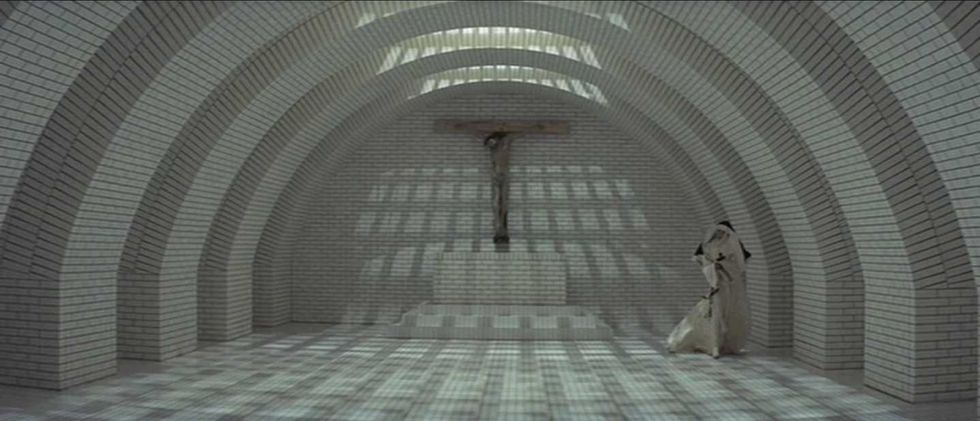
The film is visually stunning, with the city of Loudun rendered in stark white tiles and built to a grand scale in arches, angled walls, and high ceilings. It's an odd mix of sterile and grandiosity, the film's version of cathedrals and grand halls turned on their heads. Meanwhile, the costumes are often flamboyant, contrasting with the clean surroundings.
The BBFC first saw a rough cut on January 27, 1971. Warner Bros. executives saw it around the same time and were similarly concerned, making it a rare case of a distributor censoring its own film alongside the BBFC. Russell was asked to cut a late sequence from the film when the hysterical nuns engage in gyrations with... certain church decor. The cut film still received X ratings.
 'The Devils' Credit: Clockwork
From the Slade to the Stage
Jarman was born in 1942 and attended the Slade School of Fine Art (via the Victoria and Albert Museum). He went on to become a respected production designer and director, as well as an AIDS activist.
After graduating from the Slade, Jarman was commissioned by Frederick Ashton to design Jazz Calendar and by John Gielgud and Sadler's Wells Opera to design Don Giovanni, the company's opening production at the London Coliseum. Jarman also costume designed Don Giovanni, and the production was highly controversial. His designs were geometric and sharp and stripped back and part of what critics disliked about the production.
In the Sunday Times, he said the design was driven by his dislike of "unnecessary detail, which blurs the outlines of sets and costumes" (via the V&A).
Stage training taught him to design for an idea, not for literal accuracy, and eventually led him to film.
 'The Devils' Credit: Clockwork
Building Loudun
Russell learned of his work and invited the 28-year-old Jarman to join The Devils. For the film, he leaned into Art Deco influences that were admittedly anachronistic for the time period, but the designs were praised even as the film was disdained.
Russell wanted Loudun to read as modern to the people living in it. According to What's in a Scene, he told Jarman to take modern influences because Loudun's people would have seen themselves as a modern, vibrant community.
In 2012, when BFI released the film on DVD, The New Statesman wrote:
The fresh, zinging white tiles and brickwork of the sets was designed both to reflect a phrase in The Devils of Loudun, Aldous Huxley’s book about the same historical events, which described what took place in the city as akin to “a rape in a public toilet,” and to simultaneously insulate the picture from historical remoteness.
Russell described it as "a black and white film shot in color."
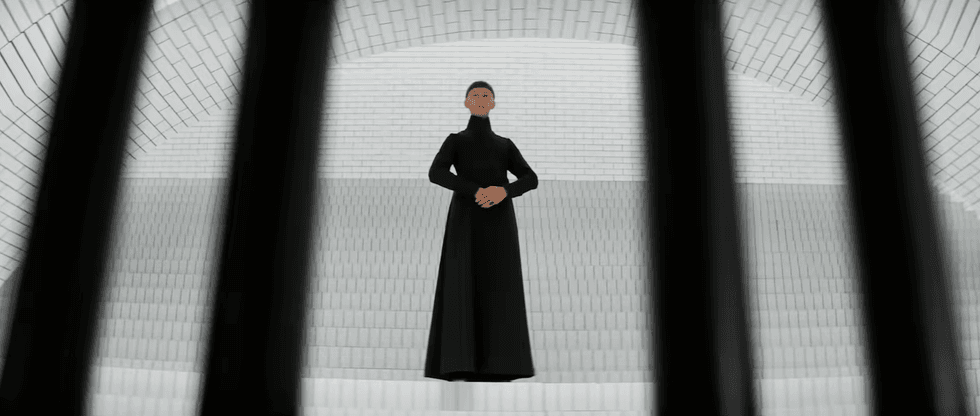
There are several stunning moments in these white halls. Sister Jeanne des Anges, also mostly in white, almost blends into the setting at points, crawling in ecstasy while her convent prays. Later, when Mignon (Murray Melvin) arrives dressed all in black, he looks like a dark bar in a cage looming over her.
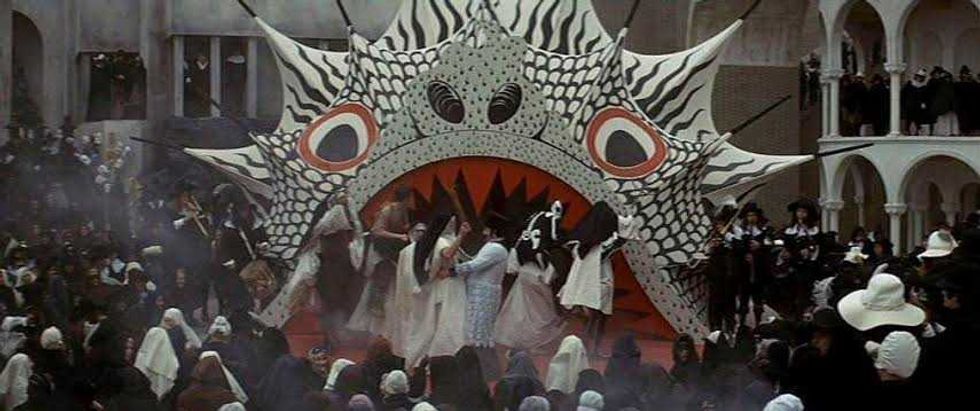
These sets were the biggest constructed since Cleopatra. Within the walls, audiences see plague carts, a dramatic recreation of events on a stage shaped like a distorted, fish-like face, a tribunal in a black hall, and more.
If there's anything to take away at the indie level, it might be that period accuracy can be sacrificed for a creative vision as bold as this one.
 'The Devils' Credit: Clockwork
What Jarman Learned
While given complete creative freedom here and a large budget, Jarman emerged from the experience determined to focus on his art. BAMPFA writes:
A deeply independent filmmaker, he embraced low budget filmmaking for its aesthetics and ethics, welcoming the opportunity to innovate and work with friends, but also to resist the way films were traditionally conceived and made.