In the premiere of Slow Horses Season 6, the series faces the delicate balancing act of navigating the aftermath of Struan’s death alongside the deeply emotional loss of River’s grandfather, David.
And trying to stay snarky and engaging without being overly melancholy.
Walking that tonal tightrope from script to screen required a radical rethink of the show’s traditional opening, a risky foray into character-driven flashbacks, and a masterclass in subtle visual manipulation.
That's why I am so excited to talk to editor Harrison Wall, who broke down the editorial mechanics behind the Season 6 opener and how he used its tone throughout the season.
Let's dive in.
- YouTubewww.youtube.com
NFS: Hey Harrison! The premiere episode of Slow Horses S6 is essentially juggling two very different emotional engines: Struan's death and River's grandfather's funeral. How did you think about cutting between those strands so that the episode feels like one piece rather than two parallel stories?
Harrison Wall: I always liked how these two strands complemented each other. Both are connected through death, but the tones are juxtaposed. Struan’s death – in classic Slow Horses fashion – is treated with zero sentiment. Whereas the death of River’s grandfather, David, is allowed to be emotionally affecting. For me, as an Editor, those two extremes offer a tonal sweet spot…
The only time it ever felt like we were juggling too much was in the opening. For quite a while, David’s death was at the front of the episode as a full standalone scene, straight off the back of Struan’s death. It was a really depressing way to start the season. Seeing David die right after Struan sort of made none of it funny. Plus, we then had to go to the main titles with Mick Jagger. The whole thing just didn’t work.
It was very difficult because none of us wanted to lose the David scene. However, it just didn’t fit in the opening, and everything worked better once we took it out.
We had to come up with something else, and that’s when we introduced the idea of the flashbacks while River is trying on his grandfather’s suit. That in itself was a challenge because it was a language the show had never really used before – at least not for a long time. The question was: can we get away with it? We went for it. Jonathan Pryce and Jack Lowden are so beautiful together – I’m so glad we got to be with them one last time.
NFS: Jack Lowden's River is in a very different emotional space in the Season 6 premiere. Did that affect the way you approached the tempo of his scenes compared with earlier seasons?
HW: It definitely added an extra element this time around. I’d cut some pretty emotional scenes with River before, in Season 4, but this time he is truly broken. Not only has he lost his primary father figure, but in this cruelly insensitive world he’s also being denied the space to fully grieve.
Jack Lowden has an amazingly unique ability to portray sadness and frustration in a way that is both devastating and funny. You have to sort of let him guide it. When he’s alone in a scene, I think it’s right that you genuinely feel sorry for him – and the pace slows accordingly. But when he’s in scenes with other characters – colliding with the likes of Lamb and Taverner – I’d rather not slow things down too much, because the whole point is that he’s being denied the space he needs, and you want to feel that frustration.
In his shared scenes, I noticed that he would sometimes be a little delayed in his responses to the other characters, and then at other points he’d be really sharp to react. I liked the irregularity of that. I made the most of those moments that stood out to me, as well as shaping more of them wherever I could.
NFS: The funeral sequence brings together an enormous number of characters and relationships. What were the editorial challenges of making that sequence legible both spatially and dramatically?
HW: The challenge of any ensemble show like Slow Horses is to not get overwhelmed by the number of characters and individual stories. The funeral scene in particular is sort of like a microcosm of what cutting the entire show is like.
For most of the funeral – with the exception of River’s speech – we’re sort of weaving around the place from character to character. It’s a bit like a dance. I loved the way they shot it because it really used the space well and felt very immersive. We also ended up holding shots for a long time because over-cutting it ruined the flow. Fewer cuts sound like less work, but actually you forfeit some of the editorial control over rhythm and performance. A lot of time is spent trying to figure out small cheats to manipulate things so that you don’t have to cut too prematurely.
The most challenging part of the funeral, though, was actually the singing inside the church. This was a rare opportunity to tell a visual story without dialogue – to observe the cast in this shared moment, with each character doing something kind of telling. I had the challenge of picking out the most interesting character moments from the rushes, but obviously the timings of the lip-sync immediately restricted my choices. I kept hitting stumbling blocks where multiple characters did their interesting thing on the same song lyric, meaning I had to choose between them. It became a real puzzle, and I found myself frustrated because I could never quite put the scene together as perfectly as I wanted. In the end, I did have to resort to a small bit of subtle lip-sync cheating and visual effects to get through it.
When I was about 95% there, I found myself having to construct one small, unusual sequence of shots to fill the remaining gap. Ordinarily, as an Editor, you’d never just shoehorn something in like that, but for obvious reasons I couldn’t just remove a five-second chunk from this part of the hymn. It’s never an edit I would have chosen to make – however, when I watched it back, I discovered something quite meaningful and foreshadowing in that particular beat, and that sort of made me okay with it. Unfortunately, I can’t reveal what that meaning is just yet. You can ask me again in six weeks’ time!
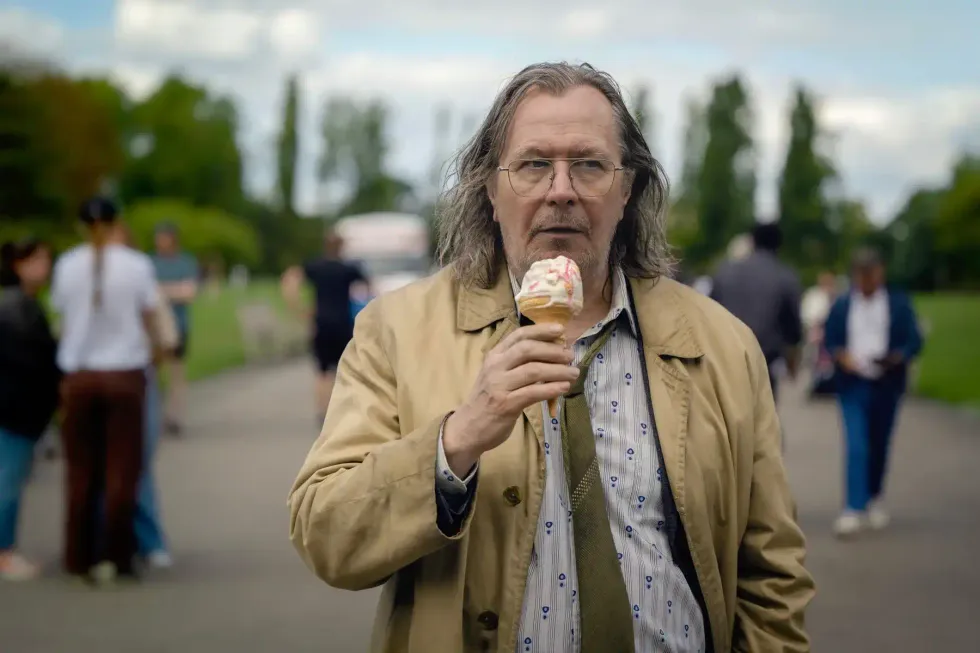 'Slow Horses'Credit: Apple
NFS: How much does silence factor into your cuts on Slow Horses? Are there moments where removing dialogue or allowing ambient sound to continue has proved more powerful than adding to the scene?
HW: In the same way that you can interrupt a moment of silence with a loud noise, I think you can interrupt a moment of noise with silence. Silence is really great for impact.
Slow Horses is fairly packed with noise. When there’s no dialogue, there’s usually score. However, when you kill all of that for a moment, I think it makes you pay attention.
There’s a really cool ambient sound moment in this episode. It’s right before River has the flashback to his grandfather. We cut from him aggressively scrubbing his shoes in the heavy rain to him sat on the sofa eating a microwave meal – and the sound cuts out in quite an unconventional way, so that all you can hear is the ambient sound of River’s breathing.
It was something I tried initially because I was very self-conscious about going into those flashbacks. Just ploughing straight into them without warning was discombobulating because we never do that in Slow Horses. It felt like I had to do something a little bit startling to grab the viewer’s attention and prepare them for the gear shift.
I don’t even know if I executed it that well in the offline, but everyone seemed to respond to it. What I will say is that I’m very grateful to our sound team at Boom, who executed it brilliantly in the final mix. We’re very lucky to have them every season.
NFS: You've worked with this episode's director Adam Randall on multiple episodes of Slow Horses, including S4E4 “Hello Goodbye,” for which he won the Emmy for Outstanding Directing for a Drama Series. Can you describe your collaborative dynamic and how your shared creative language with Adam has evolved over time?
HW: My favorite story to tell about “Hello Goodbye” is that the two big climactic action sequences were originally intended to play one after the other. However, during the fine cut I asked Adam if I could try intercutting them. His immediate response was, “Do it.” And the rest is history.
I think that says a lot about our dynamic. Adam is happy for me to find challenging ways to tell the story and not necessarily stick to the blueprint, provided it enhances the tone and feel. Adam shoots his scenes very intentionally, and usually when I watch the rushes, it feels very intuitive to me how the shots are designed to go together.
In terms of creative language, one thing that has evolved this season is the use of wider shots – especially for scenes with multiple characters. In Season 4, we discovered that we didn’t like making those scenes too close or too cutty. Wherever possible, I tried to hold in a wider group shot, sometimes doing invisible edits within the frame to achieve precise timings without needing to cut to a new shot. It felt more elegant, more effortless, and allowed us to enjoy this wonderful group of actors performing in unison.
Adam definitely pushed this further this season. He also brought on board the brilliant Eben Bolter, our Director of Photography, and shot with wide anamorphic lenses. It gives this whole season a really unique feel, and I think that’s such an important thing to do after five seasons. People love the flavour of Slow Horses, but you have to keep evolving it somehow.
The story this time is also darker, and the stark wides have an unsettling way of making the characters seem smaller and more vulnerable, which – in a season where the Slow Horses are being hunted – makes total thematic sense.
NFS: Season 6 is adapted from both Joe Country and Slough House. When you're working from material that already has a substantial readership, does awareness of the source material ever affect your editorial instincts? And how did this season differ from previous ones in adapting not one but two of Mick Herron's novels?
HW: I haven’t read any of the novels, despite how beloved they are. When I’m cutting, I like to imagine that I’m a new audience and I don’t know the mechanics of what’s gone on up until that point. I usually read the scripts well in advance and then try to forget as much as possible by the time the footage comes in.
I do feel like this approach benefited me a lot this season, with the merging of two books, because my head was never clouded by any pre-existing knowledge of the two separate stories. If I knew how and why they were different, I personally would have found that unhelpful. From the beginning – for me – it felt seamlessly like one story with two intertwined strands. Obviously, we should give a huge amount of credit to lead writer Gaby Chiappe for how well she combined them.
My comforting fallback is knowing that most of my team has read the books. So if there are ever any moments of doubt or confusion, we can usually compare notes. And I think there’s value in our different perspectives. It’s a very collaborative cutting room, and we discover a lot through talking to each other.
NFS: Without getting into future episode spoilers, did the Season 6 premiere contain any moments where you were deliberately planting seeds or ideas that would pay off later in the season?
HW: As I already mentioned, I privately believe there’s a small bit of foreshadowing during the funeral song. It’s my own take. It’s very subtle.
But we’re always planting seeds in this show. And there are some big ones coming. Whenever there’s a moment where we linger on something odd, you can pretty much guarantee it has relevance. My aim is usually to give these moments just enough time to land, but then quickly bury them.
I’ll throw a slightly more obvious one out there now. In the early scene in Taverner’s office, River receives a call from an unknown number, which he chooses to ignore. We deliberately underplay it and bury it in the emotion of the moment – but it has relevance that pays off in a later episode. Maybe you clocked that one already!
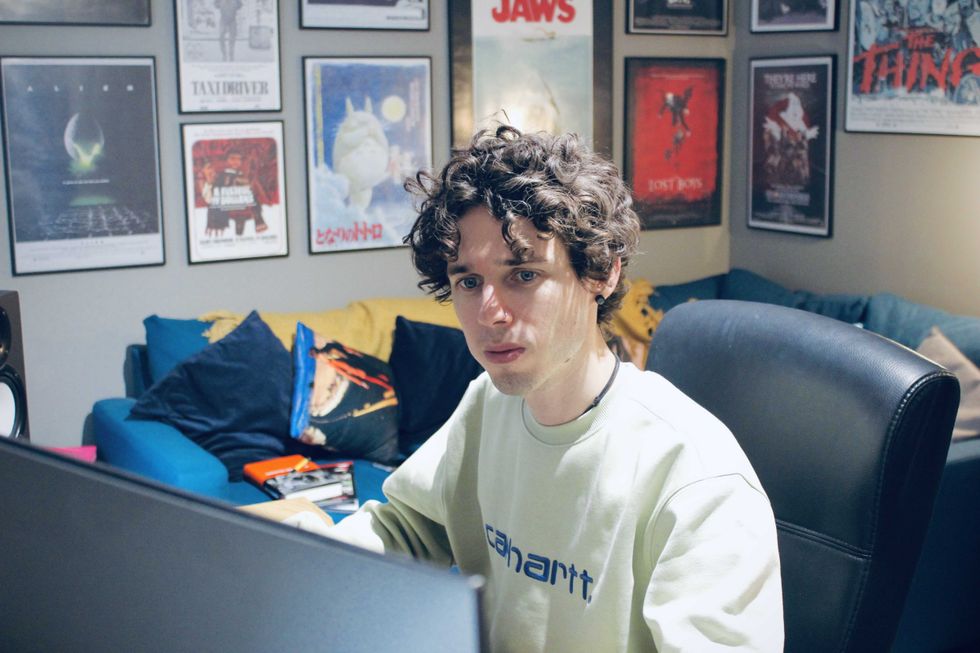 Editor Harrison WallCredit: Maria Wall
NFS: Is there anything else you would like to add about this season or any other upcoming projects you might have?
HW: Well, I’m currently back on Slow Horses again for Season 8. But before that, I also did another brand-new A24 series called The Husbands. It’s the first show I’ve done with Adam that isn’t Slow Horses, and hopefully the first of many future collaborations.
Working with A24 was exciting, as I’m a big fan of what they do. The Husbands should be releasing on Apple TV next year.