When it comes to movies with voiceover, Fight Club is one of the best. It's a pathway through the deep psychosis that's in the movie, and it perfectly sets the stage and the tone for the story.
It's hard to imagine Fight Club even being a movie without the cynical, biting, and darkly hilarious voice-over from Edward Norton's unnamed narrator.
But in a recent revelation, director David Fincher disclosed that the iconic voice-over was initially absent from the screenplay, a creative decision that he believed rendered the story “sad and pathetic.”
Speaking to The Guardian at a British Film Institute (BFI) event in 2009, Fincher recalled his first impression of the script as "sad" and "pathetic."
He knew that something had to change.
Let's dive into what happened next.
- YouTubewww.youtube.com
The Voiceover in Fight Club
Screenplays are blueprints for movies. Sometimes you have one writer come in and work on certain things, and then you bring in another to work on other things.
That's very typical in Hollywood.
And when Fincher boards a project, he wants everything to be precise, and he wants to see the movie that's in his head.
Well, the original Fight Club script had no voiceover.
Here's the whole story from Fincher:
"No, they knew what they were doing. Look, I'm not sure Rupert Murdoch read the script or the book that the film was based on, but Bill Mechanic and Laura Ziskin, when we started talking about it, we were talking about this naughty little poke-in-the-eye cult book. I'd tried to buy the book when it was out before Fox bought it. And really, it's not Fox, it's Fox 2000; you know, when all the major studios were trying to act like they were indie too, this was Fox's indie wing, and they were trying to buy this nasty little book. If you've never read the book, it's as good as it gets – I nearly pissed myself, I was laughing so hard when I read it. The guy who became my agent, Josh Donen, who was trying to buy the book with me, had told me to read it. I was like, "I don't read books, and I'm in the middle of postproduction on the game," but he said, "You have to read it tonight." So I did, and I called him back and said, "We gotta buy this." And he said, "You waited too long. Fox bought it. But go in and meet with Laura Ziskin." So I did and I told her, "I don't want to make the $3m version of this; I want to crash planes, I want to blow up buildings and I want to do the thing that Hollywood really shouldn't do, material like this." She said, "Great!" and we agreed on this development process that I still hold true to to this day. You can't hold the hands of the people who are going to pay for this stuff and do anything marginally outrageous. You have to enter into a deal with them where you say, "We'll work with a writer that you bless, and we will go away. And when we're done and I'm ready to arm wrestle about the content of what that thing is, we'll bring it back and show it to you." She said, "Well, when will you be done?" And I said, "I don't know. It may take a year, it may take three, I don't know." So we hired Jim Uhls, who went off and wrote a draft of the screenplay that didn't have any voiceover in it. I read it and said, "This is sad and pathetic. It's just sorrow and people being horrible. Where's all the stuff where he talks about what he's thinking?" And he said, "Oh, that's kind of a crutch." And I said, "No, man, that's our only chance at being sarcastic and satirical." So he went back and put all that in. Then we came back to Laura, and we laid the script on the table, with a budget, schedule and cast, and said, "$67m, it's Brad Pitt and Edward Norton, and hopefully Helena Bonham Carter, and an 89-day shoot. You have 72 hours – let us know if you're in." And she went and scrambled Bill Mechanic and they came over, we walked them through the storyboards for the entire movie, showed them the whole thing, and they said, "Go do it." You can't make a movie like that, with that number, against the will of a studio. That's kind of what I tried to do on Alien. But if you can get them to buy off on what it is, you can move an inch towards those things that will hopefully make them immortal."
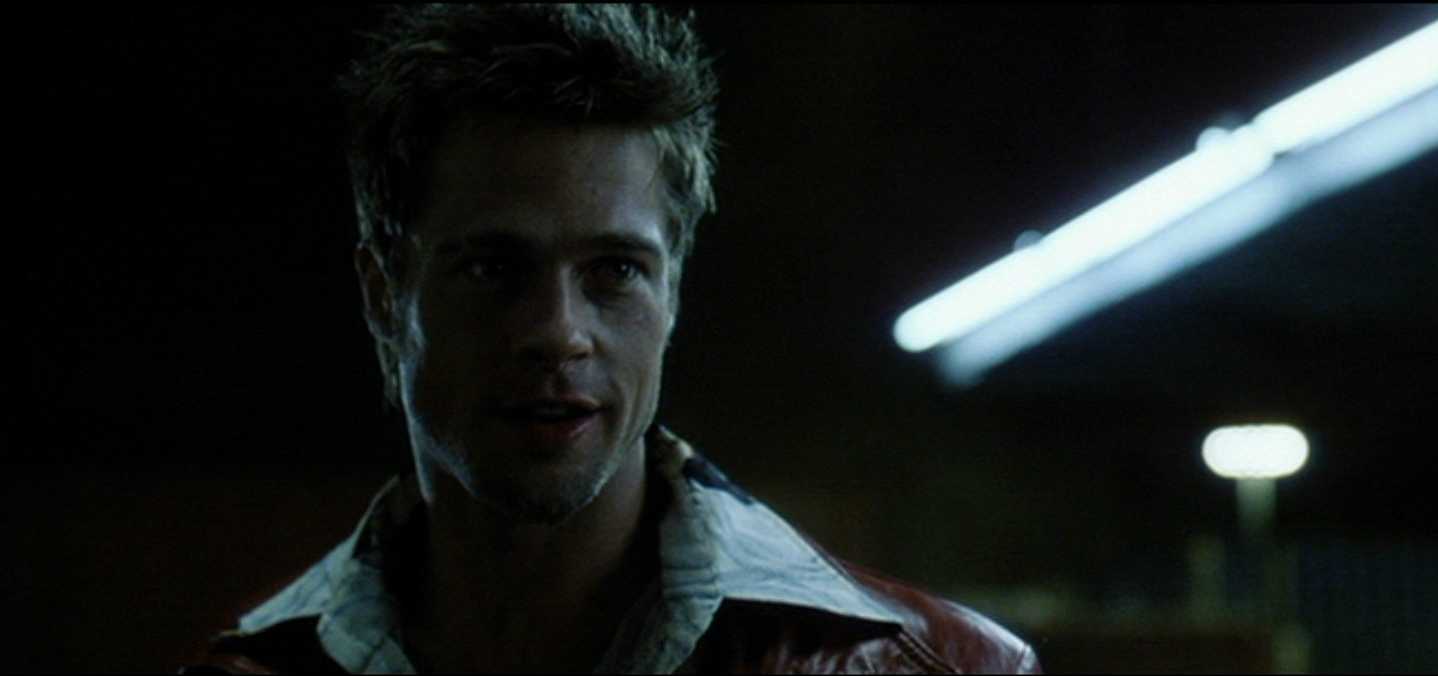 'Fight Club' Credit: 20th Century Fox
Why The Voiceover Matters to Fincher
For Fincher, the omission of the narrator’s internal monologue stripped the story of its essential satirical edge. Without the voiceover, the film was a bleak and straightforward depiction of disillusioned men engaging in brutal violence.
That's kind of boring.
It was the voice inside the narrator's head, the constant, witty commentary on the absurdity of his own life and the consumerist culture he was rebelling against, that connected with so many people.
The real meat of the story, and I'd argue why we love Fight Club, is that it peels back the layers of the characters and gives us a look into what it looks like to be a broken human, and in that, we can project ourselves onto it.
Summing It All Up
I love digging into the old archives and finding stories like these. It shows that filmmaking is a collaborative process where everyone has to dig into their craft to find the best version of the story they want to share with the world.
Fight Club is a masterclass in how voiceover and it's a movie we remember because it engages with us on a deeper level.
Let me know what you think in the comments.