I recently came across a video from Jared Henderson called "Why we can't focus." And at a time when so much is vying for our attention, and I feel like I have so little time to be creative, it got me thinking.
Your attention span is shrinking. Mine is, too.
Research from psychologist Gloria Mark at the University of California, Irvine, shows our average attention span on screens has plummeted from two and a half minutes in 2004 to just 47 seconds today. That's barely enough time to finish reading this paragraph before your brain starts wandering.
Stay with me.
For writers, this is a problem. Our work requires sustained focus. We have to imagine whole worlds, then manage to hold them in place while we find the right combination of words to create them on the page.
But we're operating in an environment engineered to fragment our brains. The news is constant, and it's mostly bad. Emails come in, work tasks come up, we wander. We feel the need to fill every free second with content, content.
Henderson says in his video essay, "Books, you have to give your attention to. But phones, screens, the internet, videos—they steal your attention. That's why I say that it's a hostile design environment. It is an environment that has been designed in order to steal your attention and thus rob you of your ability to focus as much as possible because people make money from it."
Here's what psychology research tells us actually helps.
- YouTube www.youtube.com
Understand Your Attention State
First, stop beating yourself up for not maintaining laser focus all day.
Mark's research identifies different levels of attention (via Fast Company). They are:
- Focused attention. This is when you're ready and your brain is firing well. It takes a lot of energy, so you can't do it forever.
- Rote attention. This is when you can go into cruise control during a task and don't really need to focus.
- Boredom. This is when your brain isn't engaged.
- Frustration. This is when you might procrastinate because something seems daunting and you're hesitant to start. It might lead you to give up on a task.
Work in Focused Bursts
Understanding our mental states brings us to this tip. Time management techniques like the Pomodoro method (setting a timer for 25 minutes of focused work followed by a 5-minute break) really work. There are web extensions and timers you can use, and Final Draft has timers built in, too.
When you take breaks, make them actual, good breaks. Don't just pick up your phone and get lost in TikToks. Try reading some of your research or going for a walk.
Play a mind game or puzzle. I use Elevate.
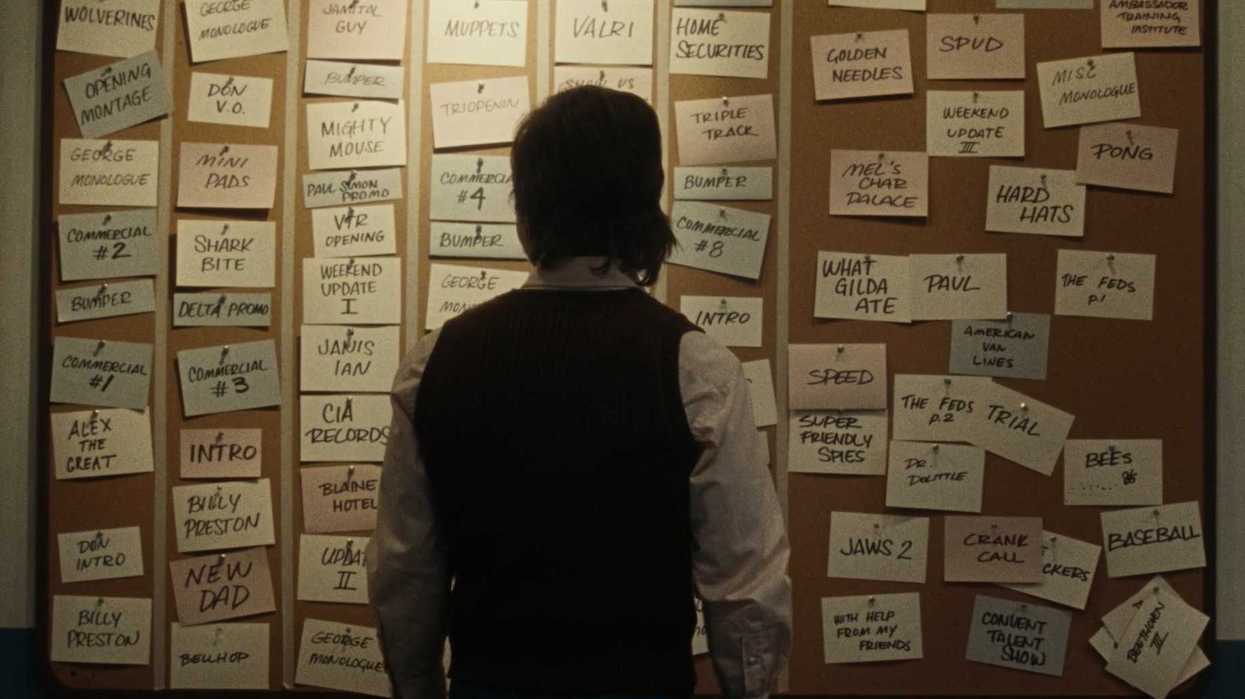
 I Think You Should LeaveCredit: Netflix
Address Your Physical Needs, Too
I recently spoke with screenwriter-turned-therapist Phil Stark, who said he often has to remind writers to actually go outside, sleep, and eat food.
Your brain needs fuel to focus. Your health is important. Eating well, with protein and complex carbohydrates, getting seven to nine hours of sleep, and being active (even walking for 15 minutes) can improve attention and mood.
Research from the American Psychological Association suggests that spending time in nature can positively impact both physical and mental health and may improve attention spans. So go outside.
Create Barriers to Distraction
Research shows that managing distractions, setting clear goals, and practicing mindfulness can enhance concentration and productivity. Taking scheduled breaks and removing distractions during work periods helps people concentrate better on tasks.
Put your phone in another room. Use website blockers or app timers that make checking social media difficult.
If you have the means, take yourself out of the house so you don't stop and do the dishes instead of working. Go to a cafe or the library. Make that your workspace, where you only do work.
Practice Single-Tasking
Don't multitask, as easy as that is these days. You don't need to listen to a podcast with the TV on while working on your script.
Research shows switching between tasks takes longer than completing them sequentially.
Mark says, "If two or more tasks involve controlled processing, we are not really multitasking in the sense of doing things in parallel, at the same time. We're switching our attention back and forth. When people switch their screens, they are using controlled processing because they're looking at what's on that screen" (via Annie Duke).
So every time you hop between your script and Reddit, you're not actually being efficient.
Commit to one thing at a time. Finish a scene. Complete a paragraph.
Answer your emails in a single batch, not throughout the day.
10 Changes You Can Make Right Now
- Put your phone in a different room when you write.
- Use browser extensions that block specific websites during designated hours. Freedom, Cold Turkey, and StayFocusd all work.
- Write before you check anything online at the start of each day.
- Keep a distraction log. Every time you get pulled away from your writing, jot down what distracted you and when it happened.
- Schedule specific times to be distracted. Tell yourself you can scroll social media or read news at 11 a.m. for 15 minutes.
- Try starting your writing sessions by hand for the first 10 minutes.
- Delete social media apps from your phone.
- Turn off all notifications except calls and texts from the humans you know.
- Set a writing sprint timer. Writing as much as you can for 15 or 20 minutes is better than no writing.
- Read books before bed instead of scrolling. Get used to long-form content again.