The 9 Most Iconic Cinéma Vérité Movies of All Time
Cinéma vérité— a cinematic style with little to no intervention.
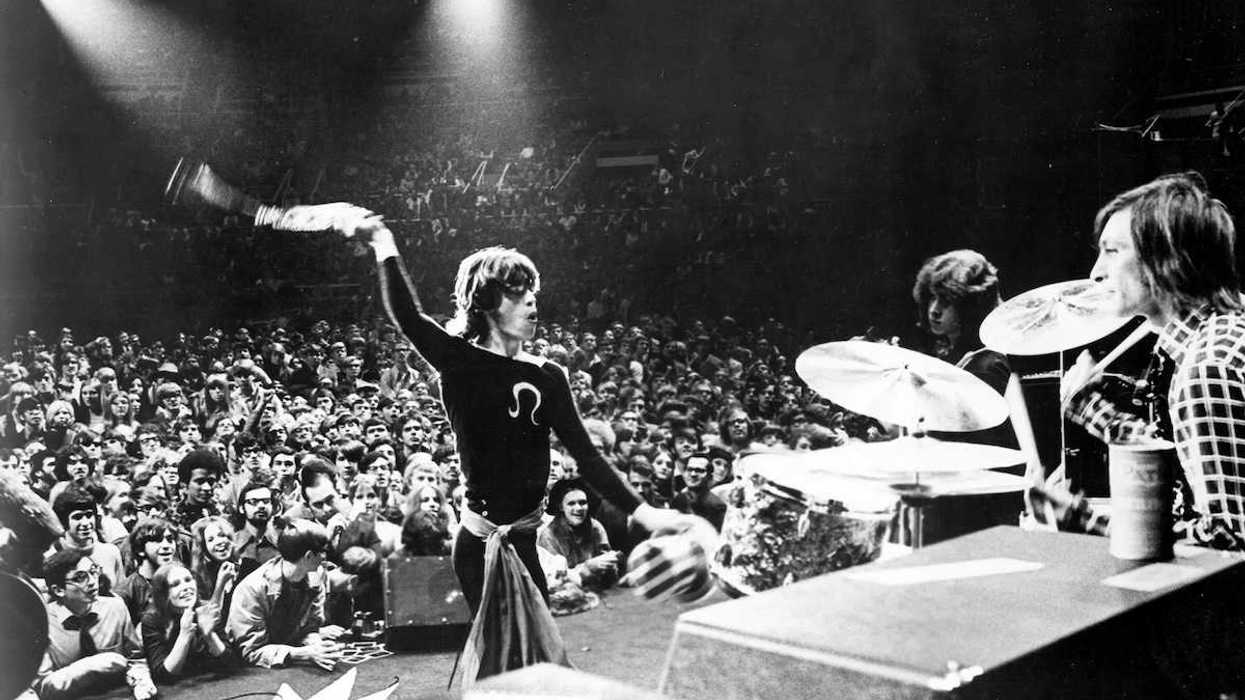
'Gimme Shelter' (1970)
Making a movie takes a lot of planning—budget, locations, production design, actors, lights, and a hundred technical things, along with the most important elements, written lines and actions. But cinema surprises us, and so do the genius filmmakers that came before us, who invented new ways of storytelling.
Among several filmmaking techniques, there is one that is truth-seeking in nature—cinema vérité. It requires minimal setups, real locations, and getting the raw, unfiltered footage without interfering with the action happening. As many movies follow the motto of replicating moments in front of the camera, cinema vérité seeks to capture original moments without any filter between the visuals and the audience.
This list showcases some iconic movie examples that display the spirit of cinéma vérité.
But, before we get to that, let’s go over what cinéma vérité is.
What is Cinéma Vérité?
Cinéma vérité, also known as “observational cinema,” is a style of documentary filmmaking that produces raw visuals with zero interference. The concept was developed alongside the French New Wave movement from the late ‘50s through the ‘60s.
Focusing on observation, the aim was to achieve realism and a more naturalistic narrative as opposed to inauthentic, large-scale, and studio-based films. Moreover, to unveil the truth hidden in plain sight, this technique draws attention away from the presence of the camera and adopts a “fly on the wall” approach.
9 Greatest Cinéma Vérité Movies You Must Watch
1. Gimme Shelter (1970)
The Maysles brothers and Charlotte Zwerin documented the Rolling Stones' 1969 U.S. tour, which led to the catastrophic events at Altamont Free Concert. They followed the band through numerous rehearsals and press tours, recording interviews and candid moments of the rock legends.
The poor mismanagement and presence of Hell’s Angels as security for the event spiraled into chaos and unfortunate events. What initially began as a utopian portrait of a rock culture movement ended with the infamous stabbing death of an attendee, right in front of the stage and the band members.
Gimme Shelter is a haunting memorial of things going out of control, responsibility, and negative spectacle.
2. Salesman (1969)
The Maysles brothers and Charlotte Zwerin follow four door-to-door Bible salesmen who drive through working-class American neighborhoods to sell expensive Bible editions to struggling families.
For the majority, we follow Paul Brennan out of the four salesmen. The awkward and long takes of their pitches, consistent failures, and minimal intervention convey their breakdown in the grind of capitalism. Their quotes keep evading them through endless rejections and long, stretched-out roads.
3. Don’t Look Back (1967)
During the historical shift from folk to rock music in the mid ‘60s, D.A. Pennebaker follows Bob Dylan around on his 1965 UK tour. He documented the singer’s clashes with journalists, bursts of creativity, and the charisma Bob carried with him.
Pennebaker used a handheld 16mm camera and a sync-sound setup to capture the electrifying performances and spontaneous hotel banter in the documentary Don’t Look Back.
Unlike the popular image of Bob Dylan as a cruel genius at the time, this documentary offered a judgment-free invitation into the portrait of Bob’s legend.
4. Hoop Dreams (1994)
Hoop Dreams captures five high-school years of two Chicago teens, William Gates and Arthur Agee, as they chase the dream of basketball scholarships.
Both try to escape their poverty-stricken lives, and we see them go through injuries, family hardships, and occasional battery charges. This on-surface sports film cleverly carries the systemic inequality undertones and their effect on youth.
The fact that Steve James gave five long years of patience and care to this documentary is a feat in itself. Events unfold in a natural progression, without any imposition or manipulation of the story arc.
5. Titicut Follies (1967)
TRAILER - Titicut Follies (1967)
The film is a stark and graphic portrayal of the conditions that existed at the State Prison for the Criminally Insane at Bridgewater, Massachusetts. Titicut Follies documents the various ways the inmates are treated by the guards, social workers, and psychiatrists.
The film is a stark and graphic portrayal of the conditions that existed at the State Prison for the Criminally Insane at Bridgewater, Massachusetts. Titicut Follies documents the various ways the inmates are treated by the guards, social workers, and psychiatrists.In 1966, Documentary filmmaker Frederick Wiseman entered Bridgewater State Hospital for the criminally insane and documented the exposé of daily horrors. Titicut Follies shows that the humiliations, neglect, and force-feedings of patients were routine at the state hospital.
For showing the dehumanizing nature (without any narrative commentary), the film landed in multiple legal troubles and bans in the U.S. until 1991.
Frederick Wiseman used his black-and-white 16mm camera to capture uncomfortable close-ups of the abuse. The confrontational observation style was employed to enforce the rhetorical commentary on the institutional hauntings.
6. Harlan County, USA (1976)
Produced and directed by Barbara Kopple, Harlan County, USA, captures the low-wage, hard-working American miners’ strike against Duke Power Company in Kentucky. She successfully captures the oppression and courage of a community fighting for survival.
The film features several heartbreaking testimonies of miners’ families. It focused more on miners’ wives who proved to be the backbone of the entire movement, standing against the authority toe-to-toe.
Visuals show Barbara’s risky approach to always being “on the ground” amidst tense confrontations, creating an intimate and authentic experience. The filmmaking style is expressive, urgent, and immerses you in the political resistance framework.
7. Grey Gardens (1975)
This time, Albert and David Maysles visit Edith and “Little Edie” Beale in their slowly decaying East Hampton mansion due to the raccoon infestations. Both mother and daughter, related to Jacqueline K. Onassis, seem to be living in their own consistent nostalgia and fantasy. They rarely step out of their mansion and are considered misfits in society.
The static long takes enable their habits, desires, and family resentments to come to the surface organically. Amidst the songs, arguments, and monologues, it becomes difficult to tell if they are sincere in their behavior or if theatrics are taking over.
8. The War Room (1993)
Chris Hegedus and D.A. Pennebaker make their way into Bill Clinton’s 1992 campaign headquarters. The documentary reveals intriguing, tension-filled, and unscripted clashes between strategist James Carville and George Stephanopoulos.
The claustrophobic interiors where meetings occur, coupled with the constant ringing of phones and television sounds, contribute to heightening tension in the film. It feels like you are watching a suspenseful human drama and not an election campaign.
9. High School (1968)
High School gives us a sneak peek into what happens in an American high school in Philadelphia. Frederick Wiseman, with a fly-on-the-wall approach, keenly observes daily interactions between students and the faculty members. The director takes us inside their gym sessions, disciplinary meetings, and assemblies, where adults lecture students.
High School as a documentary is an insightful account of human conditioning and how it begins in the teenage years. The societal institutions that are supposed to transform children into their superior versions quietly yearn for control and power. Wiseman doesn’t need any commentary to convey all of this; his editing does the trick to critique the institutions.
Summing It Up
Cinéma vérité is an important form of cinema that uncovers truth without any external manipulation of emotions or story. It’s bold and should be preserved to the very end.
Let me know your thoughts in the comments.