Why 'Megadoc' Is Such a Unique Documentary
Learn how Mike Figgis approached capturing the production.
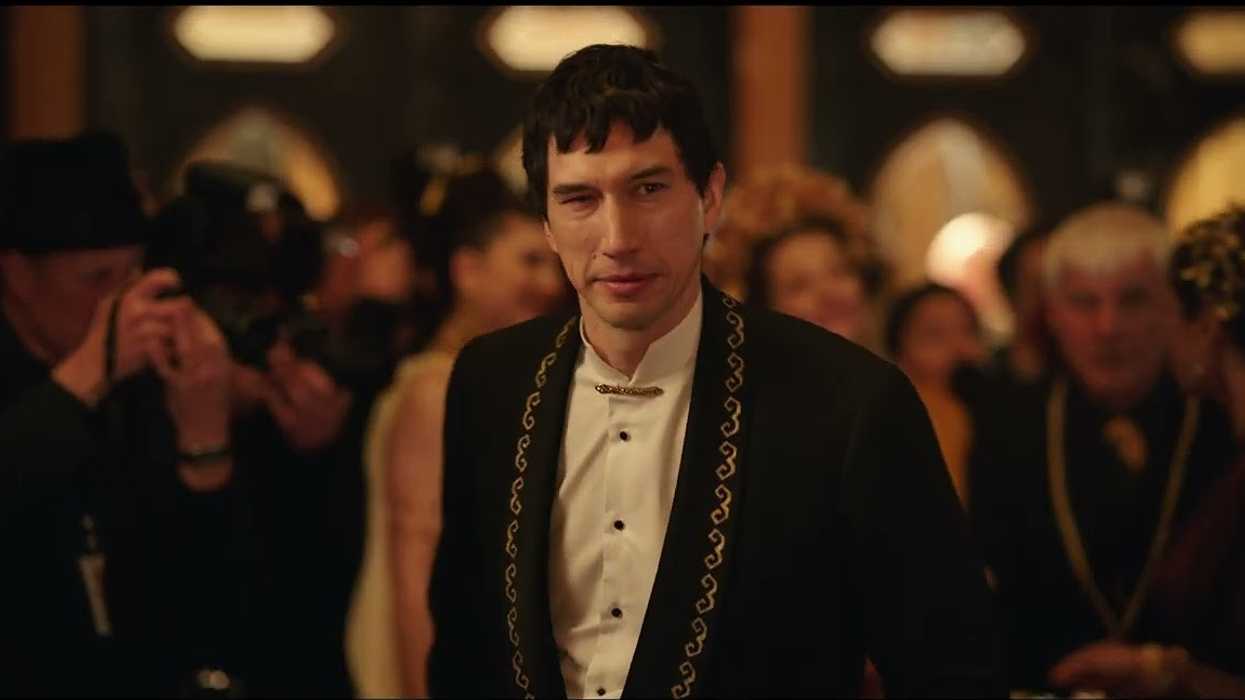
Megalopolis
Francis Ford Coppola's pet project, Megalopolis, certainly did give filmgoers one of the most unique cinematic experiences of recent memory.
It was a little quirky, from the New York Film Festival's long (like, really long) roundtable discussion between Coppola, Spike Lee, and Robert De Niro before the screening, to the in-theater actor who performed part of the film live.
Regardless of how you feel about the film, it is wildly fascinating and admirable that Coppola chased a dream and put his own money up to do it. That kind of passion is encouraged in filmmaking circles.
How did the film come together?
Mike Figgis' new documentary Megadoc, premiering at the Venice Film Festival, is a peek behind the curtain. As he revealed in a conversation with The Hollywood Reporter, his project is not a glossy, over-produced thing like the kind of doc dominating today's film landscape.
Figgis arrived on Francis Ford Coppola's Megalopolis set with no script, no agenda, and just one assistant. His approach was refreshingly organic. He just said yes when Coppola asked, "Could you be here in three weeks?"
- YouTube www.youtube.com
The most significant decision Figgis made was downsizing his approach.
The documentary's structure emerged organically rather than from planned narrative beats.
"I started off with nothing and went into it with a totally open mind," he said. "I really detest the way so many documentaries are made these days—especially for streaming—where they find a big, hot subject that's trended online and develop what's basically a detailed feature script."
This extended to his gear as well.
"I started with a relatively big camera, but it was immediately apparent that I needed to be as small and unobstrusive as possible," he said.
A minimal setup allowed him unprecedented access and intimacy on Coppola's Megalopolis set. Figgis' crew was deliberately lean—just him and one assistant who doubled as producer. The small footprint meant he could be "agile and wouldn't get in the way," capturing spontaneous moments.
His editorial philosophy was equally minimalist.
Despite having access to "amazing archival material," Figgis cut much of it during the edit.
"It's fascinating material, of course, but it immediately puts the audience in a reverential, archival mode, and I wanted the film to be much more in the present tense," he said. "Like, what's going on with Francis today, at age 83, as he spends $140 million of his own money to make this monumental passion project while reckoning with all of the realities of today's film industry?"
His relationship management with subjects offers another lesson.
For example, Adam Driver declined to be filmed for the doc, and Figgis respected those boundaries while building trust with other cast members like Aubrey Plaza.
"Over time, everyone kind of figured out who I was and why I was there," he said.
The documentary captures genuine conflict without exploiting it.
When production crises emerged, Figgis admitted to seeing the dramatic potential for his own project. However, he balanced this natural documentary instinct with empathy for his subjects, creating material that serves the story without betraying trust.
"I was doing what I love—directing a film—but none of the hugely stressful creative challenges I was observing were my responsibility. None of it was ultimately my problem."
Let us know if you're excited to see Megadoc.
- Francis Ford Coppola is Recutting Megalopolis to Be 'Weirder' | No ... ›
- These 4 Books Inspired Francis Ford Coppola's 'Megalopolis' | No ... ›
- Shia LaBeouf Gets Brutally Honest About Making 'Megalopolis' | No ... ›
- Francis Ford Coppola Is Using New Technology for His Upcoming ... ›
- U.S. Against the World: Editing Four Years of Footage with Lucas J. Harger ›