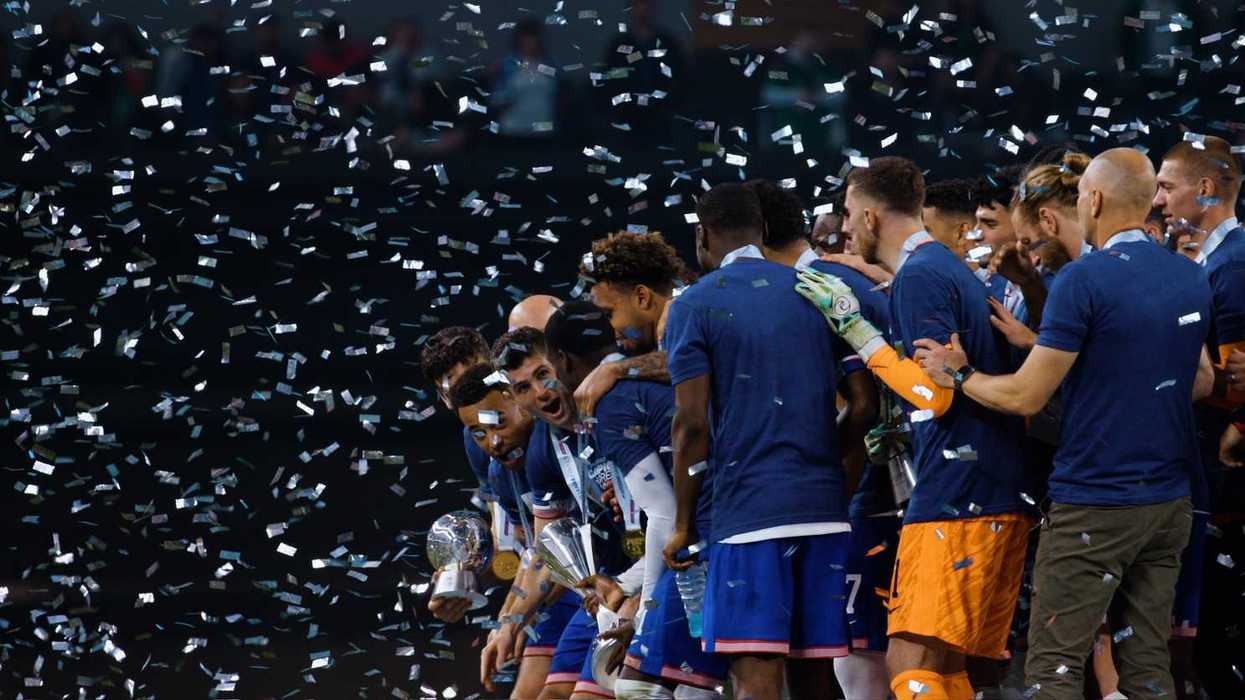
U.S. Against the World is a new sports documentary series that follows the United States Men’s National Soccer Team over more than four years, from the 2022 World Cup to present day. In just five episodes, the series covers every major match, training camp and team event, as well as more personal moments and milestones for the individual players. This meant Harger and the editorial team at Outpost had to navigate high-volume workflows, crafting a powerful five-hour narrative from hundreds of hours of tape.
With immense variety in raw footage from the years of different filmmaking technologies and slight differences in frame rates, codecs, and sources, Harger chose Premiere Productions to manage all the media and work smoothly with his large post-production team. Speech-to-text was also essential throughout the process, particularly for sorting interviews and navigating large volumes of material with efficiency.
We sat down with Harger to learn more about the crafting of this team’s story over the past five years. Check out our full conversation below.
NFS: How did you first get involved with US Against the World?
Lucas Harger: Our team at Outpost got involved very early in the process, initially coming aboard in 2020 before the series landed at HBO. Being there on the ground floor was incredibly exciting because it gave us the opportunity to help shape not just the edit, but the broader storytelling direction and creative identity of the series from the very beginning.
NFS: How do you begin a project/set up your workspace? Did you do anything differently when setting up your workflow for this project?
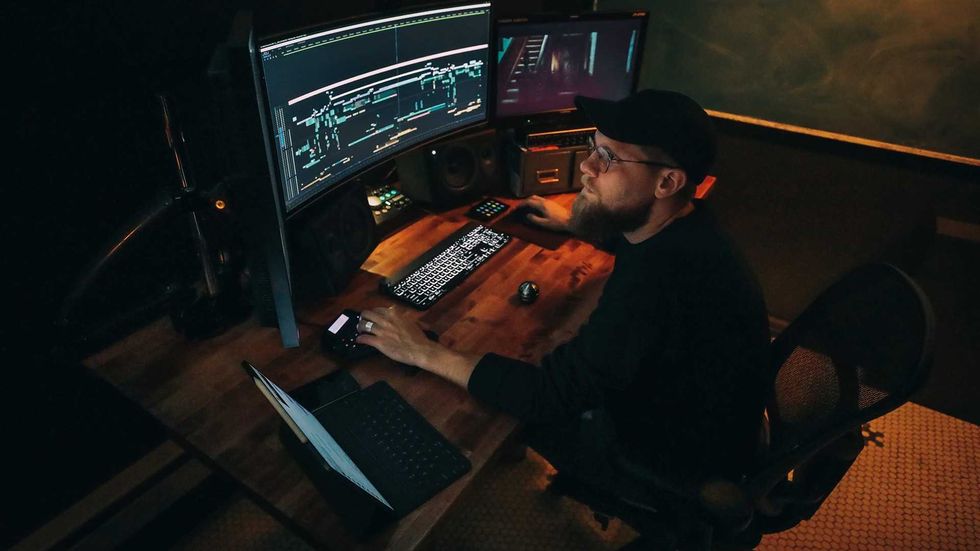
LH: Every project has unique needs, so I always think it’s important to begin with a clear understanding of why we’ve been brought onto a project in the first place — what the North Star is creatively. We knew this project was going to last years. Cameras would change. Premiere would update. Servers would evolve. So we needed to stay nimble. We are landing somewhere north of 700 hours of footage, so being clean and clear with project management and set up, up front, was important.
Ryan Bicknell, our media manager and online editor, played a major role in helping us maintain a clean, focused workflow. We spread footage across multiple Premiere projects within a Production workflow, which was key to this organization.
NFS: What conversations did you have with your director to align on the creative vision for the project? What did collaboration look like throughout production and post?
LH: For this one, we were able to take on such a central role due to the trust we’ve built over 10 years of working with the filmmakers at Park Stories, including the series’ director, Rand Getlin, and showrunner, Janina Pelayo.
Before we began cutting episodes, we had a lot of conversations with Park Stories about the show’s structure, arc, and emotional depth. Once we aligned creatively, our internal team at Outpost would get to work on the first cut, and when we had something to present that we were excited about, we’d re-engage with the production team and continue the collaboration from there – further sharpening the episode.
NFS: Tell us about a favorite scene or moment from this project, and why it stands out to you.
LH: Across five hours of delivered episodes, it’s tough to find a favorite moment. I could pick five scenes per episode. With that said, I think the way the series is uniquely bookended is exciting. I feel we really nailed the mechanics of the series, as well as bringing to completion the title sequence by the end of episode five. It’s hard to communicate what’s most exciting without giving anything away. Suffice it to say, the first five minutes of the series and the last five minutes are a beautiful bookend—I think that’s my favorite part.
NFS: Why did you choose to cut this project in Premiere?
LH: Especially in documentary filmmaking, Premiere gives us the flexibility to manage massive amounts of footage while still moving quickly creatively. AI-powered tools like Speech-to-Text also helped remove roadblocks throughout the process and gave us more time to focus on the bigger-picture storytelling work.
NFS: What's your favorite Premiere shortcut or hack, and why?
LH: Excalibur has become one of my favorite extensions in Premiere. The quick search and application of effects speeds up the workflow tremendously and helps keep momentum going creatively during the edit process. Combining that with the Elgato Stream Deck…it's pretty powerful.
NFS: What advice do you have for aspiring filmmakers or content creators?
LH: Just start creating – and if you’re an editor, just start cutting. There are so many different outlets that exist now for up-and-coming filmmakers and editors to show off their skills and capabilities, so my advice would be to take advantage of that. And whether you’re a filmmaker or an editor, you should stay curious about every craft that goes into filmmaking – sound, music, graphics. Having knowledge across all of the moving pieces that go into creating a great film is so crucial.