Sometimes, we know exactly what the opening moments of our next screenplay will be. We can see them clearly in our minds.
Other times, we have no idea how the heck we're going to set up the story we want to tell. And that's okay, too.
Tony DuShane wrote the screenplay for Confessions of a Teenage Jesus Jerk, based on his own semi-autobiographical novel, which was directed by Eric Stoltz and released in 2017. The film is currently streaming on Amazon Prime.
With this experience, DuShane understands the difference between opening a novel and opening a screenplay.
Recently, he spoke with Film Courage about how to start. As in, literally what to do on page one.
"I think, especially with a novel, there's a lot more grace than in film and on the first page of a screenplay," he said.
That lack of grace means screenwriters face even more pressure to nail those opening pages. Enjoy the full convo below, then dive into three big takeaways for screenwriters.
- YouTube www.youtube.com
Your Opening Will Change 40-50 Times (and That's Fine)
If you think you'll nail your opening scene on the first pass, DuShane has a reality check for you.
When asked how many times he'd changed the first sentence of his latest piece, he answered honestly.
"Oh, with this last draft, I probably 40 times, 50 times," he said. "When I'm writing the first sentence, I'm trying to nail the problem with the character, a problem that the character has."
For screenwriters, this revision obsession is important, too—maybe even more than in the novel. Readers of books are usually in it for the long haul. In contrast, entertainment professionals read mountains of scripts and need a quick way to filter out the duds. If your first 10 pages don't grab those readers, they likely won't read any further.
DuShane explained that understanding what your opening should be often comes only after you've wrestled with the entire story. The opening he thought was perfect rarely survived because his understanding evolved through the writing process.
This is why many experienced screenwriters will take apart their opening scene, throw it out, try something else, go back to it, and see what sticks.
It Doesn't Need to Be Spectacular, but It Does Need to Be Honest
Despite spending months refining his openings, DuShane doesn't think there's a need to be flashy.
"It's interesting. It doesn't have to be fantastic. It just I think it just needs to be the tone," he said. "It needs to set the stage. ... It doesn't have to be spectacular, but it just does have to get us there. It has to kind of be 'it.' This is it. But also not give it too much pressure."
This might seem counterintuitive for screenwriters who are usually told their opening needs to grab readers. But DuShane said your opening doesn't need to reinvent cinema, it needs to communicate what kind of story you're telling, and do it honestly.
Later, he talked about the process of mixtapes for crushes, where he wasn't showing off every musical skill. He was trying to show others who he was.
The same applies to screenwriting. Opening scenes don't have to include everything; they just need to signal your screenplay's rules and expectations. We'll get to know more as we go along.
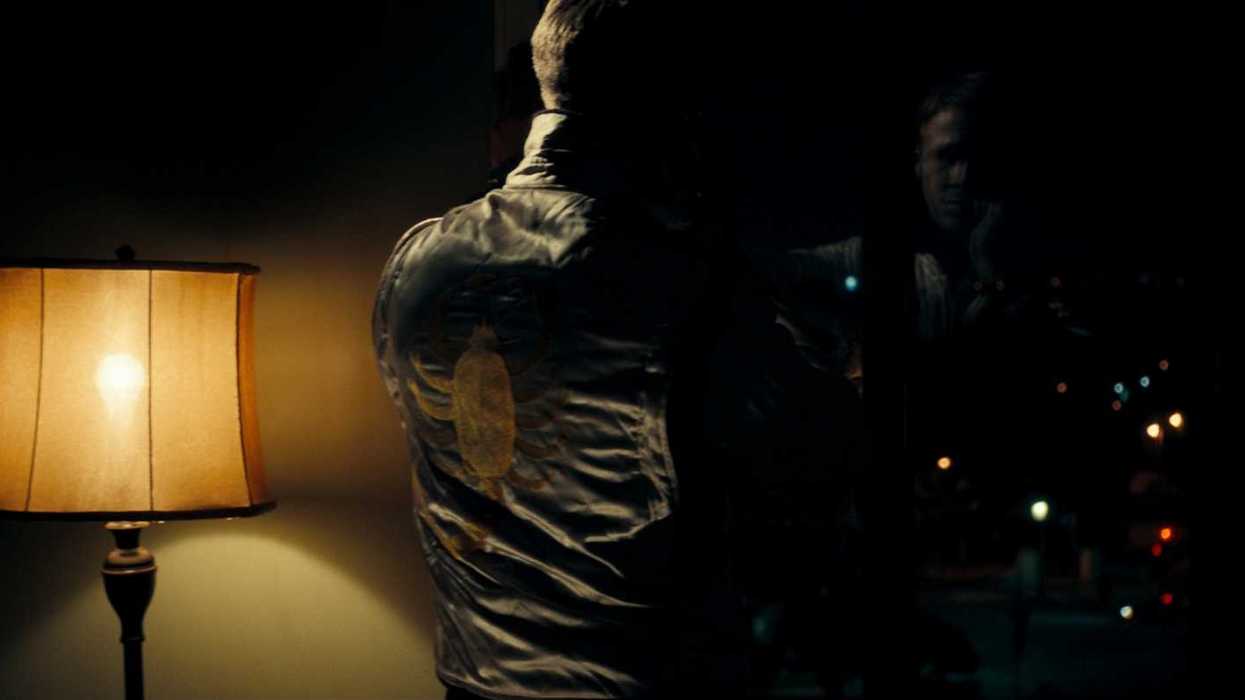
 DriveCredit: FilmDistrict
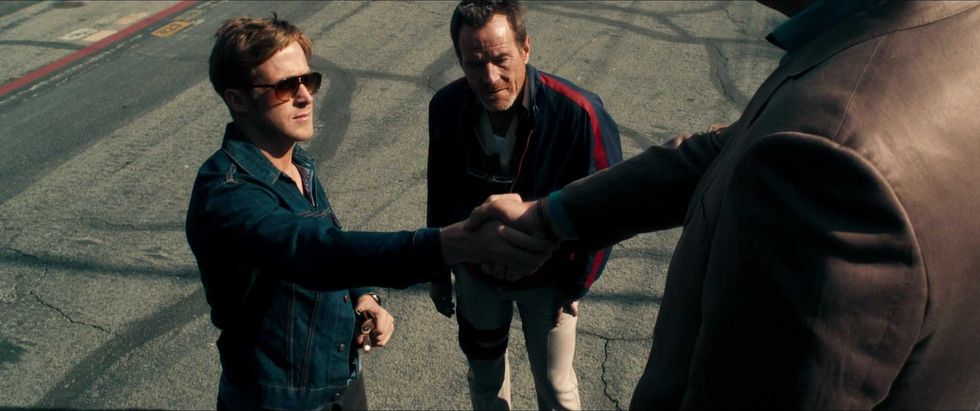
Think of It as a Visual Handshake
The opening is a handshake with your audience, DuShane said.
"It's usually, after those final drafts and those final tweaks, where I'm like ... I finally understand the entire beast that I've been trying to tame," he said. "Now, how do I bring a reader into this story with that first sentence and with that first paragraph, where they know the ride that they're going to be on. I kind of call it a handshake. I'm giving a handshake to the reader that's going to be like, 'I got you. Here we go.'"
For screenwriters, that handshake happens through images, not prose. A screenplay's opening 10 pages must establish tone. If your script is a comedy, the first 10 pages should be funny. If your script is a horror story, the first 10 pages should have a scare or at least be a little creepy.
DuShane said that the tone you set becomes a promise about the experience ahead. His new book opens with a promise of adventure.
"A condensed, 'Let's just go have some fun.' I hope it's a, 'Hey, we're having some fun. This is going to get weird,'" he said.
Your opening moments should include a striking image, some interesting dialogue, or a moment of action. It's the movie trailer for your screenplay.
- The Opening Scene of '2001: A Space Odyssey' Just Isn't the Same ... ›
- 3 Lessons from the Opening Scene of 'The Godfather' | No Film School ›
- Dissecting the Opening Scenes of Quentin Tarantino Movies | No ... ›
- What Are the Best Opening Scenes of All Time? | No Film School ›
- What Your Script's First Pages Are Doing Wrong ›