Alfred Hitchcock’s The Birds is one of the highest-ranked movies on the American Film Institute’s list of the 100 best American thrillers. It landed at No. 7, below just two other Hitchcock movies, namely Psycho (No. 1) and North by Northwest (No. 4).
However, it landed above scores of legendary classics, including William Friedkin’s The French Connection (No. 8), Martin Scorsese’s Taxi Driver (No. 22), Billy Wilder’s Double Indemnity (No. 24), Steven Spielberg’s Jurassic Park (No. 35), and Hitchcock’s own Rear Window (No. 14), Vertigo (No. 18), Strangers on a Train (No. 32), Notorious (No. 38), Dial M for Murder (No. 48), and Rebecca (No. 80).
It has managed to do this in spite of being panned by many critics at the time, including The New Yorker’s Brendan Gill, who called it “a sorry failure” in a review dated March 30, 1963. How did this happen? We’re here to break down the world it dropped into, its undeniable merits, and its implacable rise in public esteem during the ensuing decades.
The Birds Was Wildly Controversial When It Debuted
Let’s put The Birds into context, shall we? The world of 1963 cinema would be almost unrecognizable to modern audiences. One of the reasons why this was the case is the fact that, while the Hays Code was in the process of slowly breaking down, it was still technically in place in Hollywood until 1968, resulting in there being a very low ceiling for how intense or brutal horror and thriller movies could get.
While Hitchcock turned out many thriller masterpieces during the Hays Code era, including Vertigo, North by Northwest, and Strangers on a Train, like all great artists, he constantly pushed himself to try new things, even when they conflicted with what the viewing public thought they wanted from him.
He constantly challenged himself throughout his career (including making the movie Rope a stitched-together series of long takes and building an unprecedentedly large set to bring Rear Window to life). However, this experimentation manifested most prominently with 1960’s Psycho, which pushed the limit in terms of onscreen violence and sexuality (Janet Leigh is scandalously shown in her underwear, on a full-sized bed, with a man in the room) but also challenged traditional notions of narrative structure (the supposed protagonist is murdered at the end of the first act).
The Birds was very much a continuation of this experiment, delivering bird attack sequences that would have been unspeakably brutal to American audiences at the time. While audiences flocked to see Psycho, it’s possible that Hitchcock’s follow-up horror movie was a bridge too far for the time period. In addition to dividing critics, it made just over one-fifth of what Psycho made at the box office and went on to be nominated for just one Oscar (Best Special Effects, which it lost to Cleopatra) while Psycho was nominated for four.
Why The Birds Is a Masterpiece
While critics and audiences at the time were unfriendly to The Birds, it is a sparkling jewel of a movie when stripped of its context. Sure, some of the effects haven’t aged perfectly well to modern eyes, but the potency of the movie remains intact for many reasons.
One of those reasons is the same playfulness with narrative structure that Hitchcock showed with Psycho. Anyone watching the first act of The Birds would assume that it was a screwball comedy, as it kicks off in a suitably frothy way by following the prankster heiress Melanie Daniels (Tippi Hedren) going to great lengths to deliver a pair of lovebirds to Mitch Brenner (Rod Taylor), with whom she sparked romantic chemistry during a caustic conversation at a bird shop.
This brings her to the town of Bodega Bay in Northern California, which is about to become the center of a series of violent, unexplained bird attacks. The rom-com is pleasantly purring along, setting up the well-rounded characters and the town around them (another unimpeachable aspect of the movie is its extraordinary sense of place), when all of a sudden, a seagull drops from the sky and scratches Melanie as she is triumphantly returning from her delivery.
This is a startling moment that comes after audiences have long since been lured into a false sense of security, reminding viewers of exactly why they bought a ticket to see a movie called The Birds. And it’s only the opening salvo of an increasingly frantic series of attacks that include birds storming a birthday party, shooting out of fireplaces, and (most famously) chasing schoolchildren down a hill as they run away screaming.
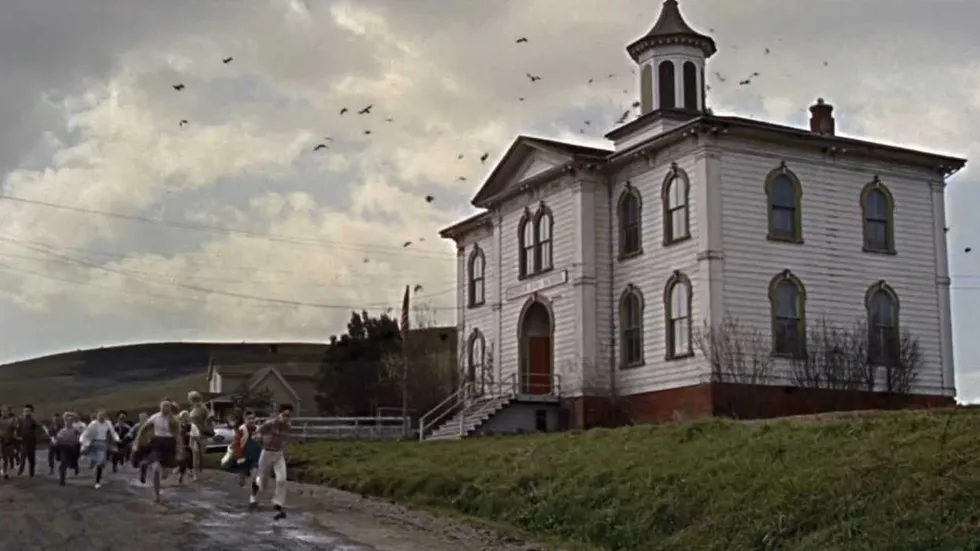 ‘The Birds’ (1963)Credit: Universal Pictures
Every element of this narrative shift is designed to make the bird attacks feel even more impactful. The brutality feels even more violent when compared to the soft, gentle rom-com that preceded it, and the fact that the characters are suddenly in constant danger feels that much more impactful because we’ve long since fallen in love with them and found ourselves invested in their arcs.
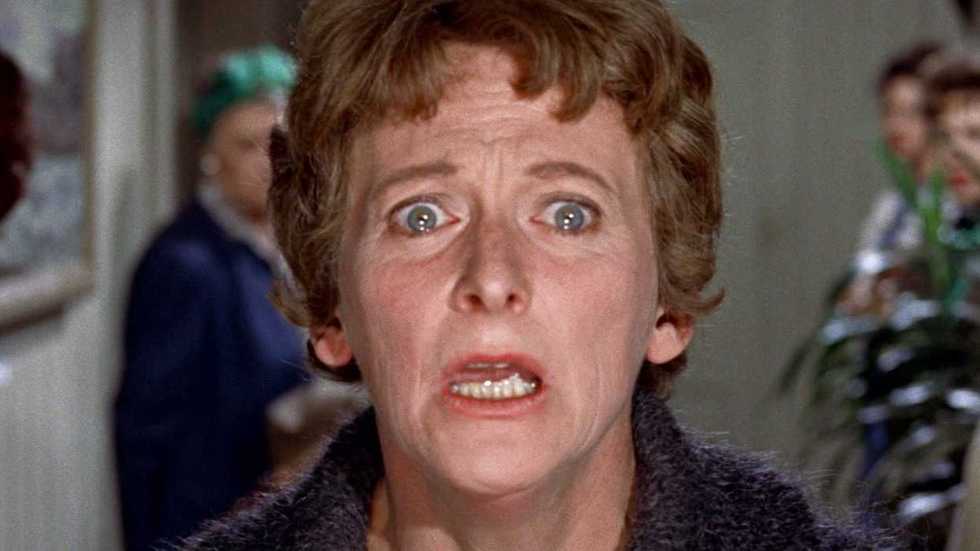
The screenplay by Evan Hunter is also well worth highlighting. It shows a masterful sense of pace, breaking up the action with dialogue scenes that are often just as thrilling as the bird attacks. One of the most noteworthy moments is a scene where Melanie and Mitch are taking shelter in a restaurant, where various dubious townspeople speculate about what’s going on. The scenes builds to a beautiful crescendo, which allows for a tremendously impactful moment later on when Melanie returns to the restaurant after the most violent bird attack yet and sees the patrons and staff shaken and cowering. Now faced with the devastating reality of the situation, the previously chatty group is shaken by the sheer power of nature and has nothing left to say.
There is a litany of other reasons why The Birds is a remarkable piece of craftsmanship, including the costume design for Tippi Hedren by eight-time Oscar winner Edith Head, the impeccable location scouting, and the experimental approach to musicality (while Psycho composer Bernard Herrmann worked on the movie as a sound consultant, he didn’t compose a single note - The Birds is only ever scored by diegetic music or the shrieks of birds, both of which draw viewers into the reality of the world on-screen like an electromagnet).
The Birds Has Soared Higher and Higher Since 1963
The more that cinema progressed from 1963, the more The Birds was embraced by a wider and wider swath of cineastes. This had already taken place to such a degree over the course of half a decade that The Birds became the most-watched movie on television when it made its small-screen debut in 1968, which is a record that it held until it was broken by Love Story in 1972.
Other accolades that the movie has collected over the years include landing on the 2022 Sight and Sound poll of the best movies in history (tied for No. 185 with classics including The Young Girls of Rochefort, Ran, and Magnolia) and being named by iconic international filmmakers Federico Fellini and Akira Kurosawa on the respective lists of their favorite movies of all time.
And, while this is circumstantial evidence, I personally visited the real-life The Birds schoolhouse in Bodega just a few months ago, and during the 20 or so minutes that I spent there, four or five other cars stopped by to take photos. This was on a random off-season weekday more than 60 years after the movie came out. Now that’s staying power.
The time has come to weigh in. Have you seen The Birds, and do you agree with the AFI or with its initial critics? Sound off in the comments below!