7 Classic Hollywood Quotes That Broke the Hays Code
These seven quotes show how filmmakers pushed censorship boundaries when the industry feared controversy.
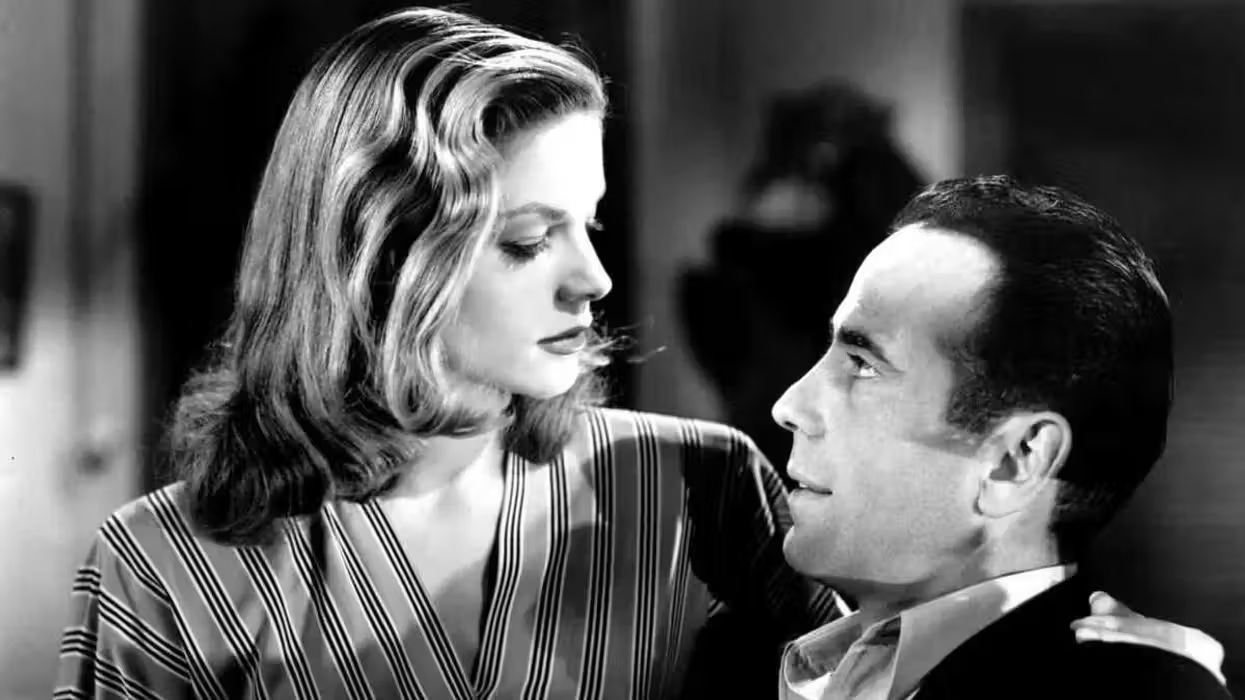
To Have and Have Not (1944)
For every country, there always comes a time when it goes through an authoritarian regime, at least once—that is, unless you live in a utopian exception. During such times, “authority figures” try to force-feed you their version of morality and ethics. In Hollywood, that propagandist endeavor was known as the Hays Code, which remained active from 1934 to 1968.
Will H. Hays, originally a Republican politician and a member of Warren G. Harding’s cabinet, served as the first chairman of Motion Picture Producers and Distributors of America (which is now known as Motion Picture Association of America, or MPAA). In this capacity, he drafted and enforced a set of “self-censorship” guidelines that were meant to “protect the audience from corrupting influences.” In simple words, it translates to moral policing of sex, desire, violence, profanity—basically, anything that the censor deemed would be a bad influence on the viewers’ imagination.
The Hays Code tried to shape everything from what and how characters spoke, behaved, and even thought. Something as small as a suggestive word could be a fair ground for debates, negotiations, or even legal fights. Mostly, movie studios tried to co-exist with the code by following the rules or, at best, writing and directing movies around its technicalities.
But, like revolutionaries, some filmmakers refused to play along. Some did what they wanted and released their films with waivers, while others “smuggled in” their sensibilities through clever writing.
These seven quotes from that era are indicative of how some Hollywood writers tested boundaries of the Hays Code, before it started to crack entirely.
7 Classic Hollywood Quotes That Defied the Hays Code
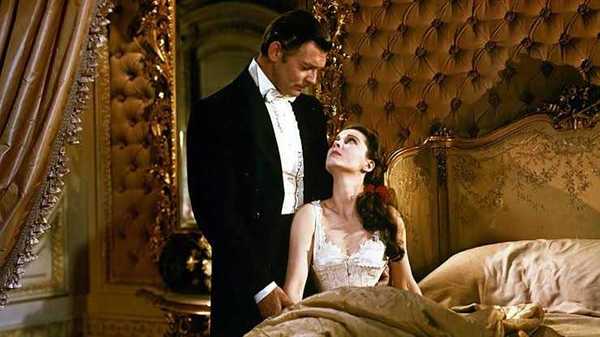
1. “Frankly, my dear, I don’t give a damn.” - Gone With the Wind (1939)
Written by: Sidney Howard | Directed by: Victor Fleming
One of the main ingredients that made up the contents of the Hays Code was its crusade against profanity. However, today, in this quote, we might have to look closer to find the word that was then qualified as profane—the word was “damn”. It led to contentions between MPPDA and the producer David O. Selznick, who sought an exemption for the word, saying it was essential to the novel and to the scene’s emotional truth. In one of their rare displays of backing down, MPPDA allowed the word to stay in the script. The quote has since then been placed at the top spot in AFI’s list of 100 greatest movie quotes.
2. “I don’t want to take advantage of you.” - The Outlaw (1943)
Written by: Jules Furthman | Directed by: Howard Hughes
If you read the line without any context, it may not sound queer at all. However, movie critics and historians have long commented on The Outlaw’s underlying homoerotic subtext, especially between Billy the Kid (Jack Buetel) and Doc Holliday (Walter Huston). This went directly against the Code’s expected “masculinity” norms. Some viewers also believe that there is more flirting between Billy and Doc than between Billy and Rio (Jane Russell). Rio’s character was another (one of the many) grounds for the Code’s objection to the film. They felt the film was unnecessarily fixated on Rio’s cleavage. As a result, Howard Hughes spent quite a long period battling MPPDA.
3. “You know how to whistle, don’t you, Steve? You just put your lips together and blow.” - To Have and Have Not (1944)
Written by: Jules Furthman and William Faulkner | Directed by: Howard Hawks
This is one of the most daring and blatant instances of the Hays Code defiers. Lauren Bacall, in her screen debut, delivered this innuendo-filled line, which not only danced around but trampled the Code’s strict rules on sexual suggestiveness. Yet, it was smartly done. It was a strong insinuation, but not direct enough to warrant any cuts. The line, which was also Bacall’s audition scene before she was cast, is noted for defining Bacall’s bold, irreverent screen image. Thanks to the clever writing, today we can enjoy the line as the pinnacle of flirtatious dialogue.
4. “I’m just a no-good bastard.” - Out of the Past (1947)
Written by: Daniel Mainwaring | Directed by: Jacques Tourneur
Again, the Code’s objection to profanity. The word “bastard” broke the restrictions, but the problem was deeper than that. It was the film’s foggy stance on morality. Blurred ethics is the soul of Noir cinema, and this line perfectly captures that spirit. The PCA (Production Code Administration) pushed for the changes, but this tone was everywhere in the movie; there was little room left for sanitization. The line stayed, thrived, and went on to fuel the movie’s fatalist atmosphere. This proves that even though the Code wasn’t ready, the audience was ready and evolved for darker honesty.
5. “But you don’t think it’s better for a girl to be preoccupied with sex than occupied?” - The Moon is Blue (1953)
Written by: F. Hugh Herbert | Directed by: Otto Preminger
This particular quote sounds quite daring, but the PCA’s objection was much wider than just one quote. The romantic comedy was full of words that the Code considered as profanity; words like “virgin” and “mistress.” Sounds ridiculous now, but that’s the Hays Code for you. Preminger shared these exact feelings; so much so that he not only refused to edit them out but also refused to submit the film for approval. The film was released without PCA approval and instantly made headlines for this defiance. The PCA was further embarrassed when the film turned out to be a hit, marking the audience’s direct disapproval of the agency. This was a significant moment that proved the Hays Code system was losing its grip.
6. “Well, nobody is perfect.” - Some Like It Hot (1959)
Written by: Billy Wilder and I.A.L. Diamond | Directed by: Billy Wilder
Again, without the context, the line may not underscore its significance. This classic, timeless comedy was already in great disfavor with the PCA because of its flagrant crossdressing throughout the film. Whatever chances the movie had for its suggestive content being (generously) overlooked as an audacious, brazen comedy disappeared with this final line. PCA rejected the movie, but following the footsteps of The Moon is Blue, Billy Wilder gave them a middle finger and secured distribution anyway. The film was immensely successful, and the PCA was again humiliated. The quote has now turned into a cheeky jab at rigid standards and pseudo-moralistic attitudes. It is also an example that proves cinema thrives when it accepts human complexity instead of censoring it.
7. “A boy’s best friend is his mother.” - Psycho (1960)
Written by: Joseph Stefano | Directed by: Alfred Hitchcock
Hitchcock, with this line, pushed the Code boundaries further than any other filmmaker of his time. You might wonder why; the line sounds not only innocent but cute. Well, this line is where Hitchcock is suggesting the elements of incest. The film’s portrayal of psychological trauma and violence was already a strong ground for the PCA to object to the film; this reason was something else altogether. As it turned out, Hitchcock exerted enough influence to get the film passed with minimal edits. This undertone, how much ever disturbing it is, still adds to the film’s twisted psychology. Today, this incident stands as proof of what happens when censorship fails to impose its mediocre objections—the audience ends up with a magnificent classic.
- Origins of the Hollywood Sign: It Was Never Meant for the Movies ›
- How Hollywood Survived the Great Depression ›
- A Brief Look at the History of Hollywood | No Film School ›
- What Are the Five Key Elements to Classic Hollywood Storytelling ... ›
- When Was the Golden Age of Hollywood? | No Film School ›
- The 10 Best Movies of Hollywood's Golden Age | No Film School ›
- This Goodbye Line Remains One of Cinema’s Greatest Mic Drops ›
- Decoding The Line That Turned Defeat Into Defiance in 'Gone With ... ›
- When a Kiss Changed Cinema: 11 Iconic Moments ›
- 9 Times Actors Flat-Out Refused to Deliver Their Lines ›
- 9 Times Iconic Movies Cleverly Dodged the Censor Board ›
- 14 Iconic Movies Set in Chicago ›